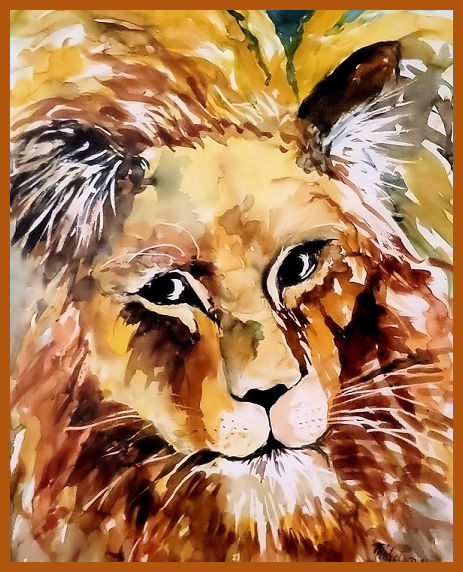
Futile rage ∙∙
Why do the nations rage and the peoples plot in vain? – Psalms 2:1
Psalms 2:1-6
1 Why are the nations so angry? Why do they waste their time with futile plans?
2 The kings of the earth prepare for battle; the rulers plot together against the LORD and his anointed one.
3 “Let us break their chains,” they cry, “and free ourselves from slavery to God.”
4 But the one who rules in heaven laughs. The Lord scoffs at them.
5 Then in anger, he rebukes them, terrifying them with his fierce fury.
6 For the Lord declares, “I have placed my chosen king on the throne in Jerusalem, on my holy mountain.”
Rage is a form of violent, uncontrollable anger. It influences our reasoning and judgment. Rage is angry resentment or prejudice against a person or group. Frequently, our rage is unfair and unjustified.
Road rage, however, refers to aggressive and angry behavior displayed while driving. The term was first coined in 1987 in response to a series of shooting on freeways and interstates in Los Angeles.
Rage behaviors on the road encompass a range of offensive actions such as rude gestures, verbal insults, and threats, both physical and through driving maneuvers. These actions are motivated by the driver’s desire to alleviate their frustration, but in the worst cases, road ragers aim to intimidate or cause harm to others. Shockingly, some incidents escalate to the point where a driver leaves their vehicle to assault or even use firearms against another driver.
Alarming statistics reveal that road rage is increasing. More than 1500 such cases are reported each year, resulting in over 12,000 preventable injuries. Perhaps even more concerning is that at least one firearm is involved in over 37% of road rage incidents. During a seven-year study, over 200 murders were attributed to road rage incidents, highlighting the severity of this dangerous behavior on the roads.
Rage is often thoughtless and blind. Sadly, it lurks in the heart of every fallen person. If you search, you will probably discover its silent presence. Tragically, the Father is the object of rage and rebellion.
Who is ultimately in charge of planet Earth and the created universe? Where does the buck stop? The Scriptures unequivocally answer this question. The Father is the architect, the intelligent designer, and the Creator of all. He is sovereign over His creation.
Psalms 2 recounts the senseless rejection of the Father’s rule and authority. His chosen and anointed King, the Lord Jesus Christ, is also targeted. Psalms 2 reveals an astonishing yet consistent pattern found throughout the Scripture. The Father sits serenely and confidently upon His throne. He is composed, ruling with peace and confidence. He is sovereign over all aspects of existence. He has made choices, and His choices stand firm. On the other hand, people tend to be obtuse, stubborn, self-absorbed, willful, rebellious, and defiant.
The opening word of the Psalm sets its tone: “Why.” The psalmist, however, isn’t seeking information or clarification. Why is he asked why? He is expressing a sense of puzzlement and even astonishment. In modern English, we might ask, “How can people be so foolish?” Why do they erupt in tumultuous rage, surrender themselves to senseless anger, and “waste their time with futile plans?”
People deceive themselves into believing they can successfully rebel against the sovereign, omnipotent Lord of lords and King of Kings. They delude themselves, thinking that their futile struggle and defiance have the power to alter somehow or overthrow His absolute authority.
In their folly, they envision themselves as contenders in a battle for supremacy. On one side stand the kings and officials of the earth. Their adversaries are the Father Himself and His Anointed One, His Son, the Lord Jesus Christ. This appears to be an utterly unwinnable contest. It is like a bunch of angry mice screaming and plotting against an alpha male elephant. Yet even this feeble analogy fails to capture the absurd incongruity of the situation.
If we base the outcome solely on numbers, who would be victorious? Throughout history, their combined armies have numbered in the billions. On the other side, there are only two opponents: the Father and the Son. However, it is no contest. The Father is greater than all.
It is worth noting that their entire rebellion is in words only. They only raise their voices against the Father, never their weapons.
The absurdity of it all is reminiscent of a fairy tale, like the one about the big bad Wolf and the three little pigs. Similar to the Wolf, those who are in opposition to the Father are full of hot air. They huff and puff, but absolutely nothing changes. The Father’s plans and choices are set in granite. They stand firm, unwavering, and no created force can alter them.
REFLECT & PRAY
It is almost inconceivable that anyone would be so foolish and imprudent as to wage war against the Father, knowing they cannot possibly win. Nevertheless, against all reason, some still choose to do so.
Father it is so easy to judge and condemn others. I must confess that rage lives within my wicked heart as well. Thank You for forgiving my rebellion. Enable me to understand and forgive others as well.
INSIGHT
Psalms 2:1-3
1 Why do the nations rage and the peoples plot in vain?
2 The kings of the earth set themselves, and the rulers take counsel together, against the LORD and his Anointed, saying,
3 “Let us burst their bonds apart and cast away their cords from us.”
The Hebrew word translated as rage, angry, and in an uproar is ragash. It signifies being in a state of great anger, to behave violently or irrationally. “The verb ragash designates any noisy or riotous assembly that practically seethes in its antagonism” (Leupold). The nations gather in a frenzy of tumultuous anger, and it escalates from there.
They “devise futility” (Leupold). They make plans, they plot, they scheme, they ruminate, and they strategize. The Hebrew word translated as vain is riq. It has the sense of being empty, useless, pointless, or worthless.
The bottom line is that neither rage nor pathetic, pointless scheming can bring about any change.
The French common language version (FRCL) translates the Hebrew as a question and a statement: “The nations are in an uproar – but why? The people plot, but it is useless!” (UBS).
Pause momentarily and visualize the psalmist penning these words and shaking his head in disbelief (Johnston). They cannot possibly win; their cause is absolutely futile, so why try? Rage, murmured shouts, and scheming are rooted in the hearts of every fallen individual. Our hearts, by nature, are naturally bent against the Father, the living God.
How does the Father react to such feeble rebellion and raging anger? He laughs!
Psalm 2:4 But the one who rules in heaven laughs. The Lord scoffs at them.
Just imagine in your mind’s eye for a moment, the Father, regally sitting in heaven. He is shaking His head, laughing. I can hear Him saying, “Really! You can’t be serious!” He scoffs at them, ridicules them, and mocks them.
Despite being children of the King, each of us possesses the same fallen nature. We are prone to indulging in self-pity and harboring angry resentment. Yet, the Father is not angry with us, for He understands our frailty, knowing we are mere dust (Psalms 103:13-14). So, how does the Father respond to His children? Perhaps He, too, would ask the question, “Why?” And with some incredulity, He ponders, “How can My children act so foolishly?” He exclaims, “They just don’t get it now, but someday they will.”
In a twinkling of an eye, the Father transitions from astonishment to a deep and sorrowful longing, followed by overflowing forgiveness, all while yearning for our complete restoration.
Why do we become so angry and rage? Why do we waste our time with futile plans?
¯\_(ツ)_/¯ 5-30-1
© Dr. H 2023
 Dr H Reflections
Thank You Dr H as I was soooo inspired to read all of Psalm 103 in The Passion Translation
LikeLike