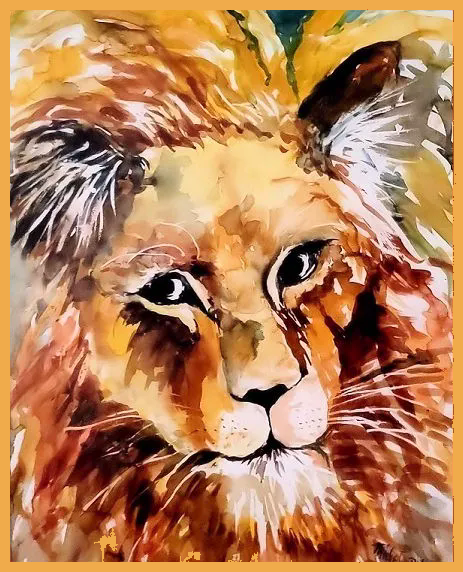
Adopted into God’s Forever Family ∙
God sent his Son . . . so that he could adopt us as his very own children. – Galatians 4:4-5
Galatians 4:1-7
1 Think of it this way. If a father dies and leaves an inheritance for his young children, those children are not much better off than slaves until they grow up, even though they actually own everything their father had.
2 They have to obey their guardians until they reach whatever age their father set.
3 And that’s the way it was with us before Christ came. We were like children; we were slaves to the basic spiritual principles of this world.
4 But at the fulness of time, God sent his Son, born of a woman, subject to the law.
5 God sent him to buy freedom for us, who were slaves to the law so that he could adopt us as his very own children.
6 And because we are his children, God has sent the Spirit of his Son into our hearts, prompting us to call out, “Abba, Father.”
7 Now you are no longer a slave but God’s own child. And since you are his child, God has made you his heir.
For millennia, inheritance has been governed by the law of Primogeniture, which is derived from the Latin word “primogeniture,” meaning “first birth.” This rule grants the firstborn son exclusive rights to inherit his parents’ entire estate when they die.
The rationale behind Primogeniture was practical rather than discriminatory. Its primary aim was to avoid the continual subdivision of parcels of land across multiple generations. If the land were continually subdivided, there would eventually be little or nothing left for the heirs down the line.
Primogeniture remained a prevalent inheritance system among many European royal families until the 20th century, with its principles still influencing the inheritance of noble titles in England. The goal was to ensure estates remained whole and undivided as much as possible.
Does primogeniture exist in the Scriptures? The answer is mixed. In the kingdoms of Israel and Judah, the tradition saw the eldest male child inheriting his father’s throne. However, there are also instances of more equitable distribution among heirs, such as Judah’s blessings to his twelve sons, indicating a nuanced approach to inheritance.
Genesis 49:1 Then Jacob called together all his sons and said, “Gather around me, and I will tell you what will happen to each of you in the days to come.”
The Father shows no partiality among the children of the King; the practice of Primogeniture does not apply to our inheritance.
Every child of the King receives every spiritual blessing by the Father, as we are joined with His Son, the Lord Jesus Christ, who is both His firstborn and His only Son.
Ephesians 1:3 All praise to God, the Father of our Lord Jesus Christ, who has blessed us with every spiritual blessing in the heavenly realms because we are united with Christ.
Our inheritance is not derived from a human birthright but from a spiritual one. Every child of the King receives their inheritance from the King without bias based on gender, birth order, social status, or any caste system.
Romans 8:16-17
16 For his Spirit joins with our spirit to affirm that we are God’s children.
17 And since we are his children, we are his heirs. In fact, together with Christ, we are heirs of God’s glory.
The Father adopts us into His Forever Family when we place our faith in His Son, the Lord Jesus Christ, because He accepts us just as He accepts His own Son (Romans 8:17) (Stanley).
Every child of the King has been welcomed into God’s Forever Family. It’s a done deal. It happened at the moment we accepted the Lord Jesus Christ as our Savior.
Yet, the journey doesn’t end there. While the wonders of redemption and salvation would have been sufficient in themselves, exceeding all expectations, the Father’s aspirations for us stretch even further. He has much more in store for us. Forgiveness, redemption, and salvation are only the beginning of what the Father intends for us. When He “sent His Son . . . to redeem” us, it was not an end in itself but a gateway to an eternal bounty beyond our wildest imagination.
Galatians 4:4-5
4 But at the fulness of time, God sent his Son, born of a woman, subject to the law.
5 God sent him to buy freedom for us, who were slaves to the law so that he could adopt us as his very own children.
Why does the apostle Paul refer to all children of the King as “sons?” In the first-century Mediterranean world, it was common for sons to inherit their father’s wealth. Therefore, everyone who believes in the Lord Jesus Christ, regardless of whether male or female, becomes a “son” of God, an heir with equal rights of inheritance. All children of the King are heirs of the Father’s bounty.
REFLECT & PRAY
We are more than saved. We are adopted into God’s Forever Family and are greatly beloved.
Father it is such a privilege and delight to call You Abba! Thank You for wanting me and welcoming me into your Forever Family.
INSIGHT
When Paul referred to the “fullness” of time, he highlighted a pivotal moment in history marked by the birth of the Messiah during the Pax Romana. This era, characterized by relative peace and stability, the advent of Greek as a common language, improved travel infrastructure, and the rise of urban civilization, created an ideal environment for the rapid dissemination of the gospel and the subsequent expansion of Christianity. The prophet Daniel also foretold this period as the appointed time for the Messiah of Israel to come (Daniel 9:24-26).
The term “adoption” in Paul’s writings is translated from the Greek word “huiothesia,” which appears only five times in the New Testament and is exclusively used by Paul. “Huiothesia “ is a compound of two words: “huios,” meaning son, and “thesia,” meaning placing. Thus, it conveys the act of being placed as a son within a family (adopted), encompassing the rights, privileges, and responsibilities accompanying family membership.
Similarly, the Apostle John emphasizes that through this spiritual adoption, we become members of God’s Forever Family, highlighting a perpetual bond and belonging within God’s family.
1 John 3:1-2
1 See how very much our Father loves us, for he calls us his children, and that is what we are! But the people who belong to this world don’t recognize that we are God’s children because they don’t know him.
2 Dear friends, we are already God’s children, but he has not yet shown us what we will be like when Christ appears. But we do know that we will be like him, for we will see him as he really is.
Children of the King, we have a delightful relationship with the Father. The Father has provided an informal, intensely intimate relationship with Him. We are encouraged to call Him Abba, that is, Daddy or Poppa (Romans 8:15-16).
“Abba is an Aramaic term for ‘father’ that suggests warmth, closeness, intimacy, and mutual delight. God did not bring us into His family to be our austere and stern Father but to be our beloved and approachable Daddy” (Stanley).
¯\_(ツ)_/¯ 1-14-2
© Dr. H 2024
 Dr H Reflections