Escape from slavery ∙
You will know the truth, and the truth will set you free. . .. If the Son sets you free, you are truly free. – John 8:32,36
Romans 6:14-17
14 Sin is no longer your master, for you no longer live under the requirements of the law. Instead, you live under the freedom of God’s grace.
15 Well then, since God’s grace has set us free from the law, does that mean we can go on sinning? Of course not!
16 Don’t you realize that you become the slave of whatever you choose to obey? You can be a slave to sin, which leads to death, or you can choose to obey God, which leads to righteous living.
17 Thank God! Once, you were slaves of sin, but now you wholeheartedly obey this teaching we have given you.
The vile institution of slavery stands as a grim testament to the depths of human malice and selfishness. Achieving liberation from such bondage represents a monumental and uplifting victory for anyone who endured its cruel grasp.
In the era preceding the American Civil War, thousands of enslaved individuals embarked on perilous quests for freedom. Many fled under the cover of night, relentlessly pursued by “slave catchers” with their ferocious bloodhounds. Although many were recaptured, some devised remarkably clever strategies to escape. One notable example is Henry “Box” Brown, who ingeniously mailed himself to freedom inside a wooden crate.
In 1848, Ellen and William Craft executed one of the most daring and imaginative acts of self-liberation. Their escape plan involved hiding in plain sight. Ellen, a fair-skinned woman of mixed race, disguised herself as a young, ailing white man of wealth. William took on the role of her attentive servant. Together, they embarked on a four-day train journey from Macon, Georgia, to Philadelphia.
Ellen embodied the persona of a privileged yet unwell Southerner. To enhance their ruse, William meticulously trimmed Ellen’s hair to neck length. She donned a stovepipe hat, tinted glasses, and facial bandages. To further solidify the disguise, Ellen placed her right arm in a sling, cleverly avoiding any expectation for “him” to sign documents at hotels or elsewhere.
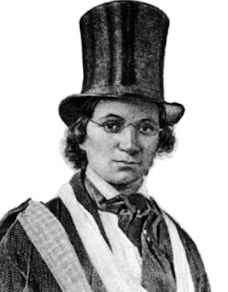
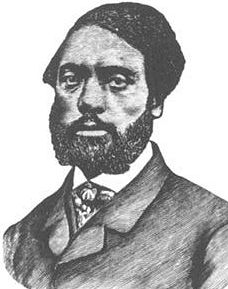
The Crafts’ journey to freedom is a testament to the extraordinary ingenuity and courage of those who dared to defy their chains. It remains an inspiring chapter in the quest for human dignity and justice.
In a moment of fervent prayer, Ellen and William Craft took a daring leap towards liberty. Their journey to freedom was marked by stays in some of the finest hotels, yet each step was fraught with close calls and tense moments that could have led to their capture. Reflecting on their experience in their 1860 book, “Running a Thousand Miles for Freedom,” they credited their courage, quick thinking, a bit of luck, and the guidance of “our Heavenly Father” for their safe passage.
Upon reaching Philadelphia, Ellen and William were warmly embraced by the abolitionist network, receiving the support and shelter they needed. In 1850, they made their way to England. After two decades, they returned to the United States to establish a school in Georgia for newly freed African Americans, contributing to the education and empowerment of their community.
The atrocity of enslaving others is a profound human failing, mirrored by the equally debilitating spiritual slavery to sin. Many remain unaware of this bondage, a universal condition stemming from humanity’s fallen nature. Yet, there is hope and liberation through Jesus Christ, who came to free us from the shackles of sin, enabling us to serve the living God.
The scriptures affirm, “You will know the truth, and the truth will set you free” (John 8:32) and, “So if the Son sets you free, you are truly free” (John 8:36). These words remind us of the profound freedom found in truth and faith.
REFLECT & PRAY
When we are liberated in Christ, sin no longer holds sway over our lives.
Father, we are grateful for sending Your Son, Jesus Christ, who declared the Truth so clearly, enabling Your children to break free from the shackles of sin and serve You wholeheartedly.
INSIGHT
Many who do not believe in the Lord Jesus Christ are under the illusion that they are genuinely free. To them, embracing Christ seems like surrendering to bondage and losing autonomy. But is this perceived freedom genuine? The Scriptures unequivocally reveal the reality that nothing could be further from the truth. Sin is depicted as a master that enslaves those who submit to it. Embracing Christ does not impose captivity; instead, it offers real freedom from the oppressive rule of sin.
Romans 6:16 teaches us a profound truth: the one you choose to obey becomes your master. When individuals give in to sin, they become slaves, with sin taking the role of their master. However, when people place their faith in Jesus Christ, they are liberated from the bondage of sin and become servants of Christ, as noted by Wiersbe. This transformative shift signifies an exchange of masters, where “servitude to sin is replaced with servitude to God,” as explained by Mounce.
The inherent fallen state of humanity means being born spiritually dead in sin, a seemingly paradoxical notion. Yet, this was the reality for all believers before encountering the redemptive power of faith. Through Christ, the shackles of sin are broken, and believers are brought from spiritual death to life, now serving a new and righteous master.
Ephesians 2:1 Once you were dead in the trespasses and sins
Being dead in our trespasses and sins is akin to living as slaves to sin—a genuinely dismal existence. Yet, the Lord Jesus Christ came to liberate us from this bondage, offering us the chance to escape sin’s enslavement once and for all (2 Peter 2:20).
Galatians 5:1 reminds us that Christ has truly set us free.
In this newfound freedom, the Father extends a radically different way of living to every child of the King. Instead of being bound to sin, we are invited to choose a life of righteousness. As Paul explains, there are only two masters: one is sin, and the other is obedience [to God]. There is no possibility of living without an allegiance to one or the other” (Mounce). Nicoll echoes this sentiment by stating that true independence for humanity is unattainable; our very nature compels us to serve a master. Thus, we are encouraged to serve righteousness, embracing the freedom and purpose offered through a life dedicated to God.
Many who do not share the Christian faith mistakenly believe they are truly free in their current state. They fear that accepting Jesus Christ as their Lord and Savior would cost them their freedom. However, this perception is flawed. In reality, they are not free but are bound by sin. By embracing faith and becoming children of the King, they do not lose freedom; instead, they undergo a profound transformation. They exchange the oppressive master of sin for the liberating service of the Father, finding true freedom and purpose in a life devoted to God.
Romans 6:14-17
14 Sin is no longer your master, for you no longer live under the requirements of the law. Instead, you live under the freedom of God’s grace.
16 Don’t you realize that you become the slave of whatever you choose to obey? You can be a slave to sin, which leads to death, or you can choose to obey God, which leads to righteous living.
17 Thank God! Once, you were slaves of sin, but now you wholeheartedly obey this teaching we have given you.
The Romans grasped the transformative idea of being liberated from the chains of sin. By embracing this profound truth, they transitioned into becoming slaves to righteousness. This freedom from sin does not suggest that they were void of a sinful nature or that they ceased committing sinful acts. Instead, it signifies liberation from sin’s overpowering control over their lives, allowing them to live with a newfound purpose and alignment with righteousness, as MacDonald indicates.
¯\_(ツ)_/¯4-21-3
© Dr. H 2024
 Dr H Reflections