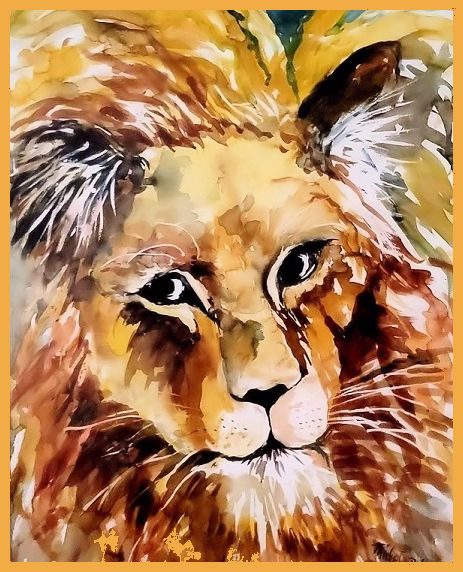
The healing power of life ∙
Jesus realized at once that healing power had gone out from him, so he turned around in the crowd and asked, “Who touched my robe?” – Mark 5:30
Mark 5:25-34
25 A woman in the crowd had suffered for twelve years with constant bleeding.
26 She had suffered a great deal from many doctors, and over the years, she had spent everything she had to pay them, but she had gotten no better. In fact, she had gotten worse.
27 She had heard about Jesus, so she came up behind him through the crowd and touched his robe.
28 For she thought to herself, “If I can just touch his robe, I will be healed.”
29 Immediately, the bleeding stopped, and she could feel that she had been healed of her terrible condition.
30 Jesus realized at once that healing power had gone out from him . . ..
32 But he kept on looking around to see who had done it.
33 Then the frightened woman, trembling at realizing what had happened to her, came and fell to her knees before him and told him what she had done.
34 And he said to her, “Daughter, your faith has made you well. Go in peace. Your suffering is over.”
The modern electric battery works by converting chemical energy into electrical energy. These devices supply power for countless applications, energizing products such as flashlights, smartphones, and electric vehicles. A battery consists of one or more cells, where chemical reactions generate the flow of electrons within a circuit. Every battery contains three fundamental elements: an anode (the “-” terminal), a cathode (the “+” terminal), and an electrolyte, a substance that reacts chemically with the anode and cathode to create a current.
The term “battery” was first introduced in 1748 by Benjamin Franklin, who used it to describe a grouping of charged glass plates. The invention of the first actual modern battery, however, came in 1800, when Italian physicist Alessandro Volta developed the voltaic pile. Later advancements included Carl Gassner’s creation of the zinc-carbon dry cell in 1881, the first battery of its kind to achieve commercial success. By 1901, Thomas Edison had made his mark with the invention of the alkaline storage battery.
Turning from physical science to spiritual realities, the Lord Jesus Christ is both perfect humanity and undiminished deity. He has all of the characteristics of deity. Using his power and authority, He created and sustains all that was made. Life itself resides within the Lord Jesus Christ.
As stated in John 1:3-4, “Through Him, all things were made; without Him, not one thing came into being that exists. In Him was life, and that life was the light of humanity.”
The Gospels give us a glimpse of His divine power through the miraculous acts He performed—healings, wonders, and signs that often required no more than a spoken command, a prayer, or a simple touch. But where did this power come from? It emanated from His divine nature, underscoring His role as both Creator and Sustainer, whose very essence is life and light.
The Lord Jesus Christ could be compared to a life-giving battery—but not one that simply holds electrical energy. Instead, He carried within Himself the very essence of life, a divine force through which all creation was brought into being. A glimpse of this incredible power is seen in the account of a woman who suffered from a chronic condition of bleeding. When her hand touched His garment, His life force flowed into her, and she was instantly healed, a powerful testament to the transformative power of His healing.
The woman remains unnamed because the story highlights not her identity but her unwavering faith. Imagine her anguish—a woman enduring years of pain from an illness deemed untreatable. She had spent all she had on treatments, only to see her condition worsen. Her life was marked by disappointment, suffering, and the heavy weight of hopelessness. What a horrific burden she carried.
But then came a glimmer of hope. After hearing about the miracles of Jesus, her desperation turned into determination. She recalled the stories of others who had experienced His healing touch (Mark 5:27). She sought Him out, thinking to herself, “If I just touch his garments, I will get well.” Pushing through the crowd surrounding Him, she approached and reached out and touched His garment. The moment she made contact, her bleeding stopped, and her body was restored to health.
This story captures not only the creative, restorative, life force of the Lord Jesus Christ but also the profound impact of faith. The woman’s unwavering belief in His ability to heal drew her to Him and allowed her to experience the miracle she so desperately needed, serving as a powerful encouragement to all believers.
REFLECT & PRAY
The healing that comes from the Father is purposeful and often selective. The miracles performed by the Lord Jesus Christ were powerful affirmations of His identity as the Messiah of Israel. However, the event described in Mark 5:25-34 stands out as unique. Here, it was the woman’s wholehearted faith that became the catalyst for her miraculous healing and restoration.
Father, You are the Eternal and Living God, the very source of life itself. Life dwells within You and emanates from You. Father, I believe, help my unbelief.
INSIGHT
Under the Law of Moses, a woman in her condition was considered ceremonially unclean (Leviticus 15:25-28). This meant that anyone who came into physical contact with her would also become unclean. Because of this, she was only allowed in public if she took measures to ensure others were aware of her unclean status. By touching the garment of the Lord Jesus Christ, she technically violated the purity laws, rendering Him ceremonially unclean as outlined in Leviticus 15:19-23.
But the Lord Jesus Christ is the Lord of the Sabbath and all of the other laws of Moses. His authority surpasses all ceremonial regulations, as He declared in Luke 6:5, “The Son of Man is Lord of the Sabbath.” His dominion extends far beyond any purity laws; He embodies a higher principle that centers on restoring life, healing, and doing good.
This truth is illustrated in Luke 6, where Jesus is confronted by the scribes and Pharisees, who sought to accuse Him of healing on the Sabbath. This act demonstrated that the authority of the Lord Jesus Christ was greater than the traditions of men. His mission was one of bringing life where there was none.
Luke 6:7-11
7 The scribes and the Pharisees were watching Him closely to see if He healed on the Sabbath so that they might find reason to accuse Him.
8 But He knew what they were thinking, and He said to the man with the withered hand, “Get up and come forward!” And he got up and came forward.
9 And Jesus said to them, “I ask you, is it lawful to do good or to do harm on the Sabbath, to save a life or to destroy it?”
10 After looking around at them all, He said to him, “Stretch out your hand!” And he did so; and his hand was restored.
11 But they themselves were filled with rage and discussed together what they might do to Jesus.
Rather than being defiled by the touch of the unclean, Jesus reversed the dynamic. His power, the essence of life, burst out and flowed into the woman, cleansing her and restoring her completely. This exchange exemplified His divine power and authority to conquer impurity with His holiness.
The Lord Jesus was well aware of the power pulsating within Him and would discharge it as needed. He noticed this transfer of power even though it occurred without His conscious intention.
The Lord Jesus Christ sought out the woman who had shown such remarkable faith. He wanted her to stand before Him, to meet His gaze, to experience His compassionate heart, and to hear His words of reassurance. When He spoke to her, the encounter went far beyond physical healing. He addressed her tenderly as “daughter,” sending her off with a blessing of peace (Mark 5:34). Being “made whole” was about more than her body being restored; Jesus also brought healing to her spirit, offering her complete restoration—spiritual as well as physical (Wiersbe).
The woman approached Him, trembling with a mix of awe and reverence. The Greek word translated as fear or fearing, phobeomai captures this emotional response, “signifying both fear and deep respect.” Overwhelmed, she stepped forward and fell at His feet, confessing everything that had taken place. Through her actions, she demonstrated not only her immense faith but also her heartfelt gratitude.
Lord Jesus Christ then said to her, “Daughter, your faith has made you well; go in peace, and be healed of your disease” (Mark 5:34). His words affirmed the beautiful truth—faith not only unlocks healing but also draws us closer to the eternal source of life itself. When Jesus heals, He imparts more than just health; He shares His abundant life from within. Though each act of healing required Him to give of Himself, His wellspring of life remains inexhaustible.
This story holds an important lesson. To create something meaningful and extraordinary, we, too, must devote a part of ourselves—our energy, devotion, and even our soul: personal sacrifice and a willingness to be all are required (Barclay).
¯_(ツ)_/¯1-07-1
© Dr. H 2024
 Dr H Reflections