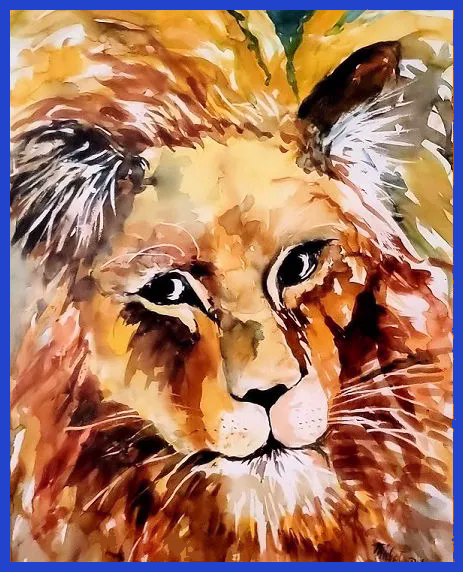
Teddy bear or Grizzly bear ∙
Those who are dominated by the sinful nature think about sinful things, but those who the Holy Spirit controls think about things that please the Spirit. For the sinful nature is always hostile to God. It never did obey God’s laws, and it never will. – Romans 8:5,7
Romans 6:12-19
12 Do not let sin control the way you live; do not give in to sinful desires.
16 Don’t you realize that you become the slave of whatever you choose to obey? You can be a slave to sin, which leads to death, or you can choose to obey God, which leads to righteous living.
18 Now you are free from your slavery to sin, and you have become slaves to righteous living.
19 Because of the weakness of your human nature, I am using the illustration of slavery to help you understand all this.
The story of the Teddy Bear begins with an unexpected act of kindness from none other than President Theodore Roosevelt. On November 14, 1902, Roosevelt embarked on a hunting trip in the wilderness of Mississippi. Despite hours of diligent tracking, Roosevelt and his hunting party had no success in their pursuit of wild game.
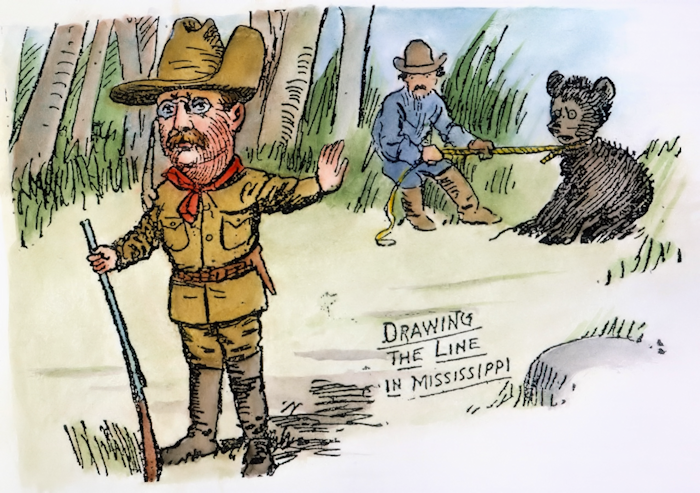
Then, one of Roosevelt’s assistants, Holt Collier, located a 235-pound black bear. To ensure a successful hunt, Collier captured the bear alive and tied it to a willow tree, intending for Roosevelt to shoot it. However, when the president arrived and saw the restrained bear, he was appalled. Roosevelt considered the act entirely unsportsmanlike and refused to take the shot. This single moment of compassion became national news as reporters shared the story of the president’s ethical stance far and wide.
Clifford Berryman, a political cartoonist, was particularly inspired by the story. He created a cartoon illustrating President Roosevelt refusing to shoot the poor bear, and it quickly garnered widespread attention.
Among those moved by this simple yet poignant image was Morris Michtom, a Brooklyn candy shop owner Michtom and his wife’s shop was not only a place of sweet confections but also one where they made and sold stuffed animals. Seeing an opportunity, Michtom created three stuffed toy bears inspired by Berryman’s cartoon. Displaying two of them in his shop window, he sent the third to Roosevelt himself, seeking permission to name his new creation “Teddy’s Bear.” Much to the delight of Michtom, Roosevelt agreed. Thus, the “Teddy Bear” was born — a soft, comforting figure that would become a beloved cultural icon, symbolizing kindness, warmth, and compassion.
Over time, the Teddy Bear transcended its origins to represent comfort and innocence, becoming a cherished toy for children and a nostalgic keepsake for adults. Its creation not only reflects Roosevelt’s integrity but also speaks to the profound ways small acts of kindness can leave an enduring legacy.
Interestingly, each person is born with a tad bit of Teddy Bear and a tad bit of Grizzly Bear. These “bears” serve as metaphors for our personalities and choices. The Teddy Bear represents tenderness, kindness, and the capacity to offer comfort and love. It is the part of us that is nurturing and willing to extend compassion not only to others but also to ourselves.
On the other hand, the Grizzly Bear reflects the primal, raw, and often destructive side of human nature. It embodies traits like aggression, selfishness, and unchecked emotion. Grizzly Bears, though strong and resilient, can be dangerous if left uncontrolled, symbolizing the potential for human impulses to dominate our better judgment.
Of course, some people might lean more heavily toward one bear than the other, but both reside within us. The question is, which bear will we allow to lead our lives?
This inner tension between the Teddy Bear and the Grizzly Bear mirrors a more profound spiritual truth. Paul addresses this duality when he speaks of the transformation that occurs when we become children of the King. Ephesians 2:5 says, “He made us alive with Christ even when we were dead in transgressions — it is by grace you have been saved.” When the Father awakens a new spiritual life within us, we encounter a profound shift.
However, this awakening sets up an inward battle — a conflict between two natures. On the one hand, there is the “old self,” often synonymous with the Grizzly Bear, representing our sinful nature and the desires of the flesh. This nature embodies selfishness, pride, and rebellion against God’s will. On the other hand, the “new self,” akin to the Teddy Bear, reflects our spiritual awakening — a life transformed by grace and guided by the pursuit of righteousness.
This internal struggle can feel like a form of spiritual schizophrenia. It’s as though the Incredible Hulk lurks beneath our composed exterior, ready to burst out and take control whenever old temptations or emotions are stirred. Even Paul acknowledged this wrestling in Romans 7, lamenting how the things he wanted to do, he failed to do, and the things he did not want to do, he found himself doing.
Much like the choice between living as a Teddy Bear or a Grizzly Bear, the spiritual battle is one of intentionality. Which nature will you nurture? Will you yield to the old self, driven by selfish instincts, or will you lean into your new life in Christ, allowing the rejuvenating Spirit of God to guide and shape you?
Living as a “Teddy Bear” does not mean forsaking strength but channeling it through kindness, integrity, and grace. It means choosing patience over anger, compassion over judgment, and reconciliation over division. When we live according to our new nature, empowered by the Spirit, we reflect the image of God Himself — a Father who, steadfast in His loyal love, extends mercy and forgiveness to children of the King.
Roosevelt’s moment of compassion reminded the world that even in positions of power, it is not weakness to show kindness. Similarly, we are given daily opportunities to choose which “bear” to embody. By intentionally drawing nearer to the Father and allowing His Spirit to work within us, we can overcome the impulses of the Grizzly Bear and live as Teddy Bears, offering comfort, light, and goodness to the world around us.
REFLECT & PRAY
Romans 7:25 Thank God! The answer is in Jesus Christ our Lord. So you see how it is: In my mind, I really want to obey God’s law, but because of my sinful nature, I am a slave to sin.
Father, I long to be a Teddy Bear rather than a Grizzly Bear. Continue the work of taming me that I might be meek and have my “Power Under Control.”
INSIGHT
In the kingdom of God, children of the King can choose to live as Teddy Bears rather than Grizzly Bears. Following the Fall, the human race was contaminated by sin. We are born with a sinful nature, the Grizzly Bear. It seeks to control us and often does. However, when we are born again (John 3:3), the Father imparts a new spiritual nature, the Teddy Bear. These two bears (natures) are constantly at war within us, each striving for dominance. Paul explains:
Romans 7:14-23
14 The trouble is with me, for I am all too human, a slave to sin.
15 I don’t really understand myself, for I want to do what is right, but I don’t do it. Instead, I do what I hate.
19 I want to do what is good, but I don’t. I don’t want to do what is wrong, but I do it anyway.
23 But there is another power within me that is at war with my mind. This power makes me a slave to the sin that is still within me.
Paul encourages the children of the King to live according to the Spirit and resist the flesh. Romans 6:12: “Do not let sin control the way you live; do not give in to sinful desires.”
How can we do that? The Father provides abundant examples in the natural world. Bears, for instance, are known for their strength and power. Mama bears are highly protective and caring, displaying ferocity when guarding their young. At the same time, these bears can be gentle and loving when nurturing their cubs. They control their immense strength and power. The Scriptures describe this quality as meekness.
Matthew 5:5 Blessed are the meek, for they shall inherit the earth.
What is meekness? “Meekness is not weakness; meekness is Power Under Control. This word was used to describe a soothing wind, a healing medicine, and a colt that had been broken. In each instance, there is power . . .. But this power is under control” (Wiersbe).
The Greek word often translated as meek is praus. Praus can be summarized in one simple phrase: “Power Under Control.” When referring to animals, an appropriate translation of praus would be “tame.” The word “connotes a unique blend of strength and poise.” Meekness involves “gentle friendliness and consideration, accommodating others’ weaknesses” (Friberg).
When wild animals are tamed, their power is not taken away, but their destructive, independent instincts are restrained. They accept the direction of another and no longer respond with “fight or flight.” Tame animals lose their fear of people.
If a mama Grizzly Bear can demonstrate meekness by controlling her power, so can the children of the King.
This struggle between the two natures — the Teddy Bear and the Grizzly Bear — is ongoing. However, we have the ability to choose which bear we allow to take control.
Paul writes, “The sinful nature wants to do evil, which is just the opposite of what the Spirit wants. And the Spirit gives us desires that are the opposite of what the sinful nature desires. These two forces are constantly fighting each other, so you are not free to carry out your good intentions” (Galatians 5:17).
All the children of the King grapple with this inner battle. The struggle can be intense and continuous, yet the Father provides the strength for any child of the King to endure and control our Grizzly Bear natures. We are reminded not to judge or condemn one another for these battles. Ultimately, each child of the King stands or falls before the Father Himself.
Paul explains, “Who are you to condemn someone else’s servants? Their own master will judge whether they stand or fall. And with the Lord’s help, they will stand and receive his approval” (Romans 14:4).
Which bear wins?
The one you feed!
¯_(ツ)_/¯4-10-2
© Dr. H 2025


I love the history behind the stuffed teddy! And yes, truth of the inner tension between our Teddy and Grizzly. May we all act with compassion and integrity like President Roosevelt, and more importantly, like Jesus!
LikeLike