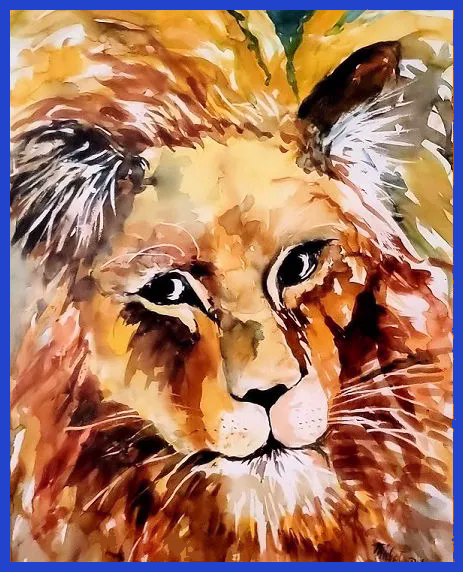
Dealing with predators
David said, “The LORD who delivered me from the paw of the lion and from the paw of the bear, He will deliver me from the hand of this Philistine.” And Saul said to David, “Go, and may the LORD be with you.” – 1 Samuel 17:37
1 Samuel 17:32-47
32 “Don’t worry about this Philistine,” David told Saul. “I’ll go fight him!”
33 “Don’t be ridiculous!” Saul replied. “There’s no way you can fight this Philistine and possibly win! You’re only a boy, and he’s been a man of war since his youth.”
34 But David persisted. “I have been taking care of my father’s sheep and goats,” he said. “When a lion or a bear comes to steal a lamb from the flock,
35 I go after it with a club and rescue the lamb from its mouth. If the animal turns on me, I catch it by the jaw and club it to death.
36 I have done this to both lions and bears, and I’ll do it to this pagan Philistine, too, for he has defied the armies of the living God!
37 The LORD who rescued me from the claws of the lion and the bear will rescue me from this Philistine!” Saul finally consented. “All right, go ahead,” he said. “And may the LORD be with you!”
45 David replied to the Philistine, “You come to me with sword, spear, and javelin, but I come to you in the name of the LORD of Heaven’s Armies– the God of the armies of Israel, whom you have defied.
46 Today the LORD will conquer you, and I will kill you and cut off your head. And then I will give the dead bodies of your men to the birds and wild animals, and the whole world will know that there is a God in Israel!
47 And everyone assembled here will know that the LORD rescues his people, but not with sword and spear. The battle is the Lord’s, and he will give you to us!”
There are countless predators in the world. One of the fiercest is the Harpy Eagle.
The term “Harpy” originates from the Greek word harpyia, conjuring images of the harpies from ancient Greek mythology. These mythical creatures were wind spirits tasked with transporting the dead to Hades or Tartarus. They were depicted with the lower body of an eagle and the head of a woman standing up to six feet tall. This striking imagery inspired the naming of the Harpy Eagle, a bird of prey that boasts a giant wingspan and a unique, almost goblin-like appearance with wings.
The harpy eagle is one of the largest and most powerful eagles in the world, native to the tropical rainforests of Central and South America. Unlike your average bird of prey, the harpy eagle is a feathered apex predator. Its impressive talons, comparable in size to bear claws, are among the largest of any raptor. With a wingspan exceeding seven feet, it primarily feeds on sloths and monkeys, snatching them right out of the trees like a terrifying, silent flying Dragon.
This eagle boasts a striking appearance, featuring a distinctive double crest of feathers on its head and a face resembling a scowling gargoyle. Its plumage is mainly dark gray, with a white belly and black-and-white striped legs. What’s most unsettling is its piercing gaze, which seems to size you up as though you could be its next meal.
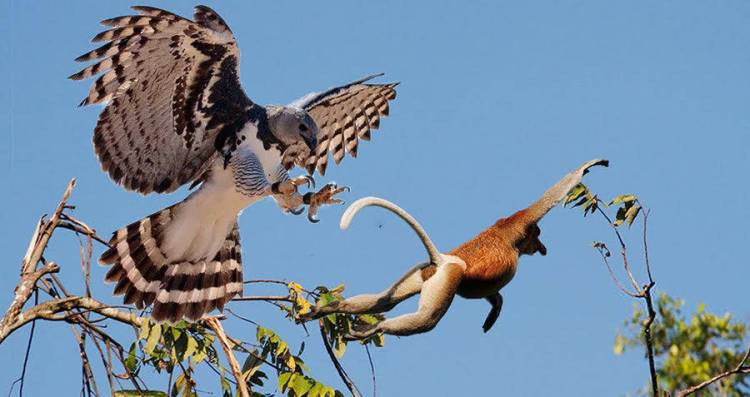
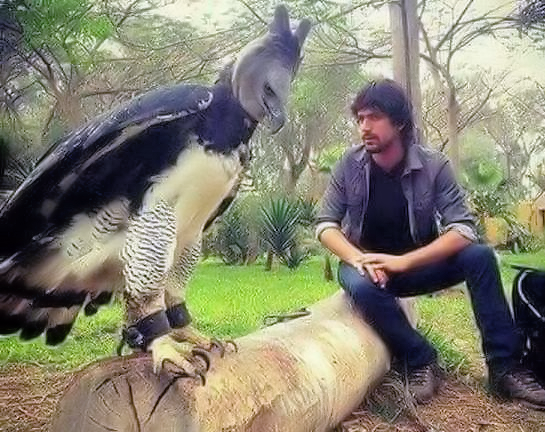
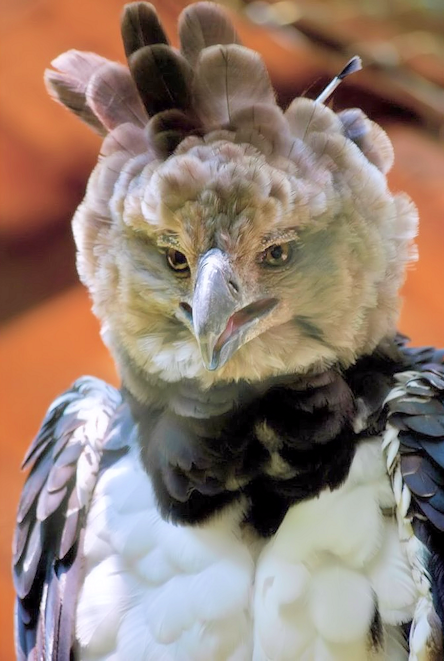
Flying predators, like eagles and hawks, are key hunters that help maintain ecosystem balance by controlling populations of small mammals, rodents, and insects. Their presence indicates a healthy, biodiverse environment.
REFLECT & PRAY
Matthew 28:20 I am with you always, even to the end of the age.”
Father, thank You for warning me of the clear and present dangers I face in the fallen world under the domination of the god of this world. Thank You for overcoming the world.
INSIGHT
Rather than being our enemies, birds of prey are vital allies in promoting ecological balance. While they may occasionally challenge livestock or pets, our aim should be living in harmony, benefiting both humans and wildlife. Not so that our non-corporeal enemies and their human cohorts who are out to devour us.
The Bible is rich with imagery, using animals to convey profound spiritual truths. Among these, predators—both literal and metaphorical—are recurring symbols of danger, destruction, and opposition. From lions and wolves to serpents, these figures provide children of the King with powerful lessons about staying spiritually vigilant and relying on God’s protection. By studying the examples of predators in scripture, we can learn to recognize threats, overcome fear, and stand firm in faith.
Lions are mentioned frequently in the Bible, often representing power, ferocity, and danger. One of the most well-known references is in 1 Peter 5:8, which warns, “Stay alert! Watch out for your great enemy, the devil. He prowls around like a roaring lion, looking for someone to devour.”
Here, the lion represents the devil—aggressive, persistent, and always on the hunt to lead the children of the King astray. Be alert to spiritual attacks, but never forget that Christ, the Lion of Judah, has already defeated evil. Trust in His victory and stand courageous in the face of danger.
Wolves are another common biblical predator, often used to describe false prophets and false teachers who seek to harm the Father’s people. The Lord Jesus Christ warned His followers in Matthew 7:15, “Beware of false prophets who come disguised as harmless sheep but are really vicious wolves.”
Not all threats are obvious. Wolves disguised as sheep typify deception, making it clear that the children of the King must stay discerning and grounded in God’s Word and steeped in sound doctrine to avoid falling victim to lies.
Pray for discernment and test all teachings against the sound doctrine of Scripture. False prophets may appear harmless but can lead entire flocks away from the truth of the word of God.
The serpent is perhaps one of the most infamous predators in the Bible, appearing as the tempter in the Garden of Eden. The serpent’s characteristics—craftiness and deceit—serve as a warning of how subtle and cunning temptation can be. Temptation often appears attractive and reasonable, but it can spiral into sin and separation from God. Stay rooted in God’s Word to resist the serpent’s whispers. If it’s too good to be true, it probably isn’t true.
Hosea 13:7-8 compares God’s judgment on rebellious Israel to a lion, leopard, and bear tearing apart their prey. These terrifying metaphors remind us that straying from God’s ways carries severe consequences.
Psalm 91 offers immense comfort to those who seek shelter in the Lord. It promises, “You will tread on the lion and the cobra; you will trample the great lion and the serpent” (Psalm 91:13). This imagery reveals the power God grants His faithful followers to overcome even the most fearsome predators.
Predators often strike when their prey is unaware. Similarly, spiritual attacks can come suddenly and unexpectedly. Jesus tells His disciples to “watch and pray,” emphasizing the importance of vigilance (Matthew 26:41). Stay spiritually awake by maintaining a deep connection with God through prayer, worship, and consistent study of His Word.
Like wolves among sheep, harmful influences can creep into your life disguised as harmless companions or ideas. The apostle Paul warns us in Acts 20:29, “I know that false teachers, like vicious wolves, will come in among you after I leave, not sparing the flock.”
Jesus reminds us to examine the “fruit” of others (Matthew 7:16). Surround yourself with godly people who encourage your walk with Christ rather than pull you away.
The Bible reassures us over and over that the Father is our ultimate protector. Psalms 23 portrays Him as the Good Shepherd who defends His flock from predators, stating, “Even though I walk through the darkest valley, I will fear no evil, for you are with me” (Psalms 23:4).
We are to trust in God and depend on His strength to shield us from harm and lead us to safe pastures.
Predators in the Bible illustrate life’s challenges, spiritual enemies, and the need for a deep reliance on God and the sound doctrine of Scripture. Whether it’s a roaring lion, a crafty serpent, the lurking wolf, or the silent raptor, these threats encourage the children of the King to stay alert, walk faithfully with the Lord, and trust in His mighty protection.
Be vigilant, do not fear.
¯_(ツ)_/¯5-15-2
© Dr. H 2025
 Dr H Reflections