
Adversity – a catalyst for greatness
Every child of God defeats this evil world, and we achieve this victory through our faith. 1 John 5:4
1 John 2:12-17
12 I am writing to you, who are God’s children, because your sins have been forgiven through Jesus.
13 I am writing to you who are mature in the faith because you know Christ, who existed from the beginning. I am writing to you who are young in the faith because you have won your battle with the evil one.
14 I have written to you who are God’s children because you know the Father. I have written to you who are mature in the faith because you know Christ . . .. I have written to you who are young in the faith because you are strong. God’s word lives in your hearts, and you have won your battle with the evil one.
15 Do not love this world nor the things it offers you, for when you love the world, you do not have the love of the Father in you.
16 For the world offers only a craving for physical pleasure, a craving for everything we see, and pride in our achievements and possessions. These are not from the Father but are from this world.
17 And this world is fading away, along with everything that people crave. But anyone who does what pleases God will live forever.
Igor Stravinsky: A Revolutionary Force in Music
Igor Stravinsky, a Russian-born Jewish composer, transformed the landscape of 20th-century music. His groundbreaking works, such as “The Firebird” (1910) and “The Rite of Spring” (1913), redefined classical music and challenged traditional sensibilities. In fact, the premiere of The Rite of Spring was so radical that it caused a riot, solidifying Stravinsky’s reputation as a revolutionary force in music.
Stravinsky brought innovations to classical music, featuring constantly changing rhythms, metric imbalances, and highly dissonant harmonies. These elements introduced something entirely new, helping to foster the development of modernism in the genre.
A Life of Resilience
Stravinsky’s life was marked by displacement and adversity brought on by tumultuous historical events. In 1920, following the upheaval of the Russian Revolution in 1917 and the subsequent establishment of the Soviet regime, he immigrated from Russia to Paris.
However, his journey of escape from violence and persecution did not end there. In 1939, as the clouds of war loomed ominously over Europe and the threat of the Nazi juggernaut, Stravinsky sought refuge once more, this time fleeing Paris for the safety of the United States.
Despite these challenges, Stravinsky’s resilience and innovation left an indelible mark on the world of classical music.
Stephanie Dabney: A Trailblazing Firebird
Stephanie Dabney’s extraordinary talent transcended boundaries, making her a trailblazer in the world of ballet. As a principal ballerina for the Dance Theater of Harlem (DTH), she captivated audiences and critics alike, particularly with her iconic portrayal of “The Firebird.” Dabney became the first Black ballerina to dance the title role in Stravinsky’s ballet, breaking barriers and redefining what was possible in the world of dance.
Dabney’s portrayal of “The Firebird,” a mythical red bird who protects a prince from evil, vaulted her to fame. Her performance was described as “The most incandescent Firebird imaginable” by a New York Times critic. Raisa Gorbachev, wife of Mikhail Gorbachev, remarked, “She was wonderful, as if created for this role.”
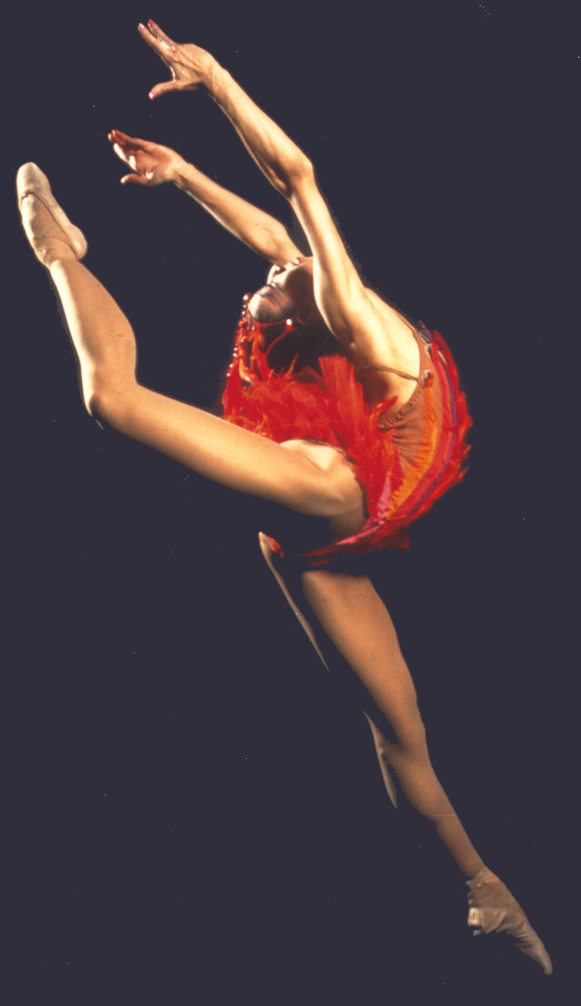
By Martha Swope Courtesy-DTH
Dabney herself said of the role: “This is a role where you get to really dance and be the music. It pushes you and fills your insides, and it makes your emotions come out.”
Dabney’s journey was not without challenges. She began dancing at age 4, and at just 16, she joined the Dance Theater of Harlem in 1975, where she rose to prominence. Stephanie Dabney overcame significant prejudice and bias throughout her career as a Black woman in the predominantly white world of classical ballet. In 1984, she performed “The Firebird” during the opening ceremonies of the Summer Olympics in Los Angeles. She redefined what was possible for dancers of color.
A Shared Legacy of Resilience
Both Stravinsky and Dabney faced intense discrimination and prejudice in their respective fields. Yet, they overcame these challenges to create innovative music and deliver superlative performances that continue to inspire generations.
Their stories remind us that adversity can be a catalyst for greatness. As Stravinsky revolutionized music, Dabney redefined ballet, proving that resilience and creativity can triumph over bias and inequity.
REFLECT & PRAY
Belief and trust in the Father are not so much taught as they are caught. Let us draw inspiration from the resilience of those who came before us and trust in God’s strength to overcome.
Father, life is filled with bias, opposition, and adversity. Strengthen me to be an overcomer. Let my inner redbird soar like an eagle, rising above challenges with grace and courage.
INSIGHT
The Peace of Christ
The Lord Jesus Christ offers us a gift beyond understanding, a unique, divine peace. He promises in John 14:27, “Peace I leave with you; My peace I give to you; not as the world gives do I give to you. Do not let your heart be troubled, nor let it be fearful.”
The peace that Lord Jesus Christ offers is beyond the world’s grasp. While the world often defines peace as simply the absence of conflict or hostility, Christ’s peace transcends this superficial definition.
The Meaning of Shalom
The peace offered by the Lord Jesus Christ is unique and significantly different from what we typically find in the world. In the Old Testament, the Hebrew word for “peace” is shalom. Its essence encompasses much more than just the lack of war. Shalom implies a “sense of completeness, fulfillment, well-being, ease, stability, success, wholeness, and even prosperity.”
The essence of shalom is at once lofty and profound. It embraces the highest good for humanity, a state of harmony and flourishing that only God can provide. The Father awakens a transcendent, otherworldly, delightful peace within us.
The Peace of God
The Apostle Paul asserts that the peace and tranquility provided by the Father can be enjoyed but never fully understood. Philippians 4:7, “And the peace of God, which surpasses all understanding, will guard your hearts and minds in Christ Jesus.”
This remarkable peace is rooted in the very heart of the Father. As we draw closer to Him, He brings this peace to life within our hearts. As Charles Stanley notes, this peace is not dependent on our circumstances; instead, it flows directly from our relationship with Christ.
Facing Trials with Courage and Faith
The peace of Christ does not eliminate trials but equips us to face them with courage and faith. Jesus promised in John 16:33, “I have told you all this so that you may have peace in me. Here on earth, you will have many trials and sorrows. But take heart, because I have overcome the world.”
As children of the King, we are called to endure the “fiery trials” of this present age with joy and perseverance. The Apostle Peter explained, 1 Peter 4:12-13, “Dear friends, don’t be surprised at the fiery trials you are going through, as if something strange were happening to you. Instead, be very glad, for these trials make you partners with Christ in His suffering, so that you will have the wonderful joy of seeing His glory when it is revealed to all the world.”
Why Trials?
They are not random occurrences; instead, they serve as tools for growth, helping to shape our character and deepen our trust in God. In essence, the challenges we encounter are intended to enrich our lives, fostering strength and faith along the way.
- Strengthening Our Faith: Trials are a way to test and strengthen our faith. According to James 1:2-3, they help us see how genuine our faith really is. Instead of leading to failure, these challenges refine and prove our beliefs.
- Building Endurance: As James 1:3 states, “The testing of your faith produces endurance.” This endurance helps us stay faithful and strong even when we face difficulties.
- Encouraging Spiritual Growth: Trials help us grow spiritually by shaping us to reflect Christ more closely and preparing us for a greater purpose in Him.
Trials “test” our faith to demonstrate that it is genuine. Biblical trials are not intended to cause us to fail, but rather to approve us. The Greek word translated as “testing” is dokimion. Dokimion, as used here, means “to evaluate the genuineness and strength of our faith” (cf. 1 Peter 1:7). Trials prove that our faith is genuine and effective. Challenges build endurance, helping us navigate through even the toughest circumstances.
A Biblical Call to Overcome
John 16:33, “In the world, you have tribulation, but take courage; I have overcome the world.”
As children of the King, we are called to overcome challenges. Like Stravinsky and Dabney, who found strength in adversity, we too can rely on our faith to navigate life’s trials. Their stories remind us that greatness often comes from struggle, inspiring us to embrace resilience and creativity. Hebrews 10:36 reminds us, “Patient endurance is what you need now.” Trials may seem daunting, but they serve a purpose, refining our faith just as gold is refined by fire.
Instead of viewing hardships as setbacks, we should see them as opportunities for growth. While we don’t need to enjoy suffering, however, we can find joy in knowing that the Father is using our struggles for good.
¯\_(ツ)_/¯11-19-2
© Dr. H 2025
 Dr H Reflections