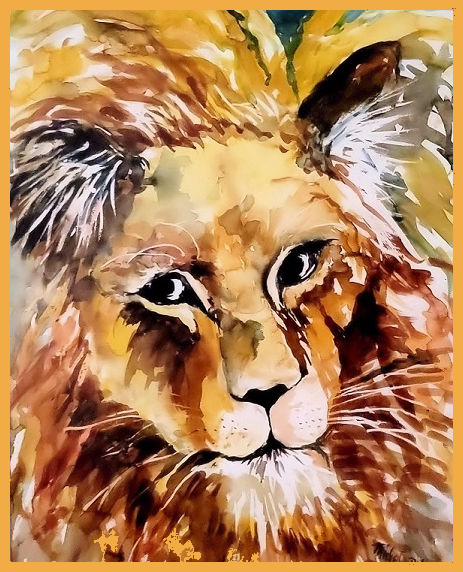
Facial Recognition ∙∙
Jacob named the place Peniel (which means “face of God”), for he said, “I have seen God face to face, yet my life has been spared.” – Genesis 32:30
Genesis 32:24-31
25 When the man saw that he would not win the match, he touched Jacob’s hip and wrenched it out of its socket.
26 Then the man said, “Let me go, for the dawn is breaking!” But Jacob said, “I will not let you go unless you bless me.”
27 “What is your name?” the man asked. He replied, “Jacob.”
28 “Your name will no longer be Jacob,” the man told him. “From now on you will be called Israel because you have fought with God and with men and have won.”
29 “Please tell me your name,” Jacob said. “Why do you want to know my name?” the man replied. Then he blessed Jacob there.
30 Jacob named the place Peniel (which means “face of God”), for he said, “I have seen God face to face, yet my life has been spared.”
31 The sun was rising as Jacob left Peniel, and he was limping because of the injury to his hip.
The Rise of Facial Recognition Technology
Facial recognition software is rapidly changing the concept of privacy in public spaces. As Kashmir Hill noted in The New York Times, this technology “could herald the end of public anonymity.” A prime example of this is Clearview AI, an app that searches the internet for facial images. It collects photos from platforms like Facebook, YouTube, and X, amassing a database of over 30 billion images by 2023. Using its advanced algorithm, Clearview matches faces captured by surveillance cameras, now nearly ubiquitous in major cities, to its extensive database. This technology can identify faces from any angle, making it a powerful tool for identification.
Clearview AI licenses its software to thousands of law enforcement agencies, including the FBI and DHS, as well as private organizations. While its capabilities are impressive, they also raise significant concerns about potential misuse. The idea of searching for someone by their face, much like Googling a name, is no longer a distant possibility. The emergence of a surveillance society is upon us.
Jacob’s Encounter: Wrestling with God
Genesis 32:25-28: “When the man saw that he would not win the match, he touched Jacob’s hip and wrenched it out of its socket. Then the man said, ‘Let me go, for the dawn is breaking!’ But Jacob said, ‘I will not let you go unless you bless me.’ The man asked, ‘What is your name?’ He replied, ‘Jacob.’ The man told him, ‘Your name will no longer be Jacob. From now on you will be called Israel, because you have fought with God and with men and have won.’”
This pivotal moment also led Jacob to name the place Peniel, meaning “face of God,” as he recognized his opponent was the Angel of the Lord.
Genesis 32:30: “Jacob named the place Peniel (which means ‘face of God’), for he said, ‘I have seen God face to face, yet my life has been spared.’”
The Angel of the Lord:
Who is the Angel of the Lord? His identity is revealed in the book of Hosea. He was not simply an angel of the Lord but the Angel of the Lord. The Angel of the Lord was a unique figure in the Old Testament who was both an angel and God Himself. This Angel is often understood as the pre-incarnate Christ.
Hosea 12:3-5: “Even in the womb, Jacob struggled with his brother; when he became a man, he even fought with God. Yes, he wrestled with the angel and won. He wept and pleaded for a blessing from him. There at Bethel, he met God face to face, and God spoke to him, the LORD God of Heaven’s Armies, the LORD is his name!”
The Angel of the Lord appears in other significant moments in the Scriptures. For instance, He speaks to Moses from the burning bush, identifying Himself as God.
Exodus 3:2: “There the angel of the LORD appeared to him in a blazing fire from the middle of a bush. Moses stared in amazement. Though the bush was engulfed in flames, it didn’t burn up.”
Exodus 3:14: “God replied to Moses, ‘I AM WHO I AM. Say this to the people of Israel: I AM has sent me to
REFLECT & PRAY
In the Father’s kingdom, victory can often be achieved through the act of surrender. Jacob’s wrestling match exemplifies this idea: he succeeded not by overpowering his opponent but by tenaciously holding on in faith. Perseverance and trust can lead to unexpected victories.
Father, may I follow the advice of Corrie Ten Boom, “Hold everything in your hands lightly; otherwise, it hurts when God pries your fingers open.”
INSIGHT
Wrestling with God: A Lesson in Persistence and Transformation
The story of Jacob wrestling with the Angel of the Lord provides deep insight into the nature of our relationship with God. It illustrates that the Father is not angered or upset when His children grapple with Him, whether in a physical, emotional, or spiritual sense. In fact, it seems He expects this kind of engagement. This boldness and persistence are integral to how He created us. While we may never truly “win” in these encounters, the act of wrestling itself can lead to transformation, as it did for Jacob.
The Struggle and Its Consequences
Jacob’s wrestling match with the Angel of the Lord came at a cost. Although he succeeded in the sense that he refused to let go until he received a blessing, there was collateral damage. The Angel dislocated Jacob’s hip, leaving him with a permanent limp.
Genesis 32:25-31: “25 When the man saw that he would not win the match, he touched Jacob’s hip and dislocated it. 31 The sun was rising as Jacob left Peniel, and he was limping because of the injury to his hip.”
This physical injury became a lasting reminder of the encounter, representing both struggle and victory. Jacob’s limp was not a sign of defeat but a testament to his persistence and the blessing he received.
The Meaning Behind the Name Israel
The name “Israel” carries deep significance, rooted in Jacob’s struggle. The Angel declared: Genesis 32:28: “Your name will no longer be Jacob,” the man told him. “From now on you will be called Israel, because you have fought with God and with men and have won.”
The Hebrew word translated as “striven” or “struggled” is sarita, which conveys the “sense of contending, persisting, or wrestling.” This word connects to the first part of the name “Israel” (Isra), while the second part (El) serves as a common shorthand for Elohim, meaning God. Therefore, the name Israel can be interpreted as “one who has wrestled with God.”
This renaming marked a paradigm shift for Jacob. It represented his change from someone who depended on his own cunning and strength to someone who understood the importance of God’s blessing and presence in his life. The God of Abraham and Isaac had now become Jacob’s God as well.
Genesis 28:21: “If I return safely to my father’s home, then the LORD will certainly be my God.”
Victory Through Loss
Jacob’s story highlights the paradox of God’s kingdom: we often win by losing. His limp became a visible sign of his encounter with God, drawing curiosity wherever he went. When asked about it, he might have said, “I wrestled with the Angel of God. Even though I lost, I won. Now I limp.”
This principle is echoed in the teachings of Jesus:
Matthew 10:39: “If you cling to your life, you will lose it, but if you give up your life for me, you will find it.”
The quicker we submit to God, the sooner we find true victory. Although discipline and surrender may be difficult in the moment, they ultimately lead to lasting peace and righteousness.
Hebrews 12:11 “No discipline is enjoyable while it is happening; it’s painful! But later it produces the fruit of peace and righteousness for those trained by it.”
The Paradox of Surrender
Jacob’s wrestling match with the Angel of the Lord teaches us that persistence, even in the face of pain, can lead to profound transformation. His new name, Israel, and his limp serve as lasting reminders of his encounter with God, the moment when he lost yet ultimately won. In the Father’s kingdom, surrender is not defeat; it is the path to true victory.
¯\_(ツ)_/¯4-17-2
© Dr. H 2025
 Dr H Reflections