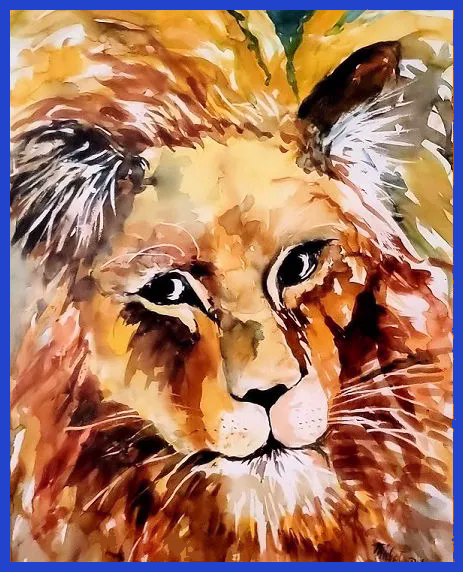
Silent Night ∙∙
She gave birth to her first child, a son. She wrapped him snugly in strips of cloth and laid him in a manger because no lodging was available for them. – Luke 2:7
Luke 2:1-14
At that time, the Roman emperor Augustus decreed that a census be taken throughout the Roman Empire.
All returned to their own ancestral towns to register for this census. And because Joseph was a descendant of King David, he had to go to Bethlehem in Judea, David’s ancient home. He traveled there from the village of Nazareth in Galilee. He took with him Mary, his fiancée, who was now obviously pregnant. And while they were there, the time came for her baby to be born.
That night, shepherds were staying in the fields nearby, guarding their flocks of sheep. Suddenly, an angel of the Lord appeared among them, and the radiance of the Lord’s glory surrounded them. They were terrified, but the angel reassured them. “Don’t be afraid!” he said. “I bring you good news that will bring great joy to all people.” “The Savior – yes, the Messiah, the Lord – has been born today in Bethlehem, the city of David!”
Suddenly, the angel was joined by a vast host, the armies of heaven, praising God and saying, “Glory to God in the highest heaven, and peace on earth to those with whom God is pleased.”
The Origins of “Silent Night”
“Silent Night,” one of the most cherished Christmas hymns worldwide, was officially recognized by UNESCO as intangible cultural heritage in 2011. Its gentle melody and profound lyrics have resonated with countless hearts, but the story of its creation is equally inspiring. This beloved carol emerged from the collaboration of two remarkable individuals, Joseph Mohr and Franz Gruber.
The story begins in 1816, when Joseph Mohr, a young priest serving in Mariapfarr, Austria, penned the words that would later become “Silent Night.” At the time, Mohr had no idea that his poem would grow into a cherished holiday tradition. Two years later, in 1818, while stationed at St. Nicholas Church in Oberndorf, Austria, Mohr approached Franz Gruber, a schoolteacher and deputy organist, with a request. On Christmas Eve, Mohr handed his poem to Gruber and asked him to compose a melody that could be performed at that night’s Midnight Mass.
Gruber, drawing on his musical expertise, composed the tune for “Silent Night” within hours. That same evening, the two friends introduced their creation to the congregation. Mohr played the guitar while he and Gruber sang the hymn together, marking the first-ever performance of what would become one of history’s most enduring songs.
International Acclaim
Over the years, “Silent Night” gained widespread recognition. By the mid-19th century, it had become a staple of Christmas celebrations far beyond Oberndorf. However, as its popularity grew, confusion about its origins also arose. The original manuscript had been lost, and Joseph Mohr’s role as the lyricist was largely forgotten. For a time, Franz Gruber was mistakenly credited as the sole creator of the hymn.
Efforts to uncover the hymn’s true history began in 1854 when the Royal Prussian Court Chapel sought information about its origins. Franz Gruber responded with a detailed account of the carol’s creation, crediting both himself and Mohr. Decades later, in 1995, a manuscript by Joseph Mohr, written around 1820, was discovered, reaffirming his pivotal role in crafting the hymn.
The hymn’s global reach expanded significantly in 1859 when John Freeman Young, an Episcopal priest at Trinity Church in New York, published an English translation of the original German lyrics. Young translated three of the hymn’s six verses, and these three remain the most widely sung version today.
The Enduring Legacy of “Silent Night”
From its humble beginnings in a small Austrian church to its recognition as a cultural treasure, “Silent Night” has become a symbol of peace, faith, and hope. Its story is one of friendship, creativity, and a shared vision of bringing light to the world.
Silent night, Holy night. All is calm, all is bright.
Round yon virgin, mother, and child Holy infant, tender and mild.
Sleep in heavenly peace, Sleep in heavenly peace.
Silent night, Holy night Son of God, love’s pure light.
Radiant beams from thy holy face. With the dawn of redeeming grace,
Jesus, Lord at thy birth Jesus, Lord at thy birth.
Silent night, Holy night. Shepherds quake at the sight.
Glories stream from heaven above, heavenly hosts sing Hallelujah.
Christ the Savior is born, Christ the Savior is born.
The Fulfillment of a Promise
The lyrics of “Silent Night” echo the profound events of the first Christmas, as described in Matthew 1:18-23:
“This is how Jesus the Messiah was born. His mother, Mary, was engaged to be married to Joseph. But before the marriage took place, while she was still a virgin, she became pregnant through the power of the Holy Spirit.
Joseph, her fiancé, was a good man and did not want to disgrace her publicly, so he decided to break the engagement quietly. As he considered this, an angel of the Lord appeared to him in a dream. ‘Joseph, son of David,’ the angel said, ‘do not be afraid to take Mary as your wife. For the child within her was conceived by the Holy Spirit.’ ‘And she will have a son, and you are to name him Jesus, for he will save his people from their sins.’”
“All of this occurred to fulfill the Lord’s message through his prophet: ‘Look! The virgin will conceive a child! She will give birth to a son, and they will call him Immanuel, which means God is with us.’”
This passage highlights the miraculous birth of Jesus, the Savior of the world, whose arrival was foretold by the prophets and fulfilled on that extraordinary night in Bethlehem.
REFLECT & PRAY
Luke 2:40: “There, the child grew up healthy and strong. He was filled with wisdom, and God’s favor was on him.”
Father, thank You for sending Your Son on that extraordinary, silent, and holy night. You deserve our gratitude and esteem. The Savior, the Messiah, the Lord, was born in Bethlehem. Praise God in the highest.
INSIGHT
The Shepherd Witnesses
Remarkably, the first to hear the heavenly announcement of Jesus’ birth were not kings, priests, or religious leaders, but shepherds. In the societal hierarchy of the time, shepherds were considered the lowest of the low. They were despised, marginalized, and often excluded from religious and social acceptance. Their work rendered them perpetually ceremonially unclean, barring them from participating in temple worship. Yet, it was to these humble individuals that the angel of the Lord appeared, proclaiming the good news of the Savior’s birth.
Why shepherds? Their calling reflects God’s heart for the lowly and His boundless grace extended to all. By choosing shepherds, the Lord demonstrated that His love is not reserved for the powerful or elite but is freely given to the overlooked, the broken, and the humble. Wiersbe insightfully observes, “God does not call the rich and mighty; He calls the poor and the lowly.” This divine choice underscores the Father’s value of humility over status and faith over earthly wealth.
The Heavenly Announcement
A breathtaking display of divine glory accompanied the angel’s proclamation to the shepherds. Luke 2:9 describes the moment: “Suddenly, an angel of the Lord appeared among them, and the radiance of the Lord’s glory surrounded them. They were filled with great fear.”
The Greek phrase “Ephobethesan phobon megan,” translated as “They were filled with great fear,” is an example of a Semitic idiom. Semitisms, common in the Greek New Testament, incorporate features from Hebrew or Aramaic. Both the verb and noun derive from the same root, phobe, meaning “fear.” The repetition of the root intensifies the emotion, emphasizing the overwhelming terror the shepherds experienced. This phrase can also be rendered as “they became terrified.”
However, their great fear (phobon megan) would soon be transformed into great joy (charan megalen).
In Luke 2:10, the angel comforts the shepherds by delivering a message that transcends mere fear, embodying a profound sense of joy and hope for all humanity instead. This announcement of the Savior’s birth marks a pivotal moment in history, bringing untold happiness and reassurance to people from all walks of life. Rather than instilling dread, this divine proclamation highlights the promise of redemption, inviting everyone to partake in the joy of this miraculous event.
The Unpretentiousness of God’s Plan
The birth of Jesus highlights God’s incredible humility, grace, and purpose. It reminds us that His ways are higher than ours, His love knows no limits, and His glory is often revealed in unassuming and straightforward circumstances. The Father delights in working through the humble to accomplish the extraordinary.
As Hughes beautifully reflects, “As the Virgin traveled, her steady beating heart, hidden from the world, kept time with the busily thumping heart of God.” This poetic imagery captures the profound mystery of the incarnation, God Himself entering the world as a vulnerable child.
John 1:14 declares: “The Word became human and made his home among us. He was full of unfailing love and faithfulness. And we have seen his glory, the glory of the Father’s one and only Son.”
Hughes further notes, “The baby Mary carried was not a Caesar, a man who would become a god, but a far greater wonder, the true God who had become a man!” This profound truth underscores the unparalleled significance of Christ’s birth.
From Fear to Joy
The shepherds’ experience captures the transformative power of encountering God’s glory. Their initial terror gave way to joy as they received the angel’s message of hope. This moment reminds us that God’s love and grace are not reserved for the powerful or privileged but are extended to all who are willing to accept them.
The birth of Jesus, announced by angels and witnessed by shepherds, is a testament to God’s love for the lowly and His desire to bring joy and salvation to the world. It is a story of grace, glory, and the remarkable unfolding of God’s redemptive plan.
“Silent Night” is more than a hymn; it is a testament to the enduring power of faith and the message of peace brought by the birth of Christ. Its timeless melody and lyrics continue to inspire us and remind us of the profound significance of that holy night.
¯\_(ツ)_/¯
© Dr. H 2025
 Dr H Reflections