
Handel’s Messiah and the Lord God Omnipotent
For a child is born to us, a son is given to us. The government will rest on his shoulders. And he will be called: Wonderful Counselor, Mighty God, Everlasting Father, Prince of Peace. – Isaiah 9:6
Revelation 19:6 Alleluia: for the Lord God omnipotent reigneth.
The Timeless Majesty of Handel’s Messiah
George Frideric Handel’s oratorio, Messiah, is a masterpiece that magnificently sets to music the greatest story ever told. With its elegant, memorable melodies, Messiah has become a beloved tradition, particularly during the Christmas season. It is celebrated across the globe in grand performances. Remarkably, Handel originally crafted the piece to be accessible, requiring as few as four vocalists accompanied by a small ensemble of instruments, including strings, continuo, two trumpets, and two drums. This intentional simplicity facilitated performances in various settings, contributing to its lasting impact.
Since its premiere on April 13, 1742, in Dublin, Messiah has been performed annually without exception, earning its reputation as the most renowned and frequently staged oratorio in history. Its universal appeal and profound spiritual significance have firmly established it as one of the greatest masterpieces in classical music.
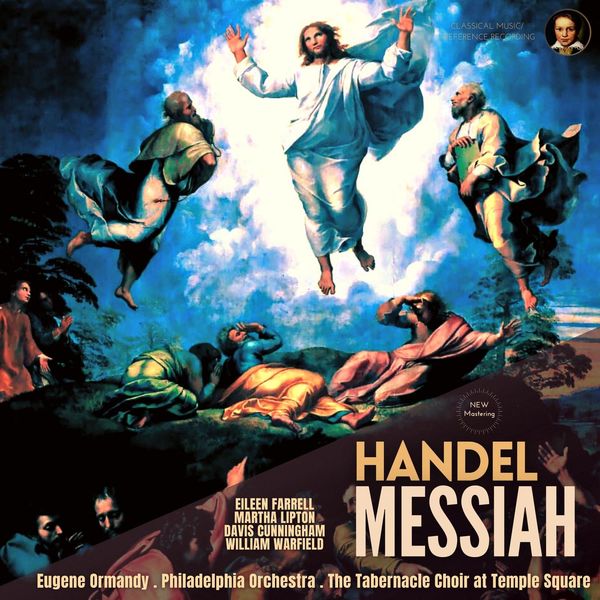
A Reflection on Christ’s Life and Mission
For the children of the King, Messiah is more than just a musical composition; it is a profound meditation on the life, mission, and majesty of the Lord Jesus Christ. The oratorio reflects on Christ as the Messiah of Israel, the Savior of the world, and the coming King of Kings. Its libretto draws directly from Scripture, primarily the King James Bible and the Coverdale Psalter, seamlessly blending passages from both the Old and New Testaments. This creates a cohesive and powerful narrative that captivates the soul with its heart-stirring beauty.
The Structure of Messiah
The oratorio is divided into three distinct parts, each focusing on a pivotal aspect of Christ’s life and mission:
Part 1: The Nativity
This section highlights the prophecies of Christ’s coming, particularly those of Isaiah, and culminates in the joyous proclamation of His birth. The narrative draws heavily from Luke 2:8-14, recounting the angelic announcement to the shepherds: “Glory to God in the highest, and on earth peace, goodwill toward men.”
Part 2: The Passion
The second part focuses on the suffering and sacrifice of Christ, culminating in His crucifixion. It reaches its emotional and musical zenith with the triumphant “Hallelujah Chorus,” a declaration of Christ’s ultimate victory and reign.
Part 3: The Resurrection and Ascension
The final section celebrates Christ’s resurrection, His ascension, and the promise of eternal life for believers. It brings the divine story full circle, exalting the hope and glory found in the risen Savior.
Musical Nuances and Scriptural Depth
Handel’s Messiah is not only a musical triumph but also a deep expression of biblical truth. The libretto celebrates the everlasting beauty of Scripture while honoring the Lord Jesus Christ. Handel’s brilliance shines through in his use of musical elements to amplify the text’s meaning. For example:
- “All We Like Sheep”: The lively, scattered melody vividly portrays a flock in motion, reflecting the words, “All we like sheep have gone astray.”
- “For Unto Us a Child Is Born”: This uplifting piece builds to a majestic climax with the declaration: “And His name shall be called Wonderful, Counselor, the Mighty God, the Everlasting Father, the Prince of Peace.”
The highlight of the oratorio is undoubtedly the “Hallelujah Chorus”, a rousing anthem of praise that proclaims:
“Alleluia: for the Lord God omnipotent reigneth. Lord of lords, forever and ever, hallelujah, hallelujah, and King of Kings, forever and ever, hallelujah, hallelujah.”
This unparalleled composition continues to inspire and uplift, carrying forward the timeless legacy of Handel’s magnum opus.
Handel’s Inspiration and Legacy
Remarkably, Handel composed Messiah in just 24 days, a feat that many attribute to divine inspiration. Regarding the Hallelujah Chorus, Handel himself said, “I did think I did see all heaven before me and the great God himself!” His masterpiece gently and unequivocally presents Jesus Christ as the Son of God, the fulfillment of prophecy, the Savior of mankind, and the coming King.
Handel’s achievement far surpasses any expectations he may have had. The music elevates to sublime beauty and power, gently reflecting the majesty of Christ. It is a work that continues to resonate with audiences, bringing them closer to the heart of God.
The Role of Language in Messiah
Unlike many great classical musical compositions, which were originally written in languages other than English, Messiah was composed in English. Handel, born in Halle, Germany, in 1685, relocated permanently to London in 1712. The libretto quotes directly from the King James Bible, a version that was widely understood and cherished at the time. This accessibility enabled audiences to easily internalize the words and their sentiments. Over time, as English became a global language, Messiah gained even greater reach, ensuring its message could be shared with people around the world. There are no coincidences in the kingdom of God!
REFLECT & PRAY
Matthew 26:64: “And in the future, you will see the Son of Man seated in the place of power at God’s right hand and coming on the clouds of heaven.”
Father, You are the omnipotent, mighty King, ruler over all creation. Your Son, the Lord Jesus Christ, is the fulfillment of prophecy, the Savior of the world, and the coming King of Kings. May His reign bring joy, peace, and hope to all who seek Him.
INSIGHT
The Reign of the Lord God Omnipotent
Revelation 19:6 declares: “Hallelujah! For the Lord God Omnipotent reigns.” This triumphant proclamation celebrates the sovereignty and unmatched authority of the Lord God Almighty, whose reign is absolute and eternal. The Greek word translated as “Omnipotent” or “Almighty” is pantokrator, a term rich in meaning and significance.
The term pantokrator is derived from two Greek words: pantos, meaning “all, every, everything,” and krateo, meaning “ruler.” Together, pantokrator signifies “ruler of everything,” emphasizing the Lord’s supreme authority over all creation. This title highlights God’s limitless power and sovereignty, who rules the universe with complete authority.
Kosmokrator: The Limited Power of the Enemy
In stark contrast, the enemy is referred to as the “world ruler” in Ephesians 6:12: “For we do not wrestle against flesh and blood, but against principalities, against powers, against the rulers of the darkness of this age, against spiritual hosts of wickedness in the heavenly places.” The Greek word for “world ruler” is kosmokrator, which combines kosmos (world, world system) and krateo, meaning “ruler.” Kosmokrator denotes “the ruler of the world system,” a title that highlights the enemy’s influence over the fallen world.
However, the enemy’s power is both limited and delegated. It is temporary and subject to the ultimate authority of God. In contrast, the power of the Lord Jesus Christ is infinite, arising from His inherent deity. No force, earthly or spiritual, can withstand His supreme authority.
The Sovereign Reign of the Lord God Almighty
The Lord God Almighty is already sovereign, presiding over all creation. His control is absolute, and His authority is unmatched. However, His reign has so far been exercised in abstentia, allowing humanity to experience free will and the consequences of sin. This dynamic will change dramatically with the return of the Lord Jesus Christ.
When Christ returns, His reign will no longer be distant. He will establish His Kingdom on Earth, ruling in a personal and direct way. His governance will be “hands-on,” bringing His presence into the midst of His people. This will mark the beginning of a new era, one characterized by holiness, righteousness, and peace.
The Kingdom of the Prince of Peace
Since the fall of Adam and Eve, the Earth has never been a place of perfect holiness, righteousness, or peace. Human governance, no matter how noble or well-meaning, has consistently fallen short of achieving true harmony. Wars, uprisings, and injustices have troubled humanity throughout history. But this will change when the Prince of Peace establishes His Kingdom.
The coming of the Lord Jesus Christ will bring in the long-awaited Kingdom of God. For the first time in history, Earth’s inhabitants will experience just, holy, and righteous leadership. The reign of Christ will usher in an era of unparalleled peace, prosperity, and tranquility. For a thousand years, the world will be free from wars, uprisings, and the chaos that has marked human history.
A Unified Faith Under Christ
Under the reign of the Lord Jesus Christ, the entire human race will be united in a singular faith, free from divisions, competing ideologies, and false religions. The Kingdom of God will center around Christ, the King of Israel and the Savior of the world, welcoming all who enter to worship Him as the one true King.
This profound unity of faith will illustrate the fulfillment of God’s ultimate purpose for humanity: a harmonious existence where His people worship Him in spirit and truth. Christ’s reign will stand as a testament to God’s power, love, and righteousness, bringing His will to fruition.
Handel’s Messiah exemplifies the power of Scripture and the beauty of music, inspiring listeners to reflect on the eternal truths within God’s Word. It serves as an invitation to acknowledge the majesty and glory of the King of Kings.
The Father reigns as the omnipotent ruler and sovereign King over all creation, His limitless power and unmatched authority inspiring hope for the future. We eagerly anticipate the day when His Son, the Lord Jesus Christ, will establish peace, righteousness, and unity in the world. May His Kingdom come and His will be fulfilled on Earth as it is in Heaven.
¯\_(ツ)_/¯
© Dr. H 2025
 Dr H Reflections