A Lost Sheep Found ∙∙
If a man has a hundred sheep and one of them gets lost, what will he do? Won’t he leave the ninety-nine others in the wilderness and go to search for the one that is lost until he finds it? – Luke 15:4
John 15:1-5
I am the true vine, and my Father is the gardener. He cuts off every branch of mine that doesn’t produce fruit, and he prunes the branches that do bear fruit so they will produce even more. You have already been pruned and purified by the message I have given you. Remain in me, and I will remain in you.
For a branch cannot produce fruit if it is severed from the vine, and you cannot be fruitful unless you remain in me. Yes, I am the vine; you are the branches. Those who remain in me, and I in them, will produce much fruit.
Apart from me, you can do nothing.
The Remarkable Recovery of Baarack: A Modern Parable
In February 2021, a lost sheep was found after nearly five years wandering through the Australian bush. Rescuers named the sheep Baarack, and they were amazed to discover that it had grown an incredible 77 pounds of dense fleece. The weight of its dirty, matted wool, caked with years of mud and debris, made it difficult for Baarack to stand or walk.
Unlike their wild ancestors, the mouflon found in Europe and Asia, modern domesticated sheep have been selectively bred over centuries to produce fleece that must be sheared rather than naturally shed. While wild mouflon have a rough outer coat and a soft undercoat that provides natural insulation, allowing them to shed in warmer months, domesticated sheep depend on human intervention. This change fundamentally altered their lives: Today’s sheep rely entirely on human care to keep their coats healthy and ensure their well-being, requiring regular shearing to prevent a fate like Baarack’s.
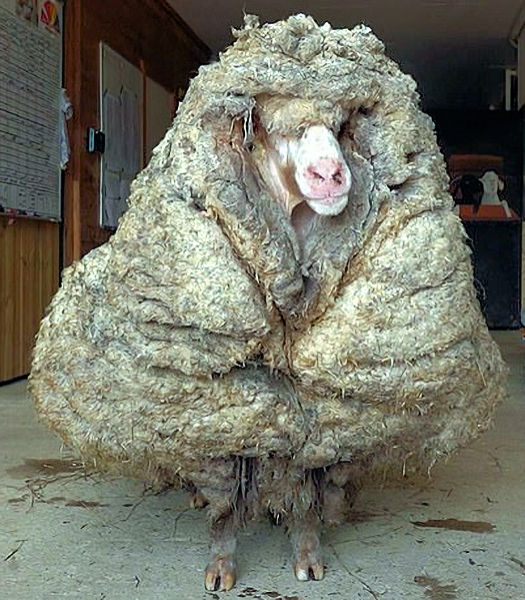
When the layers of fleece were removed, a torn ear, where an identification tag once hung, was first seen. This indicated that Baarack had once belonged to someone. Despite living wild for years, Baarack was still a domesticated sheep.
Biblical Imagery of Care and Dependence
Scripture uses vivid analogies to illustrate the relationship between children of the King and the Father, emphasizing roles such as Father-Child, Husband-Wife, Vine-Branches, Vinedresser-Branches, and Shepherd-Sheep. Each metaphor highlights the intimacy and dependence characteristic of this relationship.
As “Sheep of His pasture,” children of the King rely on His attentive care, similar to branches thriving on a vine under the watchful eye of a vinedresser. We need consistent nurturing, pruning, and guidance to truly flourish. Through this ongoing relationship, our lives can become fruitful and strong, much like grapevine branches that produce a bountiful harvest through careful cultivation.
REFLECT & PRAY
Only two things on Earth that are eternal: human souls and the Word of God. Everything else is temporary or fleeting.
Father, prune and shape my life so I stay rooted in the Lord Jesus Christ and bear lasting fruit that endures forever.
INSIGHT
Understanding Our Relationship with the Father
Knowing the Father, walking with Him, and maturing in faith are deeply rooted in relationship. Every child of the King is uniquely designed to live in a symbiotic relationship with the Father. We are not meant to be independent or detached from Him. Unlike wild sheep, we are domesticated and need a shepherd’s care and guidance.
The story of Baarack, a sheep that wandered off and became burdened by an overgrown fleece, vividly illustrates what happens when we pull away from the Father’s tender, loving care. Even as members of His flock, we still exhibit sheep-like behaviors, which can result in unfavorable consequences if we wander.
Isaiah 53:6: “All we like sheep have gone astray; we have turned to our own way.”
The Vine and the Vinedresser
We are not like wild grapes. Instead, we resemble cultivated grapevines that require a skilled vinedresser’s care to reach their full potential. Cultivated grapevines are carefully nurtured to produce the highest possible harvest, which then leads to optimal wine production. As the divine Vinedresser, the Father takes two essential steps to ensure we bear fruit: He removes unfruitful branches and prunes the fruitful ones to increase their productivity.
John 15:2: “He cuts off every branch of mine that doesn’t produce fruit, and he prunes the branches that do bear fruit so they will produce even more.”
The Importance of Pruning
A little background on grapevines helps clarify this analogy. If left untrimmed, grapevines naturally develop long, woody branches that channel their energy into branch growth instead of grape production. This results in sparse, underwhelming grape clusters. Early winemakers learned that severe pruning redirected the vine’s energy, encouraging it to focus on producing abundant, high-quality grapes rather than excessive branches.
Pruning typically takes place in midwinter, resulting in bare fields dotted with small stumps. This essential process readies the vines for the upcoming spring growing season. The cut branches are collected and burned, allowing the vines to grow freely from their established stumps each year.
Lessons from the Vine and the Branches
What insights can we derive from these scriptural analogies regarding our relationship with the Father?
The underlying message is clear: as children of the King, it is essential for us to invite the divine Vinedresser to guide and shape our lives. Much like a grapevine that flourishes through careful pruning and nurturing, we too can thrive when we focus our energies on meaningful pursuits and deepen our connection with Him.
The metaphor of the vine and branches would have resonated deeply with the original audience. This teaching goes beyond simple agricultural principles, providing a rich understanding of how to cultivate a vibrant relationship with the Father. The ultimate goal is not just to establish a connection but to produce an abundance of spiritual fruit that reflects the depth of that relationship.
The Consequences of Straying
Sheep need regular shearing, and vine branches must be carefully pruned to thrive. When we stray from the shepherd’s caring guidance or ignore His direction, we risk becoming like Baarack, burdened, unproductive, and increasingly distant from the Father. As branches of the vine, we face a crucial choice: stay connected to our source and produce abundant fruit, or become unproductive and ultimately useless.
But how does one become insignificant? Resistance, distraction, and the refusal to follow the Father’s guidance cause us to weaken. A lukewarm or superficial faith, marked by empty words without action, results in leaves without fruit. When we turn away from our faith or neglect to act on the principles we believe in, we risk becoming completely ineffective and unproductive.
John 15:5: “For apart from me you can do nothing.”
What Does “Nothing” Mean?
The Lord Jesus Christ does not mean “nothing at all,” as we can still perform regular activities of life without Him. Instead, He is referring to “nothing of eternal value” or an inability to produce spiritual fruit (ESV notes).
As William Barclay rightly notes, “Uselessness invites disaster.”
A Call to Fruitfulness
The Father desires us to succeed, produce fruit, and live lives of eternal significance. By maintaining a connection with Him and allowing His pruning and shaping, we can achieve our purpose and experience a fulfilling life rooted in His love and care. Let us embrace His role as the divine Vinedresser, trusting His wisdom and guidance to steer us toward abundant spiritual fruitfulness.
Modern sheep are representative of our dependence on the Father’s wisdom, care, and provision. Just as domesticated sheep cannot flourish without a shepherd’s guidance, we must stay close and connected to Christ, our good Shepherd and source of life, meaning, and growth.
¯\_(ツ)_/¯9-26-3
© Dr. H 2026
 Dr H Reflections