
Knowing What Is Right and Failing to Do It Is Sin
So, for him, whoever knows the right thing to do and fails to do it is a sin. – James 4:17
Luke 12:47-48
And a servant who knows what the master wants but isn’t prepared and doesn’t carry out those instructions will be severely punished.
But someone who does not know and then does something wrong will be punished only lightly. When someone has been given much, much will be required in return, and when someone has been entrusted with much, even more will be required.
Courage in the Moment
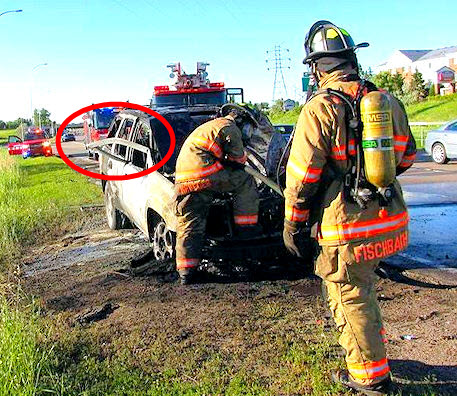
New Brighton, Minnesota, June 30, 2014. A striking headline captured public attention: Good Samaritan Saves Minnesota Man’s Life By Bending Locked Car Door With Bare Hands. The report told of a fifty-two-year-old man who used extraordinary strength and presence of mind to rescue another motorist from a burning vehicle.
Robert Renning was traveling on Interstate 35W at about 6:30 p.m. when he spotted a car on fire, the vehicle he had just passed. The driver, Michael Johannes, was trapped inside, pounding on the window. The electronic locks wouldn’t release, and the power windows wouldn’t open. With no time to spare, Renning wedged his fingers into the door frame, braced one foot against the door, and pulled. According to the State Patrol, the door bent in half from the top, shattering the glass. Renning kept bending the locked door until there was enough room to pull Johannes to safety before the flames could seriously harm him.
Minnesota State Trooper Zachary Hill later described Renning’s actions as extraordinary: he had bent a locked car door in half to free a man trapped in a burning vehicle. Hill said he couldn’t have done the same, even with a crowbar. In Hill’s words, Renning deserved every possible commendation for saving a life and keeping another person from burning alive.
Renning, however, responded with remarkable humility. Rather than drawing attention to himself, he minimized what others viewed as his “Superman” moment. His explanation was simple and direct: “Somebody was in trouble. You’re supposed to help each other out.”

The Moral Weight of What We Know
In many situations, the right course of action is unmistakably clear. The question is not whether we know our duty, but whether we are willing to act on what we know. The issue is no longer discernment but obedience.
Here the moral seriousness of the matter comes sharply into view. The Father does not treat such moments as insignificant. To recognize what is right and yet refuse to act is more than a lapse in judgment or a failure of resolve. It is a moral failure before God, because light has been given and resisted.
James 4:17: “So whoever knows the right thing to do and fails to do it, for him, it is a sin.”
This verse highlights a dimension of sin that is often overlooked. Many think of sin only as wrongful deeds, harmful words, or rebellious choices. Sin is not only doing what ought not be done; it is also failing to do what should to be done.
For that reason, this verse carries unusual weight. It confronts the one who sees the need, understands the obligation, and yet refuses to act. It reaches beyond outward behavior, exposing the quiet sins of omission that may hide beneath outward respectability. Regrettably, a person may avoid public wrongdoing and still be guilty of withholding love, truth, courage, generosity, or obedience.
This truth makes clear that righteousness is more than abstaining from evil; it is the willing pursuit of what is good. The Father calls His children not only to turn from sin, but also to respond faithfully when goodness, mercy, justice, truth, and love require action. When duty is clear, to remain still is to treat divine light as though it were optional.
REFLECT & PRAY
The Father will never request us to undertake anything that we cannot achieve with His support; every difficulty we face comes with necessary resources and strength to achieve it.
Father, I know my limitations and how often I fall short, yet I recognize that You have entrusted me with sacred responsibilities and spiritual gifts. Help me fulfill the assignments given me with wisdom, courage, faithfulness, and strength.
INSIGHT
The Seriousness of Neglected Responsibility
Failing to do what we know is right can have serious consequences. The Father is perfectly just and entirely fair in His judgments, as the Lord Jesus Christ makes clear in His parable about servants entrusted with responsibility while their master is away.
Luke 12:47-48:
“A servant who knows what the master wants but isn’t prepared and doesn’t carry out those instructions will be severely punished. But someone who does not know and then does something wrong will be punished only lightly.”
The meaning is clear: greater knowledge brings greater accountability. Ignorance does not erase responsibility, but it does lessen the degree of guilt. By contrast, when someone clearly understands the master’s will and still refuses to obey, the offense is more serious.
The Lord Jesus Christ also makes clear that faithful obedience does not go unnoticed; it is met with blessing.
Luke 12:43: “If the master returns and finds that the servant has done a good job, there will be a reward.”
Embedded in this teaching is a significant assumption: when a master assigns a task, he also provides what is needed to complete it. In the same way, the Father never commands without supplying the grace, strength, and enablement needed for obedience. He does not call His children to faithfulness while withholding what they need to walk in it.
This truth deepens our responsibility: the more a person has received, the more accountable that person is to steward it well.
Luke 12:48: “When someone has been given much, much will be required in return; and when someone has been entrusted with much, even more will be required.”
Knowledge, privilege, opportunity, and spiritual inheritance are never ends in themselves. They are sacred trusts God places in our hands and must never be treated casually. What we receive from the Father does not lessen our obligation; it increases it, calling us to live with greater obedience, diligence, and seriousness of heart.
Life, Urgency, and Eternal Accountability
Only the Father knows the day or hour when any of His children will stand before Him in eternity. This truth gives daily life profound weight. Our time is limited, and our calling is significant. Each day matters morally, presenting fresh opportunities to obey or neglect what we know is right.
In the twenty-first century, life moves at a relentless pace. We’re swept along by constant demands, unfinished responsibilities, competing pressures, and persistent distractions. As a result, much remains incomplete, postponed, neglected, or never attempted at all. The danger isn’t always open rebellion. More often, it appears in quieter forms: inconsistency, delay, and the gradual habit of leaving undone what God has placed before us.
The Perfect Pattern of Obedience
Against this backdrop, the Lord Jesus Christ is the perfect example of faithful living. He came into the world with a mission established in eternity past and fulfilled every task entrusted to Him by the Father. At the end of His earthly work, He could truthfully and definitively declare, “It is finished.”
His life was never marked by confusion about His purpose or carelessness in His calling. Rather, it was marked by perfect submission to the Father’s will.
John 6:38: “I have come down from heaven to do the will of God who sent me, not to do my own will.”
John 17:4: “I brought glory to you here on earth by completing the work you gave me to do.”
These words uncover the inner reality of His obedience. The Lord Jesus Christ lived in unbroken communion with the Father. He did not act independently, pursue a private agenda, or move through His earthly ministry without direction. Instead, He walked in constant submission, prayerful dependence, and unwavering purpose. The completion of His work was the visible expression of His perfect fellowship with the Father.
Our Daily Calling
In the same way, each of us follows a path fully known to God. In His wisdom and sovereignty, the Father has prepared works, responsibilities, and acts of obedience for His children to fulfill. Our response, then, is not anxious striving, but daily dependence on Him.
As we seek the Father’s guidance, He graciously provides the wisdom we need for each day. He orders our steps, clarifies our responsibilities, and gives us strength for every task He appoints. That is why it is wise to seek Him early, before the day’s pressures and distractions begin to rule the heart. The Father leads His children not only by setting their path, but also by giving them the insight and endurance to walk it faithfully.
Colossians 1:9: “We ask God to give you complete knowledge of his will and to give you spiritual wisdom and understanding.”
The Call to Decisive Obedience
Robert Renning’s story vividly illustrates the importance of decisive action when the need is clear. He recognized what had to be done and acted without hesitation. In a more profound spiritual sense, this same principle governs the life of faith. Father makes clear what is right; His children are called not merely to recognize it, but to respond with faithful, willing obedience.
Grace for What God Requires
The Father never calls His children to a task without also providing the grace necessary to complete it. He does not command them and then withhold strength. Instead, He gives both direction and the ability to obey, supplying what is needed for faithfulness. The believer’s responsibility is therefore clear: listen attentively, trust fully, and act faithfully.
Ultimately, what matters is not merely recognizing what is good, but practicing it. Moral and spiritual clarity are not meant to end with awareness; they are meant to lead to action. True faith is revealed not only in what one knows, but in how one responds to the Father’s will.
¯\_(ツ)_/¯
© Dr. H 2026
