
Escaping the Bondage of Slavery
You will know the truth, and the truth will set you free. . .. If the Son sets you free, you are truly free. – John 8:32,36
Romans 6:14-17
Sin is no longer your master, for you no longer live under the requirements of the law. Instead, you live under the freedom of God’s grace.
Well then, since God’s grace has set us free from the law, does that mean we can go on sinning? Of course not!
Don’t you realize that you become the slave of whatever you choose to obey? You can be a slave to sin, which leads to death, or you can choose to obey God, which leads to righteous living.
Thank God! Once, you were slaves of sin, but now you wholeheartedly obey this teaching we have given you.
Freedom from Bondage
The vile institution of slavery stands as one of history’s clearest revelations of human depravity. It exposes with chilling clarity the cruelty, selfishness, and moral corruption to which fallen humanity can descend. To be delivered from such bondage is therefore no ordinary achievement. It is a profound and transformative triumph. For those who endured slavery’s merciless oppression, freedom signified far more than escape from physical captivity. It meant the restoration of dignity, the recovery of personal agency, and the renewal of hope.
In the years leading up to the American Civil War, countless enslaved people set out on perilous journeys in pursuit of liberty. Many fled in darkness, driven by desperation and courage, while slave catchers and bloodhounds pursued them with relentless determination. Though many were captured and forced back into bondage, others succeeded through extraordinary ingenuity and resilience. One memorable example is Henry “Box” Brown, who achieved freedom by having himself shipped in a wooden crate.
Among the most remarkable of these stories is that of Ellen and William Craft. In 1848, they carried out one of the most daring and inventive escapes in American history. Their strategy depended not on disappearing from public view, but on moving through it undetected. Ellen, a fair-skinned woman of mixed race, disguised herself as a wealthy young white man in poor health. William took the role of her attentive servant. Together, they traveled openly over the course of four days from Macon, Georgia, to Philadelphia.
Ellen maintained her disguise with remarkable discipline and precision. To make the impersonation more convincing, William cut her hair short. She wore men’s clothing, completing the look with a stovepipe hat, tinted glasses, and facial bandages that made her appear to be a frail Southern gentleman. Most ingenious of all, she kept her right arm in a sling, so “he” would not be expected to sign hotel registers or other official documents. Nothing about the plan was accidental: every detail was deliberate, and each precaution helped protect the illusion on which their lives and liberty depended.
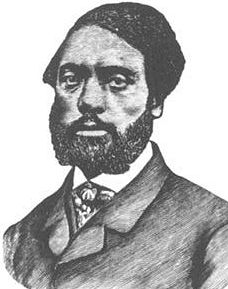
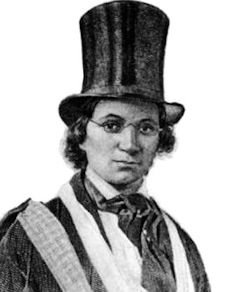
The Crafts’ escape remains a powerful testimony to the ingenuity, courage, intelligence, and inner resolve of those who refused to surrender inwardly to the chains imposed upon them. Their story endures as a moving and inspiring witness to the human longing for freedom and to the enduring struggle for dignity and justice.
A Journey Sustained by Courage and Providence
In a moment of earnest prayer, Ellen and William Craft committed themselves to a daring pursuit of liberty. Although their route to freedom included stays in elegant hotels and travel through public spaces, each stage of the journey was overshadowed by the possibility of discovery. Their success required composure, courage, emotional discipline, and keen presence of mind. Yet the Crafts understood that their deliverance rested not only on human resourcefulness, but also on the providential care of God.
Reflecting on their escape in their 1860 book, “Running a Thousand Miles for Freedom,” they credited their safe passage to courage, quick thinking, a measure of good fortune, and the guidance of “our Heavenly Father.” Their words reveal not only the strain of the journey, but also the depth of their gratitude.
Upon arriving in Philadelphia, Ellen and William were received by the abolitionist community, who offered them shelter and support. In 1850, they traveled to England, where they remained for two decades. After returning to the United States, they established a school in Georgia for newly freed African Americans, devoting themselves to the education and advancement of their community.
From Human Slavery to Spiritual Bondage
The enslavement of one human being by another is among the most sobering manifestations of humanity’s fallen condition. It reveals how profoundly the human heart can be darkened by sin, so that domination, exploitation, and cruelty are not merely tolerated but institutionalized. Yet the Scriptures speak of a bondage even more universal and more devastating than physical slavery: the bondage of sin itself. This captivity is not confined to a particular culture, era, or social class. It is the common condition of fallen humanity.
What makes this spiritual bondage especially tragic is that many remain unaware of it. Sin so thoroughly distorts the mind and affections that those held by it often mistake captivity for freedom. They imagine themselves autonomous even while living under the rule of desires, impulses, and allegiances they cannot ultimately master. Yet the reality of this enslavement does not nullify the hope of deliverance. The bondage is real, but so is the Redeemer.
The Lord Jesus Christ came to liberate sinners from sin’s tyranny and to bring them into the service of the living God. In Him, freedom is no longer a vague aspiration or a merely inward feeling. It becomes a redemptive reality grounded in His saving work. True freedom, therefore, is not found in self-rule, as though autonomy were the highest good. It is found in redemption, where the sinner is released from the mastery of sin and restored to the God for whom humanity was created.
John 8:32: “You will know the truth, and the truth will set you free.”
John 8:36: “So if the Son sets you free, you are truly free.”
These words point to a freedom deeper than civil or social liberty. They point us to spiritual liberation, which only Christ can give. The freedom He grants is not merely superficial or symbolic. It is real, enduring, and transformative.
REFLECT & PRAY
When we are liberated in Christ, sin no longer rules over our lives.
Father, we thank You for sending Your Son, Jesus Christ, who proclaimed the truth with clarity and power. Through Him, You free each child of the King from the bondage of sin and enable them to serve You with wholehearted devotion.
INSIGHT
The Illusion of Freedom
Many who do not believe in the Lord Jesus Christ imagine that they are genuinely free. To them, embracing Christ appears to mean surrendering independence and submitting to restriction. Yet the Scriptures teach the very opposite. Sin is not liberty; it is a cruel master. Those who yield themselves to sin do not remain autonomous. They become enslaved.
Romans 6:16: “Don’t you realize that you become the slave of whatever you choose to obey? You can be a slave to sin, which leads to death, or you can choose to obey God, which leads to righteous living.”
This verse sets forth a profound spiritual principle: what a person obeys becomes what rules that person’s life. Obedience reveals allegiance, and allegiance reveals mastery. When individuals yield themselves to sin, they do not preserve their freedom; they place themselves beneath sin’s dominion. What appears to be autonomy is, in reality, submission to a cruel and destructive master.
By contrast, when a person places faith in Jesus Christ, that individual is released from the bondage of sin and brought into the service of Christ. As Wiersbe notes, this is a decisive transformation. Mounce similarly explains that servitude to sin is replaced by servitude to God.
This change is not a loss, but a rescue. Believers do not move from freedom into bondage; they move from bondage into freedom. In Christ, what once enslaved is broken, and what once seemed restrictive becomes the path of life, righteousness, and peace.
From Death to Life
Humanity’s fallen condition means that all are born spiritually dead in sin. Though this may seem paradoxical, it is the clear testimony of the Scriptures. Before conversion, every believer existed in this state, alienated from God and powerless to break free by personal effort.
Ephesians 2:1: “Once you were dead in the trespasses and sins”
To be dead in trespasses and sins is to live under sin’s authority, cut off from the life of God. It is a bleak, helpless condition. Yet Jesus Christ came to free sinners from that bondage and bring them into new life.
Christ’s saving work breaks sin’s chains and gives believers a new standing before God. This freedom is not theoretical; it is real deliverance from sin’s mastery.
Galatians 5:1: “Christ has truly set us free.”
Freedom and Allegiance
In this new freedom, the Father sets before every child of the King an altogether different manner of life. No longer enslaved to sin, believers are called to walk in righteousness. Paul makes it unmistakably clear that there are only two masters: sin or obedience to God. No middle realm of moral independence exists in which a person stands answerable to no one.
As Mounce observes, human life is always shaped by allegiance to one master or another. Nicoll makes the same point in different terms: true independence is beyond fallen humanity, since our nature inevitably places us in the service of some ruling power. The issue is not whether we will serve, but whom we will serve.
This helps explain why many outside the Christian faith misunderstand conversion. They imagine that coming to Jesus Christ as Lord and Savior means giving up their freedom. In truth, the opposite is true. Apart from Christ, they are already in bondage, even if they do not recognize it. Coming to Him is not a loss of freedom but a way to find it: to be delivered from sin’s oppressive dominion and brought into the Father’s life-giving service.
Freedom Through Grace
Romans 6:14-17:
“Sin is no longer your master, for you no longer live under the requirements of the law. Instead, you live under the freedom of God’s grace. Don’t you realize that you become the slave of whatever you choose to obey? You can be a slave to sin, which leads to death, or you can choose to obey God, which leads to righteous living. Thank God! Once, you were slaves of sin, but now you wholeheartedly obey this teaching we have given you.”
The believers in Rome understood the transforming power of this truth. To be freed from sin did not mean that they no longer possessed a sinful nature or that they would never again commit sin. Rather, it meant that sin no longer exercised absolute dominion over them.
That freedom brought with it a new direction, a new allegiance, and a new purpose. They were no longer defined by enslavement to corruption, but by devotion to righteousness. In this sense, Christian freedom is not the absence of all mastery; it is the blessed exchange of a destructive master for a righteous and gracious one.
This is the paradox at the heart of the Christian life: in becoming servants of God, believers become truly free.
¯\_(ツ)_/¯
© Dr. H 2026
