
Do Dogs Detect Deceit?
Know that your sin will find you out. – Numbers 32:23
Acts 5:1-11
There was a certain man named Ananias who, with his wife, Sapphira, sold some property. He brought part of the money to the apostles, claiming it was the full amount. With his wife’s consent, he kept the rest. Then Peter said, “Ananias, why have you let Satan fill your heart? You lied to the Holy Spirit, and you kept some of the money for yourself.” “The property was yours to sell or not sell, as you wished. And after selling it, the money was also yours to give away. How could you do a thing like this? You weren’t lying to us but to God!”
As soon as Ananias heard these words, he fell to the floor and died. Everyone who heard about it was terrified.
About three hours later, his wife came in, not knowing what had happened. Peter asked her, “Was this the price you and your husband received for your land?” “Yes,” she replied, “that was the price.” And Peter said, “How could the two of you even think of conspiring to test the Spirit of the Lord like this? The young men who buried your husband are just outside the door, and they will carry you out, too.” Instantly, she fell to the floor and died. When the young men came in and saw that she was dead, they carried her out and buried her beside her husband.
Great fear gripped the entire church and everyone else who heard what had happened.
Canine Lie Detectors
Recent research shows that dogs may be better at detecting deception than people think. A study of 260 dogs tested whether these pets could distinguish between honest and misleading signals. This wasn’t just a curious observation; it revealed how socially aware dogs really are.
In the experiment, each dog faced two covered bowls, one with food and the other empty. A stranger, called the communicator, pointed to the correct bowl and said enthusiastically, “Look, this is very good!” Over time, the dogs learned to trust the communicator’s gestures and words.
The study became more interesting when researchers tested for deception. A second person moved the food while the dogs watched. The key question was whether the dogs could judge the communicator’s honesty based on what the communicator knew. In some cases, the communicator didn’t see the switch, but in others, they did and still pointed to the empty bowl.
The dogs responded differently depending on the situation. When the communicator hadn’t seen the switch but pointed to the wrong bowl, about half the dogs followed the advice, suggesting they believed it was an honest mistake. But when the communicator had seen the switch and pointed to the empty bowl, nearly two-thirds ignored the signal and chose the bowl with food. This suggests dogs can recognize misleading guidance and adjust their behavior based on whether they think someone is honest.
Ludwig Huber, a biologist at the College of Vienna and the study’s lead researcher, says the results suggest dogs can detect deception. He concluded that dogs can also sense dishonesty. Whether this conclusion is definitive or merely suggestive, the study clearly shows how dogs understand their environment. They do more than follow commands: they assess situations, read cues, and adjust their actions based on how reliable they think a person is.
A Lesson Beyond Canines
Compelling in its own right, the study also invites deeper reflection. If dogs, guided largely by instinct, observation, and repeated experience, can detect misleading behavior, how much more should human beings cultivate discernment? We possess not only greater powers of reasoning but also moral awareness, spiritual accountability, and the ability to weigh both words and motives. If creatures governed chiefly by instinct can recognize inconsistency, surely those made in the image of God should be even more vigilant in distinguishing truth from falsehood.
The spiritual implication is even more sobering. If animals can sense deception, how much more does the Father perceive every hidden motive, false appearance, and carefully managed pretense? Nothing escapes His notice. No outward performance can hide what lies beneath the surface, and no polished image can conceal the heart’s true condition from the One who searches it completely.
Yet people often live as though concealment were possible. We persuade ourselves that no one knows that no real harm has been done, or that God either does not see or does not care. Such reasoning is not merely naïve; it is deeply mistaken. The One who created all things, including the minds and instincts of creatures capable of remarkable discernment, is aware of human conduct, inward intentions, and moral compromise. To think otherwise is to mistake divine patience for divine ignorance.
REFLECT & PRAY
With apologies to Jim Carrey, there truly are pet detectives among us, both four-legged and two-legged.
Father, help me speak the truth in love and walk with steadfast integrity. Guard my heart against pretense, expose every false motive within me, strengthen my devotion to honesty, and teach me to live openly and faithfully before You.
INSIGHT
Impure Motives
The early church exemplified incredible generosity and heartfelt compassion. Believers enthusiastically shared their resources, even selling personal possessions to support those in need. This spirit of giving was a powerful expression of transformed hearts, beautifully showcasing the unity within Christ’s body. A shining example of this is Barnabas, whose selfless acts of generosity vividly reflected sincere devotion and inspired others to follow suit.
Acts 4:36-37:
“Joseph, a Levite from Cyprus, whom the apostles called Barnabas (which means ‘son of encouragement’), sold a field he owned and brought the money and put it at the apostles’ feet.” His action reflected an unfeigned love for the community and a willingness to place his resources at the service of others.
Yet not every outwardly noble act came from a pure heart. Ananias and Sapphira also sold a piece of property and brought the money to the apostles. At first glance, their gift seemed generous and spiritually admirable. But behind that appearance was a carefully concealed deception. They secretly held back part of the proceeds while presenting their offering as the full amount. Their sin was not keeping some of the money; the property and its proceeds were theirs to manage. Their transgression was the lie, the deliberate effort to seem more sacrificial than they really were. They wanted the reputation of holiness without paying the price of honesty.
Peter, filled with the Holy Spirit, confronted this deception with piercing clarity. Acts 5:3-4:
“Then Peter said, ‘Ananias, how is it that Satan has so filled your heart that you have lied to the Holy Spirit and have kept for yourself some of the money you received for the land? Didn’t it belong to you before it was sold? And after it was sold, wasn’t the money at your disposal? What made you think of doing such a thing? You have not lied just to human beings but to God.’”
Peter’s words exposed the gravity of Ananias’s deception. This was no minor offense; it was a direct challenge to God.
The story shows how sin can masquerade as respectability. Ananias and Sapphira thought they were managing appearances, but vanity and self-preservation tainted their act of generosity. They wanted to appear righteous while withholding the truth, a pattern that remains common today. People often believe their intentions are noble, yet pride, fear, and self-deception may be driving them. What seems convincing to the heart may not come from the Father. The human heart can disguise falsehood as virtue and even take pride in that deception.
The consequences were swift and severe. Ananias fell dead when confronted, and Sapphira later met the same fate, instilling great fear in the church. This underscores the seriousness of sin and the holiness of God, reminding us that hypocrisy will not go unchallenged.
Deception and the Enemy
At the heart of this episode is a vital spiritual truth: Satan is a liar. John 8:44: “When he lies, he speaks his native language, for he is a liar and the father of lies.” His influence often begins with subtle distortions and compromises, not outright rebellion. Through half-truths and rationalizations, he makes sin seem justifiable. Ananias and Sapphira’s deception reveals a deeper spiritual corruption, not merely a psychological one.
The enemy thrives when people believe secrecy can shield sin. He convinces us that hidden motives are harmless and outward appearances can conceal inner corruption. But God sees everything, both our actions and the motives behind them.
This underscores the urgent need for vigilance. Ephesians 4:26-27: “Do not let the sun go down while you are still angry, and do not give the devil a foothold.” Unchecked emotions and secret compromises can open the door to the enemy. Spiritual decline usually begins with internal permission, not immediate public failure.
Believers must practice disciplined watchfulness. 2 Corinthians 10:5: “We take captive every thought to make it obedient to Christ.” Faithfulness means not only avoiding wrongdoing but also bringing our inner lives under Christ’s lordship. We must bring every thought and motive before Him so deception cannot take root.
Honesty Before God
The account of Ananias and Sapphira reminds us that no one can deceive God. He knows our motives, rationalizations, and hidden ambitions. Though unsettling to modern readers, the story underscores God’s holiness and the destructive nature of sin, not merely as a violation of rules, but as a corruption of worship and trust.
This moment in the early church also illustrates the Bible’s honesty. Scripture doesn’t hide its characters’ flaws or failures; it tells the truth, “warts and all.” Just as Oliver Cromwell demanded that his portrait show him “warts and all,” the Bible presents a raw, honest picture of humanity. It doesn’t shy away from exposing the early church’s flaws. Instead, these pericopes offer valuable life lessons.
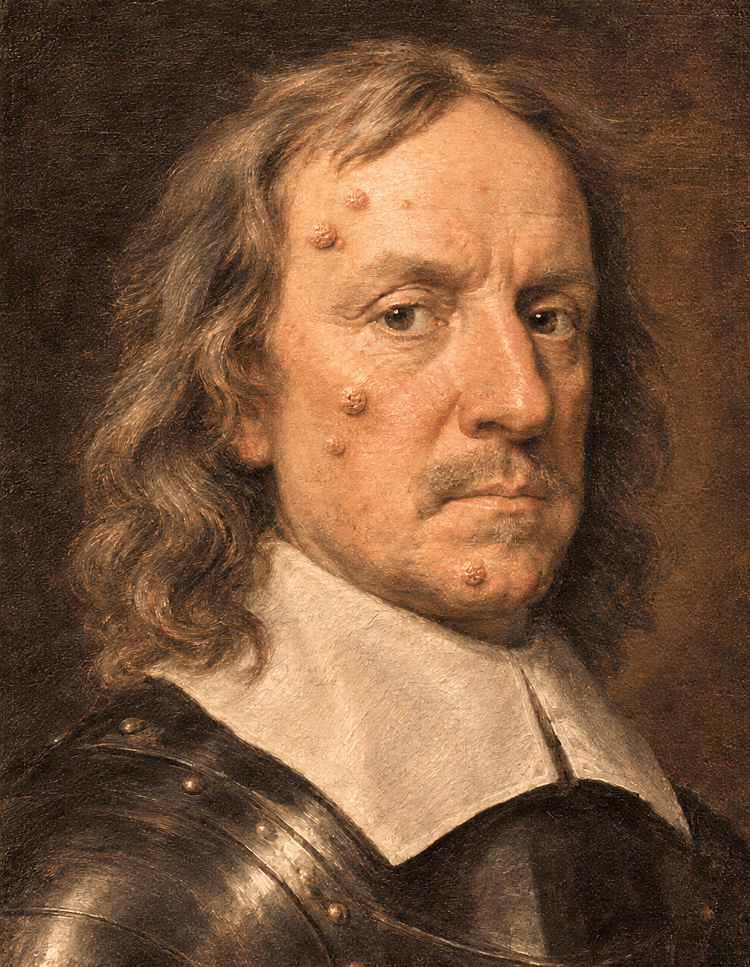
Such passages cultivate wisdom, humility, and reverent fear of God. They reveal the danger of self-deception and encourage sincerity, reminding us that appearances may mislead others, but only true integrity before God leads to peace.
¯\_(ツ)_/¯
© Dr. H 2026
