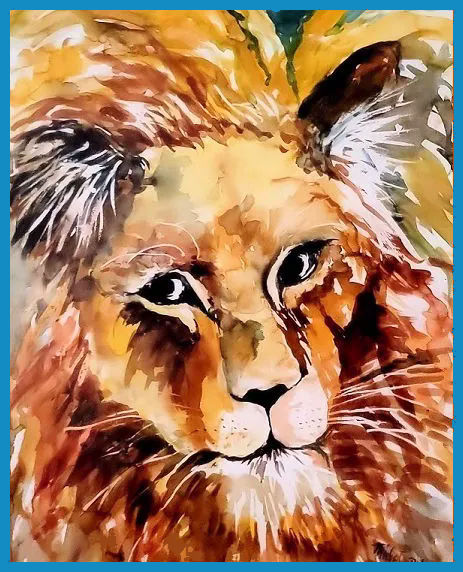
God Don’t Make No Junk! ∙∙
For we are God’s masterpiece. – Ephesians 2:10
Isaiah 64:8 O LORD, you are our Father. We are the clay, and you are the potter. We all are formed by your hand.
Isaiah 29:16 How foolish can you be? He is the Potter, and he is certainly greater than you, the clay! Should the created thing say of the one who made it, “He didn’t make me”? Does a jar ever say, “The potter who made me is stupid”?
Self-Image: How They Perceive Themselves
Many individuals struggle with how they perceive themselves. Their self-image greatly influences their confidence, decisions, and sense of self-worth. Maxwell Maltz stated, “Self-image sets the boundaries of individual accomplishment.” Paul J. Meyer noted, “Your self-image is the result of all you’ve given your subconscious as a database, so regardless of your background, what you are willing to become is the only reality that counts.” David D. Burns pointed out, “A poor self-image is a magnifying glass that can transform trivial mistakes or imperfections into overwhelming symbols of personal defeat.”
A distorted self-image can become a deeply limiting burden. It can convince a person that past wounds, failures, or circumstances define their value. Yet that kind of deficit does not have to remain permanent.
Example of Resilience
Ethel Waters, the renowned vocalist, offers a powerful example of perseverance and dignity. She was conceived through the rape of her 13-year-old mother, and her early years were marked by profound hardship. Her childhood was shaped by extreme poverty, frequent hunger, rejection, and instability. She moved constantly between relatives, including aunts, her grandmother, and even a neighbor. She never remained in one home for more than 15 months.
In her autobiography, she wrote, “ .” She married at 13, but the marriage soon ended in divorce. Later, at a costume party in Philadelphia, she was urged to sing two songs. Her performance deeply moved the audience, and that moment became a turning point in her life. Not long afterward, she was hired to sing at the Lincoln Theatre in Baltimore.
Faith And Identity
Despite the adversity she endured, Ethel Waters held a strong faith in the Lord Jesus Christ. She eventually became an important part of the Billy Graham Crusades. Her presence on stage was compelling, yet it was accompanied by warmth, humility, and an approachable charm that put even irreligious listeners at ease. Her signature song was “His Eye Is on the Sparrow.”
The first stanza reads:
Why should I feel discouraged and why should the shadows come?
Why should my heart be lonely and long for heaven and home?
When Jesus is my portion, a constant Friend is He,
His eye is on the sparrow, and I know He watches me.
His eye is on the sparrow, and I know He watches me.
Ethel Waters is also remembered for the well-known saying, “I am somebody cause God don’t make no junk!” That conviction helped her rise above the pain, rejection, and adversity that marked so much of her early life.
Maxwell Maltz wrote, “The ‘self-image’ is the key to human personality and human behavior. Change the self-image, and you change the personality and the behavior.”
Biblical Foundation
If a person believes they are worthless, they often begin to live as though that were true. Their behavior follows the identity they have accepted. But if someone understands that the Father does not create anything worthless, then they must reject the lie that they are junk. That truth can become a decisive turning point, especially for those who belong to Him. The knowledge that God does not make junk fills the heart with comfort, hope, gratitude, and renewed purpose.
David expressed this truth with deep reverence in Psalms 139:13-17:
“For you made all the delicate, inner parts of my body
and knit me together in my mother’s womb.
Thank you for making me so wonderfully complex!
Your workmanship is marvelous.
REFLECT & PRAY
John Wooden sagaciously asserted, “Be more concerned with your character than your reputation because your character is what you really are, while your reputation is merely what others think you are.”
Father, the thought that You delight in me and took great joy and pleasure in making me just the way I am is almost beyond comprehension. Encourage me to walk in the truth that I am Your masterpiece in the making.
INSIGHT
Ephesians 2:10: “For we are God’s masterpiece. He has created us anew in Christ Jesus, so we can do the good things he planned for us long ago.”
Paul describes children of the King as the Father’s “workmanship,” His “work of art,” His “masterpiece,” or His “poem.” This language presents the believer not as a finished product already perfected in every way, but as a new creation in Christ and a work in progress under the careful hand of God. Our spiritual life starts when we accept the Lord Jesus Christ as our Savior. Throughout our time on planet Earth, the Father is continuously at work in our lives, transforming and shaping us. This ongoing process will continue into eternity.
The Meaning of “God’s Workmanship”
How does the Greek language in the New Testament emphasize things? Instead of using punctuation such as underlining or highlighting, it indicates emphasis through word order. In Ephesians 2:10, the pronoun “His” is the first word in the sentence. It takes precedence, giving it special force. The sense is, “His workmanship we are.” We are the product of His intelligent design and careful craftsmanship. Every child of the King is a spiritual re-creation by the Father. This process began in this life when we embraced our identity as children of the King, and it will extend into eternity. We are a work in progress.
This truth confirms our inherent worth, sense of rootedness, and security. Children of the King are not self-made; they are the result of God’s intentional design and wise craftsmanship. Each of us is the focus of His thoughtful and purposeful activity. His saving work began when we were born again in Christ and continues as He molds us more and more into the likeness of His Son.
A Masterpiece in Progress
The word translated as “masterpiece, handiwork, or workmanship” is poiema. “Poiema is used in classical times for the work of a craftsman, such as the making of a crown” (Hoehner). The English word poem comes from this Greek word. The noun poiemacomes from the Greek verb poieo, “to do or make.” The point is that He is our Creator, our Maker, the One who made us and takes responsibility for us.
Because He is our Designer and Maker, it is not accurate or fitting to regard ourselves as worthless. Scripture presents a far different view. We are not junk. We are His. We are His precious workmanship, shaped by His wisdom and care.
The Potter and The Clay
God is the Potter, and we are the clay. That image highlights both His authority and His care. The One who formed us does not work randomly or carelessly. He creates with wisdom, purpose, and sovereign intention. Since our lives are in the hands of the Creator, the proper response is trust rather than contempt for what He has made. Isaiah the prophet explains in Isaiah 45:9-12:
“What sorrow awaits those who argue with their Creator. Does a clay pot argue with its maker? Does the clay dispute with the one who shapes it, saying, ‘Stop, you’re doing it wrong!’ Does the pot exclaim, ‘How clumsy can you be?’ How terrible it would be if a newborn baby said to its father, ‘Why was I born?’ or if it said to its mother, ‘Why did you make me this way?’
This is what the Lord says, the Holy One of Israel and your Creator: ‘Do you question what I do for my children? Do you give me orders about the work of my hands? I am the one who made the earth and created people to live on it. With my hands I stretched out the heavens. All the stars are at my command.’”
Before any of us were born, the Father had already designed and purposed our lives. We were born again; He began the lifelong process of spiritual transformation. This ongoing renewal continues toward the goal He has set, to be conformed to the image of Christ.
Transformation, Not Mere Reformation
2 Corinthians 3:18: “So all of us who have had that veil removed can see and reflect the glory of the Lord. And the Lord, who is the Spirit, makes us more and more like him as we are changed into his glorious image.”
The Christian journey transcends mere external behaviors and superficial changes. At its heart is the Father’s intention for profound inner transformation, which reshapes the heart, renews the mind, and fortifies character so that believers more closely resemble Christ. This transformation unfolds as individuals fix their thoughts on Jesus and allow the Scriptures to mold their hearts.
Believers can experience profound daily renewal by engaging in deep reflection on God’s character and beauty, especially through their relationship with Jesus Christ, the living Word. As their understanding of Him deepens, they gradually become more like Him. This ongoing transformation highlights the importance of inward renewal, which bears fruit in outward conduct that reflects Christ’s example, forming our character, shaping our attitudes, and influencing the way we live and relate to others.
Overcoming Worthlessness
Believing we are worthless is one of the mind’s most damaging lies. It often stems from rejection, failure, or criticism. This perception can become ingrained over time, but the Scriptures offer a very different foundation for our identity. According to Psalms 139:14, David gives thanks for our intricate design, proclaiming, “Thank you for making me so wonderfully complex! Your workmanship is marvelous, —how well I know it.”
Devaluing oneself undermines the wisdom and purpose of the Creator. Understanding our worth begins with recognizing God as our Designer and Maker. Viewing oneself as worthless is not humility. It contradicts God’s truth about creation.
Renewing the Inner Narrative
To combat the lie of worthlessness, we must consciously renew our minds by replacing false narratives about our self-image with the truths of Scripture. The Bible is the crucial tool in this process, correcting distorted thinking at its root. True transformation arises not from utilizing self-esteem techniques but from embracing the truth of God’s Word.
Living Out God’s Truth
Healing involves both knowledge and action. We must choose to live knowing that God’s Word is true, even if our feelings don’t immediately align. The struggle against feelings of worthlessness is often ongoing, and discouragement may resurface. In those moments, rather than seeking worth within ourselves, we should turn back to the God who created, knows, and sustains us.
In the apostle Paul explains Romans 8:28-29:
“And we know that God causes everything to work together for the good of those who love God and are called according to his purpose for them.
For God knew his people in advance, and he chose them to become like his Son.”
¯\_(ツ)_/¯7-12-4
© Dr. H 2026

