
Humanity and Deity of the Lord Jesus Christ
He is the radiance of His glory and the exact representation of His nature, and He upholds all things by the word of His power. – Hebrews 1:3
Colossians 1:15-17
Christ is the visible image of the invisible God. He existed before anything was created and is supreme over all creation.
For through him God created everything in the heavenly realms and on earth. He made the things we can see and the things we can’t see – such as thrones, kingdoms, rulers, and authorities in the unseen world. Everything was created through him and for him.
He existed before anything else, and he holds all creation together.
Understanding the Humanity and Deity of Jesus
How can we understand the humanity and deity of the Lord Jesus Christ in a way that remains theologically accurate and faithful? In the early centuries of Christianity, this question sparked intense theological debate and controversy. Numerous Christian scholars, teachers, and theological movements debated the nature of Christ, offering diverse views on the relationship between His humanity and divinity. As a result, the church was driven to articulate its doctrines more clearly and precisely to safeguard the truth revealed in the Scriptures.
As the church reflected on the teaching of the Scriptures, it realized the importance of language that could accurately express two core truths: that Jesus Christ is both fully God and fully man. To consistently and faithfully convey this theological truth, the early church adopted the term hypostasis. Although it may appear overly technical at first, this term became essential to Christian doctrine. Rather than mere jargon, hypostasis provided the precise language needed to clarify Jesus Christ’s nature, confirming both His complete humanity and His deity.
What Does Hypostasis Mean?
The term hypostasis appears multiple times in the New Testament. Its meaning varies by context. The Greek word hypostasis combines two elements: hypo, meaning “under,” and stasis, meaning “standing.” It is connected to the verb hyphistēmi, which implies “placing under,” “standing under,” “enduring,” or “supporting.” The imagery consistently evokes something positioned beneath another to uphold, sustain, or bear weight.
Hypostasis developed a wide semantic range in Greek usage. Etymologically, it signifies “what stands underneath,” and it has come to represent ideas such as “foundation,” “substance,” “essence,” “underlying reality,” “actual being,” and “essential nature.” In some contexts, it can also refer to “confidence,” “assurance,” or “steadfastness.”
In simple terms, hyphistēmi is the verb meaning “to stand under,” “to endure,” or “to support from beneath,” while hypostasis is the noun referring to that which “stands underneath,” such as a “foundation,” “substance,” “underlying reality,” or even “confidence.” In summary, hypostasis is a versatile term whose meaning varies with context, but it consistently conveys the notion of “something real, substantial, and firmly established.”
The Hypostatic Union
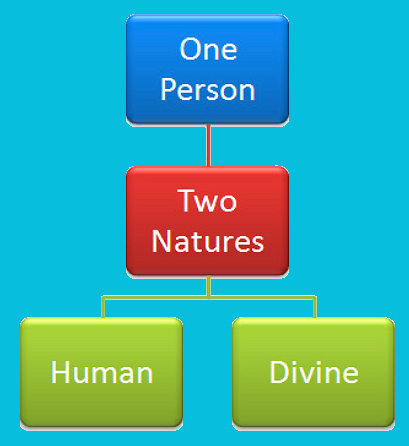
Among the most profound mysteries of the Christian faith is the person of Jesus Christ. From the earliest centuries, the church has confessed this reality in the doctrine of the Hypostatic Union, which teaches that Jesus Christ is one Person, the eternal Son, possessing two complete natures: humanity and deity. In the incarnation, Christ did not relinquish His deity by becoming man, nor did His humanity lessen His divine nature. Rather, while remaining fully all that God is, He assumed a true and complete human nature. Therefore, Jesus Christ is fully God and fully man in one person.
Though the term Hypostatic Union is not found directly in the Scriptures, the doctrine emerges as a theological conclusion drawn from the Scriptures’ teachings about Christ’s person and identity. The Council of Chalcedon explicitly and formally defined it in AD 451.
The Meaning of the Hypostatic Union
In simple terms, the Hypostatic Union means Jesus Christ is one Person with two complete natures: fully God and fully human at the same time. He is neither half-God and half-man nor two persons existing in one body. Rather, He is the one Lord Jesus Christ, truly divine and truly human.
A Simple Explanation
In layman’s terms, the doctrine means that Jesus is God who became man without ceasing to be God. When He entered the world, He did not give up His deity. Instead, He assumed a real human nature. This means that everything essential to true deity remained fully His, and everything essential to true humanity also became true of Him, apart from sin.
The Person and Identity of Christ in John 1
This is why John 1:1 matters so much. It states, “In the beginning was the Word, and the Word was with God, and the Word was God.”
This verse reveals that Jesus existed as the eternal Word prior to His birth in Bethlehem. He was not a created being; He was with God, and He was God.
John 1:14 explains that “The Word became flesh,” meaning that the eternal Son truly entered human history as a man. He did not merely appear human; He became truly and fully human.
REFLECT & PRAY
Stanley asserts, “When we hear Jesus, we hear God. When we observe Jesus, we observe God. If we ever want to know what God is like or how He might act or where He might go, all we have to do is watch Jesus.”
Father, thank you for sending your Son to become truly human, yet retaining His deity. Thank you. He came to make eternal salvation available to the human race.
INSIGHT
Christ the Image of the Invisible God
Colossians 1:15-17 presents one of the clearest declarations in the Scriptures of Christ’s deity and supreme majesty. Paul describes Him as “the image of the invisible God,” meaning that in Christ the unseen God is perfectly revealed.
Jesus is not merely a representative of God, a gifted teacher, or an exalted messenger. He is the full and visible revelation of the Father. To see Christ is to see the character and power of God.
Christ as Creator and Sustainer
Paul goes on to declare that all things were created through Him and for Him, in heaven and on earth, visible and invisible. This places Christ not within creation, but above it as its Creator. Everything that exists owes its origin to Him, and everything continues to exist by His power, for in Him all things hold together. Such language cannot be applied to a mere creature. Only God can create all things, rule over all things, and sustain all things moment by moment.
The Full Deity of Christ in Hebrews 1:3
Hebrews 1:3 offers one of the most powerful affirmations in the Scriptures of Christ’s full deity. The Son is described as “the radiance of the glory of God and the exact imprint of his nature.” This language goes far beyond simple resemblance or moral similarity. The author does not mean that Jesus merely reflects some divine qualities in an extraordinary way. Instead, he declares that “the Son perfectly reveals God because He fully shares in the divine being.” In the Son, “God’s glory is not just echoed but fully and personally manifested. “Therefore, to look at Christ is to meet the true and living God revealed.”
The Meaning of “Exact Imprint”
The phrase “exact imprint” gives added force to the argument of Hebrews by underscoring the Son’s full participation in the divine nature.
The Greek term character conveys “a precise impression made by a stamp, seal, or engraved die.” The emphasis is on an exact match rather than just resemblance; “the Son fully embodies God’s very essence.”
This vivid imagery makes the author’s meaning unmistakable. Just as a seal’s impression faithfully reproduces the original’s shape, Christ does not merely resemble God; He fully and perfectly manifests who God is.
Though truly man, He was never merely human. The life He lived in the flesh was the life of the eternal Son, the one in whom the fullness of deity dwells bodily. He is not a secondary copy, an inferior reflection, or a lesser divine being. Rather, He is the perfect and complete revelation of who God is.
The Son Who Sustains All Things
Hebrews 1:3 further declares that the Son “upholds the universe by the word of his power,” offering another compelling affirmation of His divine nature in the Scriptures. Christ is not only the perfect revelation of God; He is also the sovereign sustainer of all creation. Everything that exists continues to exist because of His power and is bound by His will. The created order is not self-sustaining and cannot endure without Him. Its continuous existence relies solely on the Son.
To uphold the universe means far more than merely passively preserving it; it means ruling, preserving, and directing all things by divine power and authority. No mere creature could exercise such authority, for nothing within creation can sustain creation as a whole. The one who upholds all things must, by necessity, stand above all things. For this reason, Hebrews presents the Son not as part of the created order, but as the divine Lord who continually sustains the universe.
Translation Challenges of Hebrews 11:1
Hebrews 11:1 has challenged scholars and translators, particularly regarding the term “hypostasis.” While this verse is commonly understood to define faith, it also describes what faith accomplishes. Throughout Hebrews 11, faith is portrayed not as mere optimism, but as a steadfast trust in the character and nature of God. Faith is characterized by confidence, fidelity, and endurance grounded in the finished work of Jesus.
The central interpretive question is how to understand hypostasis. Many modern translations render it as “assurance,” emphasizing faith as firm confidence in God’s promises. Others translate it as “substance” or “reality,” suggesting that faith enables believers to possess a present certainty regarding realities that are future and unseen.
Both interpretations contribute something important to the meaning of the verse. Faith rests firmly on God’s promises and embraces them as certain and real. Nevertheless, in the context of Hebrews, confident assurance seems to align most naturally with the author’s overall emphasis.
Hebrews 11:1 states that faith is the hypostasis of things hoped for. Here are several ways this is translated
NAS: Faith is the assurance of things hoped for.
KJV: Faith is the substance of things hoped for.
NLT: Faith is the confidence that what we hope for will actually happen.
NIV: Now faith is being sure of what we hope for.
CSB: Now faith is the reality of what is hoped for.
The Truth of the God-Man
The doctrine of the Hypostatic Union is a central truth in the gospel, not a distant, stogy, ethereal theological construct. Salvation relies on the eternal Son of God entering human history, taking on our nature, and acting on our behalf to bring us to the Father. Consequently, the Scriptures present Christ not merely as the subject of this doctrine. He is the foundation of redemption and the full revelation of God’s essence and majesty.
At the same time, the Scriptures make clear that the eternal Son of God truly became human. He entered the realities of human life, endured suffering, and fully identified with those He came to save. In Christ, full deity and true humanity are united in one person. He is both the exact imprint of God’s nature and the compassionate Savior who shared in our humanity without ceasing to be God.
¯\_(ツ)_/¯
© Dr. H 2026
 Dr H Reflections