Heuristic wisdom ∙∙

Heuristic wisdom ∙∙

Wisdom rests in the heart of one who has understanding – Proverbs 14:33

Proverbs 2:2-11

2 Tune your ears to wisdom, and concentrate on understanding.
3 Cry out for insight, and ask for understanding.
4 Search for them as you would for silver; seek them like hidden treasures.

5 Then you will understand what it means to fear the LORD, and you will gain knowledge of God.

6 For the LORD grants wisdom! From his mouth come knowledge and understanding.
7 He grants a treasure of common sense to the honest. He is a shield to those who walk with integrity.
8 He guards the paths of the just and protects those who are faithful to him.

9 Then you will understand what is right, just, and fair, and you will find the right way to go.
10 For wisdom will enter your heart, and knowledge will fill you with joy.
11 Wise choices will watch over you. Understanding will keep you safe.

Finding Our Path Through Life

How do we navigate the twists and turns of life? How can we make sound decisions? How do we actively pursue wisdom in an often chaotic world? One widely used method in modern disciplines is heuristic analysis.

The Heuristic Approach

Heuristic analysis is an approach to discovery that relies on established rules, educated guesses, and trial-and-error techniques to solve problems or learn. The solutions may not be perfect, but they are often sufficient to meet the needs at hand. This method usually taps into human instincts, combining intuitive leaps and experiential knowledge. At times, it requires a bit of luck or even a leap of faith.

The word heuristic originates from the Greek word heurisko, meaning “to find” or “to discover.” It combines experience and knowledge with curiosity and creativity. While this approach can be practical for problem-solving, is there a deeper, more reliable way to make life decisions? The Scriptures answer this question with a definite “Yes!” True wisdom begins by acknowledging the Father and seeking His guidance.

Seeking the Father for Guidance

The Lord Jesus Christ encourages us to bring our questions, uncertainties, and choices to the Father. Matthew 7:7-8 reminds us of the promise inherent in seeking Him for guidance: “Keep on asking, and you will receive what you ask for. Keep on seeking, and you will find. Keep on knocking, and the door will be opened to you. For everyone who asks, receives. Everyone who seeks, finds. And to everyone who knocks, the door will be opened.”

The Father invites us to lean on Him—to bring our hopes, fears, and needs before Him as we actively seek His counsel. However, this path is not an easy one. Matthew 7 also warns us of the challenges involved in pursuing wisdom and walking the narrow path: “You can enter God’s Kingdom only through the narrow gate. The highway to hell is broad, and its gate is wide for the many who choose that way. “ But the gate to life is very narrow, and the road is difficult, and only a few find it” (Matthew 7:13-14).

Our lives are marked by moments of regret, where we’ve felt the weight of poor choices or the sting of embarrassment from decisions made in haste without seeking the Father’s guidance. Oswald Chambers puts it simply: “All our fret and worry is caused by calculating without the Father.”

True Wisdom Comes from the Father

If we want to refine our decision-making, we must turn to the Father. His answer is simple yet life-changing: Seek wisdom and make it your own.

There is a transformational blueprint for personal growth that the Lord graciously provides. The pursuit of wisdom is not only a means to avoid folly but also a way of drawing nearer to the Father. This pursuit helps us understand His character and deepens our relationship with Him.

Proverbs 9:10 succinctly captures this truth: “The fear of the LORD is the foundation of wisdom. Knowledge of the Holy One leads to sound judgment.”

By seeking wisdom, we develop a reverence for God that transforms us on every level. Our hearts, minds, and spirits are reshaped as God helps us discern and internalize His truth. This transformation doesn’t come from surface-level exploration or passive observation. It stems from a sincere and active process of seeking and finding.

Unveiling Hidden Doors

The act of sincerely seeking God unlocks understanding we didn’t even know was possible. It’s as though our hearts sense the presence of a sealed door we’ve never noticed before. Without insight from God, we may feel an unshakable longing for “something more” but are unable to articulate what it is. However, through prayer, study, and humility, the Father Himself opens this hidden door of wisdom and understanding.

Proverbs 14 beautifully describes the life shaped by God’s wisdom: “People with understanding control their anger; a hot temper shows great foolishness. A peaceful heart leads to a healthy body; jealousy is like cancer in the bones. Wisdom is enshrined in an understanding heart; wisdom is not found among fools” (Proverbs 14:29-30, 33).

A Heart Ruled by Wisdom

When we pursue God’s wisdom, our hearts and minds are enlightened, shaped, and ultimately governed by His truth. His wisdom replaces fear, confusion, and chaos with peace and clarity. It enables us to make decisions in alignment with His will and equips us to live with purpose and confidence.

Take heart, for the wisdom you seek is not hidden forever. The Father invites all His children to come to Him. Through persistent seeking, asking, and knocking, He will reveal His eternal wisdom and guide your every step.

REFLECT & PRAY

We often find ourselves weighed down by poor decisions, suffering the consequences through the chaos they bring to our lives. We deeply feel the sting of regret when our choices lead to unintended outcomes.

Father, I come before You, seeking Your wisdom and guidance. Teach me to turn to You daily, to fix my eyes on Your face and follow the path You set before me. I long to make wiser choices, to walk in alignment with Your will, and to experience a life of peace rather than regret.

INSIGHT

The Meaning of Wisdom

Wisdom is a term we use often, but have you ever paused to ask yourself what it truly means?

The Hebrew word for wisdom, chokma, initially referred to the “technical skill or craftsmanship of skilled workers.” Over time, chokma took on a broader meaning, “encompassing experience, insight, and shrewdness.” Wisdom is essentially “Skill for living”—the ability to apply knowledge, experience, and understanding to life’s everyday situations.

True wisdom is the exceptional ability to discern, understand, and make intuitively excellent decisions. It goes beyond simply having intelligence or knowledge. While knowledge involves acquiring information, wisdom focuses on using that information effectively. It is the practical application of God’s truth in our daily lives.

The book of Proverbs encourages us to value wisdom highly because it is essential for navigating the complexities of life in a way that honors God and promotes peace and righteousness.

The Path to Gaining Wisdom

In today’s world, many people overlook the importance of true wisdom, often chasing fleeting desires without considering their long-term consequences. However, those who seek wisdom from God will not be disappointed. Here are some practical steps to help you pursue wisdom in your life:

• Seek the Father in Prayer
Take time to ask God for wisdom. When you pray, don’t just speak; learn to listen for the Father’s still, small voice. James 1:5 provides reassurance: “If you need wisdom, ask our generous God, and He will give it to you.”

• Meditate on God’s Word
Scripture is filled with timeless truths and principles. By studying God’s Word, you’ll gain insight into His heart and mind, equipping you with wisdom for life’s challenges.

• Obey Biblical Principles
Commit to obeying God’s instructions, and He will help you understand how to apply His truth in your life. His principles provide a framework for wise decisions.

• Remember God’s Faithfulness
Reflect on how God has kept His promises in the past. His track record of faithfulness reminds us that He will guide and provide as we seek Him.

• Seek Godly Counsel
Share your fears, concerns, and questions with those who deeply love God and care for you. The perspective of wise and spiritually grounded people can be invaluable in decision-making.

• Choose Friends Wisely
Surround yourself with others who are pursuing wisdom and godliness. The relationships we cultivate have a profound influence on the choices we make (Stanley).

More Than Knowledge

It’s essential to understand that wisdom is not the same as knowledge. Knowledge is plentifully available from books, the internet, and countless other sources, but wisdom isn’t something you can simply study or download. Wisdom is the deeper capacity to make decisions that align with God’s truth and bring peace into your life.

Alexander Ross explains it this way: “If any man lacks wisdom, that is an entirely different matter. He must go to the eternal Fountain of wisdom, and if he goes there, he will not be disappointed. God gives liberally, with an open hand . . ..”

The Generosity of God

God’s wisdom is not limited or withheld. He promises to give generously to all who seek it. James 1:5 reminds us of this beautiful truth: “If you need wisdom, ask our generous God, and He will give it to you.”

By seeking wisdom from the Father and aligning our lives with His Word, we connect with the One who possesses all understanding. Through Him, we gain the skills needed for a wise and fulfilling life, which can transform our decisions, relationships, and overall perspective.

Wisdom starts with a wholehearted pursuit of the Father. The opportunity and choice are yours to take the first step today.

¯_(ツ)_/¯3-16-2

© Dr. H 2025

Samson flawed hero ∙

Samson flawed hero ∙

O Lord God, remember me! Strengthen me just one more time. – Judges 16:28

Judges 16:28-30

28 Then Samson prayed to the LORD, “Sovereign LORD, remember me again. O God, please strengthen me just one more time. With one blow, let me pay back the Philistines for the loss of my two eyes.”
29 Then, Samson put his hands on the two center pillars that held up the temple. Pushing against them with both hands,
30 he prayed, “Let me die with the Philistines.” And the temple crashed down on the Philistine rulers and all the people. So, he killed more people when he died than he had during his entire lifetime.

A Tale of Two Missions

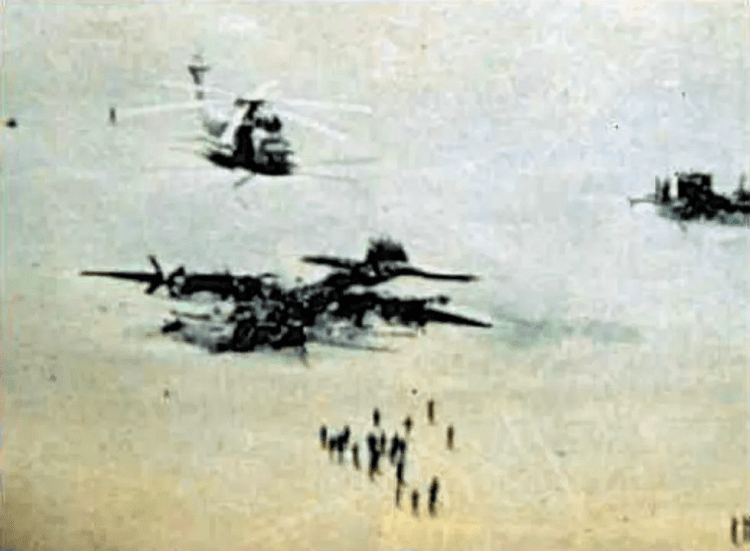
On November 4, 1979, a group of outraged Iranian students stormed the US Embassy in Tehran, taking 52 Americans hostage. For the next 14 months, these individuals endured captivity under the regime of Ayatollah Khomeini. This crisis not only caused immense suffering for the captives but also dealt a severe blow to the reputation of President Jimmy Carter and the United States.

Desperate to resolve the situation, President Carter authorized a top-secret military mission aimed at rescuing the hostages. The operation appeared to have all the elements needed for success. Yet, instead of delivering the hostages to safety, it turned into a catastrophic failure.

Eight helicopters were dispatched to the mission’s staging point in Iran, known as cally, during the retreat, one of the remaining helicopters collided with a transport aircraft. Both were destroyed in the fiery crash, and eight brave servicemen lost their lives.

Israel’s Struggles and Samson’s Calling

The story of Operation Eagle Claw parallels the repeated struggles and failures of ancient Israel. When Israel turned away from the Father, they were handed over to the Philistines, who oppressed the Israelites for 40 years due to their disobedience (Judges 13:1).

During this dark time, Samson was born to be a hero. Chosen by the Father, he was given an assignment to lead Israel out of oppression. He was empowered to conquer Israel’s dreaded enemy: the Philistines.

At the outset, things started well for Samson. He was graciously given the opportunity for success. He had godly parents who pointed him in the right direction. The spirit of the Lord began to stir him when he was a young man (Judges 13:24).

However, Samson, though destined to be a hero, was deeply flawed. He lived in an era when everyone did what was right in their own eyes (Judges 21:25). He was plagued by poor decisions, driven by impulsive emotions and unchecked desires. Instead of walking in the strength of his spiritual calling, he was led by personal lusts and a fascination with beautiful women (Judges 14:1-4; 16:4). This lack of discipline and spiritual maturity would ultimately lead to his downfall.

Flawed but Redeemed

Despite his flaws, the Father repeatedly empowered Samson to accomplish incredible feats against the Philistines. Time and again, he triumphed over his enemies with supernatural strength (Judges 14:5-6, 14-19, 15:4-8, and more). Samson is a complicated mixture of human frailty and supernatural enablement in one person.

Could it be that many of us can identify with him? A person meant for greatness, yet stumbling because of internal struggles. Samson’s life offers a somber warning to us all to pursue a disciplined relationship with God. But his death carries a profound message of hope. At the very end of his life, Samson called out to the Father, and his final act brought a decisive victory for Israel over their oppressors.

This reminds us of an unshakable truth. No matter how far we fall, “It is never too late to call upon the name of the Lord” (Simon J. Robinson). The Father’s mercy and power remain available to those who humble themselves and seek Him. Samson’s story stands as both a cautionary tale and a testament to the enduring grace of God.

REFLECT & PRAY

Charles Stanley observes that “Samson had fallen so low spiritually that he could not tell the difference between the Lord’s presence and His absence.”

Father, I have taken to heart the story of Samson. Keep my heart focused on You, not on the fleeting temptations of sin that so easily entangle and pull me away. Strengthen me just one more time.

INSIGHT

Samson’s Fall and Spiritual Blindness

As a result of Samson’s folly, his story took a tragic turn when the Lord departed from him. Tragically, Samson was so spiritually insensitive that he did not even realize the Lord had left him (Judges 16:20). His spiritual blindness gradually led to physical blindness.

As vividly recorded in Judges 16:21, The Philistines seized him, gouged out his eyes, and brought him to Gaza. There, they bound him in bronze chains and threw him into prison, forcing him to grind grain like a common slave.

Betrayed and Broken

The events that led to Samson’s downfall unfolded rapidly. Samson was betrayed by Delilah, his “lover,” a woman he believed cared for him. Samson’s hair was cut, his strength stolen, and his enemies captured him. He was no longer a mighty warrior. The Philistines blinded him, and he became a humiliated slave, a mere plaything for mockery and torment.

The Philistines, who worshiped their god Dagon, attributed Samson’s downfall and capture to this false god. They believed that Dagon had delivered Samson into their hands, and they triumphantly celebrated their supposed victory. Samson was summoned to the temple of Dagon to be humiliated and entertain them. Mocking a prophet of the living God is never a good idea. The Father takes it quite personally and frequently acts in defense of His servants, the prophets (2 Kings 9:7).

A Glimmer of Hope

Yet, even in Samson’s darkest hour, hope was quietly taking root. Judges 16:22 hints at a turning point with these simple yet profound words: “But before long, his hair began to grow back.” This subtle detail carried a hidden promise. Unknown to the Philistines, as Samson’s hair grew, his strength began to return. The Philistines had no idea that this was so. However, they would soon find out. They were in for the surprise of their life and, ultimately, their death.

Final Act of Strength

During a festival in Dagon’s temple, the Philistine rulers and thousands of others gathered to celebrate. They called for Samson to be brought out of prison to amuse them. The story is recorded as follows: Judges 16:23-24: “The Philistine rulers held a great festival, offering sacrifices and praising their god, Dagon. They said, ‘Our god has given us victory over our enemy Samson!’ When the people saw him, they praised their god, saying, ‘Our god has delivered our enemy to us! The one who killed so many of us is now in our power!’ Ridiculed and humiliated, Samson was led to stand between the two central pillars of the temple” (Judges 16:25-27).

Here, in a pivotal moment, Samson turned back to the Father. Judges 16:28 He prayed, “Sovereign LORD, remember me again. O God, please strengthen me just one more time. With one blow, let me pay back the Philistines for the loss of my two eyes” (Judges 16:28).

Gathering his renewed strength, Samson pushed against the pillars supporting the temple. With one final effort, he brought the entire structure crashing down, killing the Philistine rulers and everyone inside. Astonishingly, Samson’s death claimed more lives than all his battles combined (Judges 16:29-30).

A Prayer of Strength

This was only the second time in the book of Judges that Samson is recorded praying (Judges 15:18), yet it was a prayer of deep reliance on the Lord. His heartfelt cry, “O God, please strengthen me just one more time,” stands as a timeless model for anyone facing impossible circumstances.

But there is a little-known secret. It is pretty simple. The Father never counts how many times we pray this prayer. Thus, we can pray it repeatedly as though we have never prayed it at all. The Father has been known to answer over and over again.

When the Father calls children of the King to serve, they have only to recall and recite Samson’s prayer.

O God, please strengthen me just one more time.

¯_(ツ)_/¯6-22-2

© Dr. H 2025

Seeing things as they really are ∙

Seeing things as they really are ∙

The one who looks into the perfect law, the law of liberty, and perseveres, being no hearer who forgets but a doer who acts, he will be blessed in his doing. – James 1:25

James 1:16-25

16 So don’t be misled, my dear brothers and sisters.
17 Whatever is good and perfect comes down to us from God our Father, who created all the lights in the heavens. He never changes or casts a shifting shadow.

19 Understand this, my dear brothers and sisters: You must all be quick to listen, slow to speak, and slow to get angry.
20 Human anger does not produce the righteousness God desires.

21 So get rid of all the filth and evil in your lives, and humbly accept the word God has planted in your hearts, for it has the power to save your souls.

22 But don’t just listen to God’s word. You must do what it says. Otherwise, you are only fooling yourselves.
23 For if you listen to the word and don’t obey, it is like glancing at your face in a mirror.
24 You see yourself, walk away, and forget what you look like.

25 But if you look carefully into the perfect law that sets you free, and if you do what it says and don’t forget what you heard, then God will bless you for doing it.

Seeing Things as They Really Are

What does it mean to see things as they really are? The answers are varied. In deriving a definition from real-world examples, Peter Drucker, a renowned and perceptive observer of American trends and culture, posed a poignant question.

What did Harry Truman, the 33rd President of the United States, have in common with Jack Welch, the former President of General Electric? Drucker’s answer, “They share a rare commodity – intellectual integrity.” And what is intellectual integrity? Drucker explains, “I mean it as the ability to see the world as it is, not as you want it to be.”

His point is that Welch and Truman both tackled their jobs in the same spirit of objectivity. “They both understood executives are not their own masters. They are servants of the organization, whether elected or appointed, regardless of whether the organization is a government, a government agency, a business, a hospital, or a diocese. It’s their duty to subordinate their likes, wishes, preferences to the welfare of the institution” (Forbes).

Leadership Rooted in Reality

How can one demonstrate intellectual integrity as a leader of an organization or institution? A good leader determines the foremost need to be addressed. Meeting that need becomes their primary task and duty. The leader does not allow their ego to drive decision-making. Drucker comments, “Truman knew this—and acted on it; and that made him a great President.”

Both Churchill and Stalin were far more experienced than Truman in matters of international affairs. Truman knew he had much to learn and needed to do so at warp speed. He met daily with General George Marshall and Undersecretary of State Dean Acheson to improve his understanding. Truman recognized his limitations and had the personal character and courage to seek help when he needed it.

The Word as a Mirror

The Father has provided a way for us to see things as they really are. The Word of God discloses what each child of the King is really like on the inside. When we look into the Bible, it reveals our innermost being, heart, spirit, and soul. The Bible exposes our character, attitudes, and motivations. We are laid bare from the inside out.

James equates the Scriptures to a mirror. When we look in the mirror, we can see our exterior to determine how we look. If anything needs to be fixed, straightened out, or addressed, we can take the necessary actions.

“The main purpose for owning a mirror is to be able to see yourself and make yourself look as clean and neat as possible. As we look into the mirror of God’s Word, we see ourselves as we really are” (Wiersbe).

The Father’s Perspective

We have the opportunity to view ourselves through the Father’s perspective. Ultimately, His viewpoint is the only one that truly matters. When we are right before Him, we are right indeed.

None of us will ever wholly meet His standards in this life because of our fallen, imperfect nature. Yet, He has graciously provided us with the means to perceive reality as it truly is. Objective reality is rooted in His unwavering standards of righteousness, holiness, goodness, and truth.

REFLECT & PRAY

Just as a mirror reflects our physical image, the Bible reveals the truth of our innermost being.

Father, allow me to see reality as it truly is. Help me view the reflection of my life through Your Word and align myself with Your standards. May I be an active doer who responds to Your truth, rather than a passive hearer who forgets.

INSIGHT

Hearing vs. Doing

What separates a forgetful hearer from an effectual doer? The answer boils down to one word: action. A hearer listens but then forgets; a doer acts (Moo). A doer not only listens but applies what they’ve heard. According to James, an effectual doer is a true hearer because he hears and puts into practice the Word. Functionally, how does this occur?

Looking Intently into the Perfect Law

True hearing begins with careful attention to God’s Word. James uses the Greek word parakupto to describe this process. Parakupto means “to stoop and look intently,” much like John did when he stooped to peer inside Jesus’ empty tomb in John 20:5 (Burdick). This term refers to “an intense and deliberate focus.” It implies “a deep absorption and fervent desire to understand.”

James urges us in James 1:25: “But the one who looks into the perfect law, the law of liberty, and perseveres—not being a forgetful hearer but a doer who acts—will be blessed in his doing.”

The “law of liberty” refers to the Word of God and its divine principles. It serves as a spiritual mirror for every child of the King. This law highlights the guidelines and standards the Father desires for us to live by. It offers a framework for joyful and purposeful obedience.

A New Way of Living

James introduces a revolutionary way of life by encouraging us to connect the perfect law of liberty with the power of the Holy Spirit. This combination transforms obedience from an obligation into a joy. The failures of the past no longer weigh us down but are instead empowered and encouraged by the Father. We experience something that is often totally new – joyful spiritual obedience. Doing the right thing is no longer a chore to be endured with drudgery. Instead, it becomes a source of pleasure and delight.

The Psalmist echoes this beautiful truth in Psalms 119:18: “Open my eyes to see the wonderful truths in Your instructions.”

This new perspective on obedience shifts our hearts and minds, leading us into a state of joyful spiritual freedom.

Hearing Is Not Enough

Warren Wiersbe reminds us of a critical point: “It is not enough to hear the Word; we must do it. Many people have the mistaken idea that hearing a good sermon or attending a Bible study is what makes them grow and receive God’s blessing. It is not the hearing but the doing that brings the blessing. Too many Christians mark their Bibles, but their Bibles never mark them! If you think you are spiritual because you hear the Word, then you are only kidding yourself.”

Similarly, Charles Stanley observes that modern culture often labels individuals as “spiritual” simply because they show interest in spiritual matters. However, the biblical perspective is far more demanding. True spirituality reflects itself in obedience to God’s Word. Those who hear and obey His voice are the ones deemed spiritual in the Father’s eyes.

Final Thoughts

To be more than just hearers, we must look deeply into Scripture’s truths, allowing them to transform our hearts and guide our actions. Joyful obedience isn’t about checking off boxes but aligning our lives with God’s will, knowing that in doing so, we live in harmony with His perfect plan.

Look intently into the perfect law and become a doer, putting God’s truth to work in your life.

¯_(ツ)_/¯4-5-2

© Dr. H 2025

Gad Who? ∙∙

Gad Who? ∙∙

David said to Joab and the commanders of the army, “Take a census of all the tribes of Israel – from Dan in the north to Beersheba in the south – so I may know how many people there are.” – 2 Samuel 24:2

2 Samuel 24:10 But after he had taken the census, David’s conscience began to bother him. And he said to the LORD, “I have sinned greatly by taking this census. Please forgive my guilt, LORD, for doing this foolish thing.”

Defining Adulthood

What does it mean to be an adult? One word defines it best: responsibility. The transition from childhood to adulthood is marked by accepting personal accountability. Unlike children, who tend to shift blame or depend on others to fix their problems, adults understand they are fully responsible for both their actions and their consequences. True adults own their mistakes, work to correct them, and strive to make things right. Their mantra is simple yet profound: “It is up to me.”

Spiritual Adulthood

Spiritual maturity mirrors this concept of responsibility. A mature believer strives to live by the Father’s standards, acknowledges their sins, and aligns themselves with God’s will. They seek forgiveness and pursue cleansing with a heart dedicated to emulating the life and principles of the Lord Jesus Christ. Their guiding philosophy is clear: “It falls upon me to reflect the character and teachings of my Lord Jesus Christ.”

David’s Census

A census, by itself, may seem harmless—even necessary. For example, in the United States, a census is conducted every ten years and plays a critical role in determining the population and redistributing representation in Congress.

David decides to take a census. What could go wrong? But things took a troubling turn. Why did this act weigh so heavily on David’s conscience? What questions did it raise, and what was his hidden agenda?

Taking a census was not inherently wrong. It was practiced before without provoking God’s disapproval (see Numbers 1 and Numbers 26). The Torah even provided guidelines for conducting a census. According to Exodus 30:11-16, a census included a temple tax, which funded the tabernacle and sacrificial system (Exodus 38:25-28) and later became known as the temple tax mentioned in Matthew 17:24-27.

However, David’s census was different. This was not a temple tax. Instead, it was a military census. Its purpose was to measure the strength of Israel’s army. David’s officials reported that 1.3 million troops were fit for battle (2 Samuel 24:2). On the surface, this might seem like a strategic, necessary move, but the real issue lay beneath. What’s the problem?

The Problem with David’s Actions

The underlying problem depended entirely on one critical question: Who was Israel’s true Commander-in-Chief?

The Lord of Hosts is the ultimate Commander of Israel’s armies. The kings of Israel were to walk by faith, relying on God’s provision rather than counting on their own strength. For the kings of Israel, the size of their military force should have been irrelevant because the Father Himself supplied all the power and might they needed. Yet, David allowed pride to cloud his judgment.

Taking this census was not about honoring God; it was about inflating David’s own sense of importance. The size of his army became a source of misplaced pride and security. His decision demonstrated a lack of trust in God’s leadership and provision. By focusing on numbers, David revealed his reliance on human strength rather than the limitless power of the Lord.

A Lesson in Trust

Ultimately, David’s census teaches us a sobering lesson about the importance of responsibility and trust. Just as adults are called to take responsibility for their actions, spiritual maturity requires us to place unwavering trust in God’s sovereignty. Pride and self-reliance have no place in our walk with the Lord. A life of faith demands not only humility but the courage to trust God fully, acknowledging Him as the One who is truly in control.

REFLECT & PRAY

On June 18, 1815, Napoleon faced his final defeat at the Battle of Waterloo. Rather than risk falling into the hands of the Bourbons, Prussians, or Austrians, he chose to surrender to the British. Why? He believed that while the British might act with severity, they would also uphold fairness and justice.

Father, You are both just and merciful. How often I find myself caught in the messes of my own desperation. I acknowledge my mistakes, accept the weight of my choices, and wholeheartedly surrender myself to You.

INSIGHT

Tensions were mounting, and judgment was inevitable. He sent the prophet Gad to confront David.

In 2 Samuel 24:11-13, the Lord sent a message to David through the prophet Gad: “Go and tell David, ‘Thus says the LORD, I am offering you three options. Choose one of them for yourself, that I may do it to you.’” Gad arrived at David’s side and proposed, “Should there be three years of famine in your land? Or will you flee three months before your foes while they pursue you? Or shall there be three days of pestilence in your land?

In a sense, God permitted David to choose his own punishment. It was reminiscent of the American TV show “Let’s Make a Deal,” which first aired in 1963 and was hosted by Monty Hall for 30 years. David was presented with three choices. He could make his own deal. He could choose the door to open and face the consequences that followed.

Behind the first door, three years of famine across the land.
Behind the second door, three months of fleeing from adversaries.
Behind the third door, a severe plague lasting three days across the land.

David’s choice demonstrated his profound understanding and unwavering trust in God’s love, grace, kindness, and mercy. He was a mature child of the King. He knew it would be severe yet fair.

2 Samuel 24:14 “I’m in a desperate situation!” David replied to Gad. “But let us fall into the hands of the LORD, for his mercy is great. Do not let me fall into human hands.”

David chooses punishment directly from the hands of God. It would be harsh, but it would be just. The justice of people is often unpredictable, capricious, and lacking mercy and grace. And David knew a secret. While we reap what we sow, the Father often grants remarkable mercy and grace. The Father forgives. He mitigates the punishment. Why? Because that is His nature.

The prophet Ezekiel captures the essence of the father’s loving and merciful heart in Ezekiel 18:32 I take no delight in the death of anyone, declares the sovereign LORD.

The Father sent an angel of destruction, and three days of plague began. People died. David was grieved; his heart was broken. As the angel prepared to strike Jerusalem, David, feeling remorse and guilt, pleaded with God for the city’s inhabitants.

2 Samuel 24:17 When David saw the angel, he said to the LORD, “I am the one who has sinned and done wrong! But these people are as innocent as sheep – what have they done? Let your anger fall against me and my family.”

David cherished his flock like a shepherd, taking full responsibility for his actions. He acknowledged that he was the one who had sinned, not the people of Israel. He hadn’t considered the collateral damage his actions would cause.

David transitioned from a self-centered, supercilious king to a selfless shepherd. He asked that the Father punish him and his household rather than the innocent sheep of the house of Israel.

David was a man after the Father’s own heart (1 Samuel 13:14). The Father saw David’s remorse and love for his people. He showed mercy and halted the destruction.

2 Samuel 24:16 But as the angel was preparing to destroy Jerusalem, the LORD relented and said to the angel, “Stop! That is enough!”

The plague ceased!

Before the story concludes, we see one more instance of David’s heart and devotion to the Father. He was instructed to build an altar on a piece of land owned by Araunah the Jebusite (2 Samuel 24:18).

Despite being king and having the power to take anything he wanted, David insisted on purchasing the land from Araunah. Araunah offered to give it to David freely, but David refused the offer.

2 Samuel 24:24 says, “No, I insist on buying it, for I will not present burnt offerings to the LORD my God that have cost me nothing.”

Sacrifice, by its very nature, requires that a price be paid. Sacrifice involves cost. It is never free. His actions remind us all that genuine sacrifice consists of giving up something of value.

Every adult knows that.

What door would you choose?

¯_(ツ)_/¯10-23-3

© Dr. H 2025

Emotional Intelligence ∙

Emotional Intelligence ∙

An offended friend is harder to win back than a fortified city. Arguments separate friends like a gate locked with bars. – Proverbs 18:19

James 1:16-20

16 So don’t be misled, my dear brothers and sisters.
17 Whatever is good and perfect comes down to us from God our Father, who created all the lights in the heavens. He never changes or casts a shifting shadow.

19 Understand this, my dear brothers and sisters: You must all be quick to listen, slow to speak, and slow to get angry.
20 Human anger does not produce the righteousness God desires.

Understanding Emotional Intelligence

Emotional Intelligence (EI), also known as Emotional Quotient (EQ), refers to the ability to perceive, interpret, manage, and effectively utilize emotions. It enables individuals to connect, communicate, and interact constructively with others. EI plays a vital role in understanding and responding to the emotions of others, making it a key to building meaningful and harmonious relationships (verywellmind.com).

The Importance of Emotional Intelligence

At its core, Emotional Intelligence enables us to navigate social interactions with insight and empathy. It helps us grasp non-verbal cues, decipher unspoken feelings, and respond with wisdom rather than impulse. Having a high level of emotional intelligence (EI) leads to stronger relationships, a deeper understanding, and more effective conflict resolution.

Key indicators of Emotional Intelligence include:

• Recognizing and articulating emotions in oneself and others.
• The ability to forgive and learn from mistakes.
• Welcoming and adapting to positive change.
• A natural curiosity about people and their experiences.
• Empathy and genuine concern for others’ well-being.
• Sensitivity to feelings, using words that heal rather than harm.
• Taking responsibility for one’s errors.
• Managing emotions skillfully, even in tense or challenging situations. (verywellmind.com)

The Consequences of Low Emotional Intelligence

When we lack EI, our ability to connect and communicate suffers. Thoughtless words and dismissive phrases can damage trust, strain relationships, and even cause lasting pain. Common expressions that highlight a lack of Emotional Intelligence include statements like:

• “You’re being too sensitive.”
• “Calm down.”
• “I didn’t mean it like that.”
• “You always…” or “You never…”
• “It’s not a big deal.”
• “I’ve had it worse.”
• “I’m not trying to be rude, but…”
• “I’m only joking.”
• “I don’t care.”

Such phrases undermine others’ emotions and close the door to meaningful conversation. Instead, a soft, thoughtful approach can diffuse tension and open pathways for understanding.

The Power of Gentle Words

The Bible highlights the power of our words in Proverbs 15:1, which states, “A gentle answer turns away anger, but harsh words stir up anger.”

Gentle here is derived from the Hebrew word rakh, meaning “kind,” “tender,” and “conciliatory.” A gentle reply “soothes emotions,” “calms tempers,” and “prevents conflict.” It conveys the notion of being “soft in relation to speech,” “gentle,” “kind.” It has been rendered as “A kind answer soothes angry feelings” (CEV) or “A friendly reply calms anger” (SPCL).

To calm someone’s anger, speak to them with gentle words.

Conversely, harsh or painful words are described by the Hebrew term etsev, which means “to spark anger,” “cause pain,” and “escalate disputes.” It refers to “a word or utterance spoken sharply or heatedly” that “stirs up or excites angry emotions” (UBS).

By choosing gentleness, we not only avoid unnecessary conflict but also foster reconciliation and understanding.

Abigail as a Model of Emotional Intelligence

A beautiful example of Emotional Intelligence in action is found in 1 Samuel 25. Abigail, a wise and discerning woman, demonstrated exceptional EI in dealing with an intense conflict.

Her husband, Nabal, had insulted David after he and his men had protected Nabal’s flocks. He refused to remunerate David and his men. David was a mighty warrior with an explosive temper. Enraged by Nabal’s disrespect, David set out to destroy him and all he owned.

Acting quickly and wisely, Abigail intervened. She humbled herself, brought gifts, acknowledged David’s grievances, and pleaded for mercy while taking responsibility for Nabal’s offense.

1 Samuel 25:27-28 recounts her words to David: “Here is a gift that I, your servant, have brought to you and your young men. Please forgive my offense, for the Lord will surely reward you with a lasting dynasty, for you are fighting the Lord’s battles and have not done wrong throughout your entire life.”

Her insightful and thoughtful response softened David’s anger and averted a disaster. Abigail’s actions embody how understanding, wisdom, and empathy can resolve even the fiercest conflicts.

Cultivating Emotional Intelligence

Developing Emotional Intelligence requires self-awareness, a commitment to grow, and daily practice. When we approach others with empathy and kindness, our relationships thrive. Words have the power to heal or hurt; when we choose gentleness and wisdom, we reflect value and goodwill, creating peace where there could have been discord.

REFLECT & PRAY

“The closer a person is to us, the more an offense hurts and the harder it is to reconcile that person. An English maxim says, ‘Friendship once injured is forever lost’” (Butler).

Father, I long to cultivate Emotional Intelligence, enhancing my ability to empathize and bond with others. Please guide me in becoming more compassionate and approachable, softening any harshness within me and replacing it with kindness and understanding.

INSIGHT

The Challenge of Mending Broken Relationships

Proverbs 18:19 warns us of the difficulty of reconciliation when a relationship is damaged. “An offended brother is harder to win back than a fortified city. Arguments separate friends like a gate locked with bars.” This verse highlights how deeply conflict can divide even the closest of relationships. Some translations emphasize this further, stating, “An offended brother is more inaccessible than a fortified city,” or “A brother we have injured closes his doors to us.”

Dave Bland explains that the message is clear: It is more challenging to repair a relationship with an offended friend than to conquer a fortified city. This truth reminds us to tread carefully with our words and actions, avoiding unnecessary offenses and pursuing peace and reconciliation when conflict arises.

Conflict Should Not Be Ignored

Proverbs 17:14 teaches, “The beginning of strife is like breaching a dam, so abandon the quarrel before it breaks out.” Once an argument begins, it can quickly spiral out of control, causing irreversible harm. Instead, we should strive to prevent conflict before it arises and resolve tensions promptly to maintain harmony.

Romans 12:18 encourages us to live in peace with others whenever possible, saying, “If it is possible on your part, live at peace with everyone.” Avoiding quarrels and practicing forgiveness are vital steps in building and maintaining meaningful relationships.

Practical Steps to Avoid Conflict

Here are some ways to handle disagreements constructively and work toward peace and understanding:

• Choose your battles wisely. Not every disagreement is worth pursuing. Reflect on whether this issue truly matters in the bigger picture.
• Listen before you speak. Miscommunication is a significant contributor to conflict. Be quick to listen and slow to speak.
• Use “I” statements. Express your feelings by focusing on your perspective, such as “I feel hurt when. . .” rather than accusatory phrases like “You hurt me when. . .” This approach minimizes defensiveness.
• Explore common ground. Look for mutual solutions that respect both sides’ needs and perspectives.
• Seek outside help if needed. If you’ve reached a standstill, involve a neutral third party to mediate the situation.
• Take time to reflect and pray. Self-care, reflection, and prayer can help you respond with understanding and patience rather than anger.

The Call to Forgive and Be Tenderhearted

Ephesians 4:32 reminds us to “Be kind and tender-hearted to one another, forgiving each other just as in Christ God forgave you.” Forgiveness lies at the heart of resolving conflicts. Just as we are freely forgiven, we are called to extend the same grace to others.

James 1:19-20 reinforces the importance of controlling anger in conflict resolution. “My dearest brothers and sisters, take this to heart: Be quick to listen, but slow to speak. And be slow to become angry, for human anger is never a legitimate tool to promote God’s righteous purpose”(TPT). Responding in anger only escalates problems, while a calm and thoughtful approach creates room for redemption and healing.

A Heart of Peace

When we pursue peace with wisdom and humility, we honor God and strengthen our relationships. Conflict is unavoidable in life, but how we handle it determines whether it fosters growth or causes unnecessary damage. By forgiving freely, speaking gently, and seeking common ground, we can repair broken friendships and nurture bonds of fellowship that reflect God’s love and grace.

James 1:20 Human anger does not produce the righteousness God desires.

¯_(ツ)_/¯11-23-3

© Dr. H 2023