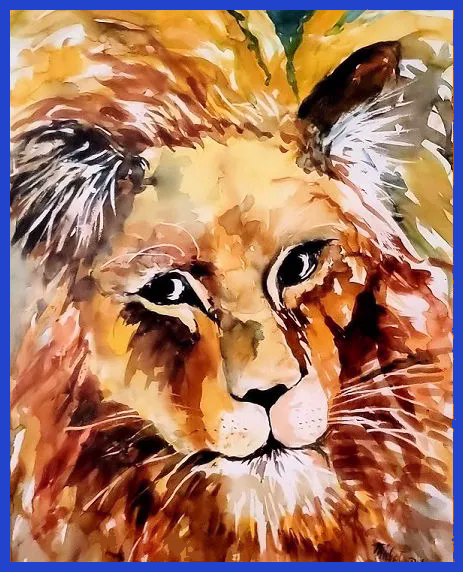
How to become real ∙

How to become real ∙

Long ago, the LORD said to Israel: I have loved you, my people, with an everlasting love. With unfailing love, I have drawn you to myself. – Jeremiah 31:3

Zephaniah 3:17 For the LORD your God is living among you. He is a mighty savior. He will take delight in you with gladness. With his love, he will calm all your fears. He will shout for joy over you.”

“The Velveteen Rabbit” is a classic British children’s tale penned by Margery Williams in 1922. The story starts when a stuffed rabbit, sewn from velveteen, is gifted to a young boy on Christmas. He is given several other presents that are modern and mechanical. The boy plays with his other new presents and forgets all about the Velveteen Rabbit.

The oldest and most experienced toy in the nursery is the Skin Horse. He was so old that his brown coat was bald in patches and showed the seams underneath, and most of the hairs in his tail had been pulled out. He was wise, for he had seen a long succession of mechanical toys arrive to boast and swagger, and by and by, their mainsprings break, and they pass away. He knew they were only toys and would never turn into anything else.

One day, the Rabbit curiously asks, What does being REAL mean? “Does it mean having things that buzz inside you and a stick-out handle?”

“Real isn’t how you are made,” said the Skin Horse. “It’s a thing that happens to you. When a child loves you for a long, long time, not just to play with, but REALLY loves you, then you become Real.”

“Does it hurt?” inquires the Rabbit.

“Sometimes,” replies the Skin Horse honestly. “But once you are REAL, pain doesn’t bother you anymore.”

“Does it happen all at once, like being wound up?”

“It doesn’t happen all at once,” said the Skin Horse. “It takes a long time. That’s why it doesn’t happen often to people who break easily or have sharp edges, or who have to be carefully kept. Generally, by the time you are Real, most of your hair has been loved off, and your eyes drop out and you get loose in the joints and very shabby. But these things don’t matter at all, because once you are Real, you can’t be ugly, except to people who don’t understand.”

“I suppose you are Real?” said the Rabbit. And then he wished he had not said it, for he thought the Skin Horse might be sensitive. But the Skin Horse only smiled.

“The boy’s uncle made me Real,” he said. “That was a great many years ago, but once you are Real, you can’t become unreal again. It lasts for always.”

The Rabbit is taken aback by this idea, doubting his chances of becoming REAL. However, one night, the boy’s Nana replaces a lost toy with the Rabbit for the boy to sleep with. From then on, the Rabbit becomes the boy’s most cherished toy, accompanying him on spring picnics and becoming an integral part of his life. The boy considers the Rabbit as REAL. Time passes, and the rabbit becomes shabbier but happy. He became REAL because of love.

Do you see yourself in this story? Are you the young boy, the uncle, the Skin Horse, or the Rabbit?

In reality, we might identify with all four of them in some way. I envy the Skin Horse, but I am probably more like the Rabbit, yearning to become REAL.

The Father God resembles the uncle: older, wiser, and having loved His children for a very long time.

REFLECT & PRAY

“God rejoices over you, though He knows you are in the process of becoming all that He has planned for you to become . . .. God is patiently molding and shaping you into the image of His Son” (Stanley).

Father, thank You for loving me with Your everlasting love and drawing me to Yourself. Thank You for taking particular delight in me. You literally shout for joy as You embrace me in Your loving arms.

INSIGHT

Jeremiah 31:3 I have loved you with an everlasting love; therefore, I have drawn you with lovingkindness to myself.

The Father, in His boundless love, gently draws us closer to Him. While this makes us children of the King, it doesn’t make us real. To become real, we must experience His love for a long time. Much like mechanical toys, many of us seem to break easily, have sharp edges, or require a lot of special handling. In reality, He has been “handling” some of us for a long, long time. Some of the rough edges have been smoothed out. We have received a few dings, but we have not been shattered. Over time, we start to love His tender touch and accept His warm embrace.

But there’s more.

The Father desires to make Himself known to us in an extraordinary way. Wherever we are, He wants to be right there in the midst of it all. In fact, He is.

Matthew 18:20 For where two or three gather together as my followers, I am there among them.

But there’s even more.

Zephaniah 3:17 For the LORD your God is living among you . . . He will take delight in you with gladness. With his love, he will calm all your fears. He will rejoice over you with joyful songs.

This verse expresses the Father’s feelings towards the children of the King. He takes “delight” in us, which could be translated as “He will be very happy with you” (UBS). “The great God not only loves his saints, but he loves to love them” (Matthew Henry). God takes great delight in loving us because we are His very own” (Jerry Bridges).

The phrase, “You will rejoice over us with loud singing,” could be translated as, “He will sing and be joyful over you” or “You will make his heart full of joy, and he will sing loudly” (UBS). He is so delighted that He shouts for joy!

Imagine being at an athletic event, rooting for your favorite team. Your team wins the game, and you get ecstatic. You shout, cheer, and literally jump for joy.

Now, picture yourself at an airport, witnessing close friends, family members, or a long-separated couple spotting each other. They rush towards each other, radiating exuberance of joy and happiness. They embrace, dance a little, and perhaps a tear or two trickles down their cheeks.

The Tanakh, the Jewish translation of the Old Testament, renders Zephaniah 3:17 as “He will rejoice over you and be glad, He will shout over you with jubilation. He will soothe with His love.” Bathed in His love, He cherishes expressing His love for the children of the King.

Have you begun shedding any fur yet?

What a charming portrayal of how the Father makes us Real.

The Father takes personal delight in us. He is not remote, indifferent, or merely satisfied in a stoic way. There’s no emotionless contentment. Instead, He bursts into a joyous divine celebration: He rejoices over us with loud singing (ESV Notes).

¯\_()_/¯ 2-21-2

© Dr. H 2024

Out Damned Spot

Out Damned Spot

“Come now, and let us reason together,” Says the LORD, “Though your sins are as scarlet, They will be as white as snow; Though they are red like crimson, They will be like wool.” – Isaiah 1:18

Isaiah 1:15-18

 15 When you lift up your hands in prayer, I will not look. Though you offer many prayers, I will not listen, for your hands are covered with the blood of innocent victims.

 16 Wash yourselves and be clean! Get your sins out of my sight. Give up your evil ways.

 17 Learn to do good. Seek justice. Help the oppressed. Defend the cause of orphans. Fight for the rights of widows.

 18 “Come now, let’s settle this,” says the LORD. “Though your sins are like scarlet, I will make them as white as snow. Though they are red like crimson, I will make them as white as wool.

In July 2024, the Israel Antiquities Authority (IAA) announced the discovery of a rare 3800-year-old woolen textile scrap in the “cave of skulls” in the Judean desert. The scrap contained strands of scarlet-colored threads, ranging in color from orange to pink to crimson. They were woven through uncolored linen to form a tabby, a type of simple, plain weave fabric where the weft thread crosses the warp thread alternately to create a checkerboard or latticelike design. The weft threads featured a vibrant red color and were woven in between the undyed warp threads.

Radiocarbon dating determined the textile’s age, placing it in the Middle Bronze Age (1954-1767 BC). This remarkable discovery was a testament to the exceptional preservation of perishable materials in the hyper-arid, low-humidity conditions found in the Middle East. This unique preservation allowed the cloth to survive for nearly 4000 years within the cave, retaining its distinctive scarlet coloring.

The red dye was created from the carcasses and eggs of a scarlet-colored scale insect. The female kermes or cochineal scale insects attach themselves to the kermes oak. The females and their eggs produce carminic acid, which provides the red/scarlet color. The scarlet dye is referred to as shani (crimson) or tola’ath shani (crimson worm or scarlet worm).

Scarlet Worm

Shani, being crimson/scarlet red, is the color of blood. Thus, the term shani was employed as a simile for blood. Blood was often used as a metaphor for wrongdoing, murder, and guilt.

Isaiah 1:15 When you lift up your hands in prayer, I will not look. Though you offer many prayers, I will not listen, for your hands are covered with the blood of innocent victims.

REFLECT & PRAY

Genuine prayer mirrors a meaningful conversation between two individuals. The act of God and man engaging in dialogue represents the essence of prayer (Stanley).

Father, thank You for providing a way for the scarlet stains of my life to be washed away, leaving no trace behind. Thank You for giving me the ability to think clearly, come to my senses, and settle things according to Your terms.

INSIGHT

In Isaiah 1:15, the Father admonishes the nation of Israel, stating that their worship attempts were unacceptable due to the presence of “bloodguilt” on their hands. The Father will not listen to their prayers. He will ignore them until things are made right. They must be cleansed and then cease from evil.

A word about “bloodguilt.”

The term “bloodguilt” is a concept that lacks a direct equivalent in English. It encompasses the idea of guilt that is the result of the wrongful shedding of blood, particularly the guilt associated with the death or murder of an innocent person. It could be translated as “guilt of blood” or “the guilt of innocent blood. “Blood guilt” could be incurred under various circumstances, such as when an undeserving individual was killed. Such acts resulted in an “enduring sense of guilt,” that is, “indelible guilt.”

Dried blood and crimson stains are tough to remove. How could people held liable for “bloodguilt” ever do it? As impossible as it might seem, the Father will make it happen. In Isaiah 1:18, He invites anyone struggling with “bloodguilt” to come to Him for cleansing.

Isaiah 1:18 Says the LORD, “Though your sins are like scarlet, I will make them as white as snow. Though they are red like crimson, I will make them as white as wool.”

The Father promises to remove the blood and the guilt associated with it, promising to treat them as he would a scarlet garment. Anyone who has tried to clean dried blood knows how difficult it is, but not so for the Father. As hopeless as it might seem, He can make even the most stubborn crimson stains disappear as if they had never existed. Miraculously, the figurative garments will become white, pure, and pristine, appearing as if they were never stained at all.

The symbolism here is clear. When we are indeed guilty of sin, we cannot cleanse ourselves; it requires supernatural intervention. Our sins will not just be covered up, still present beneath a façade. Instead, they will be removed and replaced by spiritual and moral purity. The sins that are now as obvious as the color red will be washed away and those who are sinful will be transformed.

The Father has found Israel guilty and is offering them the opportunity to be forgiven and restored. However, this forgiveness and purification can only occur if the people repent and change their ways. The Father is a forgiving God, but only on His terms.

The people were mistaken in thinking that they could live as they pleased as long as they made restitution through sacrifice. Instead of relying on religious rituals, they were supposed to obey God and have the right attitude toward Him and others (John A. Martin).

King David understood this and showed us the way. When Nathan confronted him regarding his sin with Bathsheba and the subsequent murder of Uriah, it soon became front-page news. He humbled himself and pleaded with the Father. He threw himself upon God’s mercy, utterly dependent upon His loving kindness and grace. He came to the Father on His terms.

Psalms 51:1-4

 1 Have mercy on me, O God, because of your unfailing love. Because of your great compassion, blot out the stain of my sins.

 2 Wash me clean from my guilt. Purify me from my sin.

 3 For I recognize my rebellion; it haunts me day and night.

 4 I have sinned against you, and you alone; I have done what is evil in your sight. You will be proved right in what you say, and your judgment against me is just.

He is haunted by the guilt of his sin, no doubt brokenhearted, and has abused and sullied his close, loving relationship with the Father.

David’s bloodguilt is like that of Lady Macbeth. Undone, haunted, and plagued by her own conscience, Lady Macbeth utters one of the most recognizable phrases coined by Shakespeare: “Out, damned spot.” She’s constantly washing her hands, trying to cleanse the imaginary blood that only she can see. They are stained with the invisible blood of her guilt from conspiring with her husband to kill Duncan and seize the throne of Scotland.

While it did not turn out well for either Macbeth or Lady Macbeth, David fared much better. He prostrated himself before the Father and was marvelously cleansed from his grievous, premeditated bloodguilt.

Psalms 51:7 Purify me from my sins, and I will be clean; wash me, and I will be whiter than snow.

What is true of David is true of any child of the King. No matter how grievous or horrendous our sin, we can come to the Father and be cleansed and forgiven.

How?

The Father Himself offers forgiveness and absolution.

Isaiah 1:18 “Come now, and let us reason together,” Says the LORD,

At face value, the Father wants to work things out and urges His people to consider their position before Him. The Father does not explain how the transformation will take place; only that He will ensure it happens. The resolution and restoration of fellowship between the Father and His people hinge on His capacity to cleanse them of their sins.  (Isaiah 1:18) and the people’s willingness to turn from sin and rebellion against God to faith and obedience (Gary V. Smith).

Cleansing and forgiveness for the deepest, most vile guilt imaginable is precisely what the Father does. This is why Christ Jesus came into the world.

1 Timothy 1:15 Christ Jesus came into the world to save sinners – and I am the worst of them all.

¯\_()_/¯

© Dr. H 2024

Found and restored ∙∙

Found and restored ∙∙

If a man has a hundred sheep and one of them gets lost, what will he do? – Luke 15:4

Deuteronomy 8:2-5

 2 You shall remember all the way which the LORD your God has led you in the wilderness these forty years, that He might humble you and test you to know what was in your heart, whether you would keep His commandments or not.

 3 He humbled you and let you be hungry, and fed you with manna which you did not know, nor did your fathers know, that He might make you understand that man does not live by bread alone, but man lives by everything that proceeds out of the mouth of the LORD.

 5 Thus, you are to know in your heart that the LORD your God was disciplining you just as a man disciplines his son.

The story is told of a young couple on their honeymoon. They chose a resort with a large harbor connected to the Atlantic Ocean. The guy, being a guy, was eager for adventure and decided to sail a sailboat despite never having done so before, but how hard could it be? Confident from his Boy Scout days and his reading about sailing, he set off with his new wife, the wind filling their sails. Within minutes, they found themselves a mile or two from shore, heading straight into the vast Atlantic.

When he decided it was time to turn back, he realized the wind was now behind them, pushing them further out to sea. Panic set in as they had no radio, food, or drinking water. Turning the boat around directly into the wind was futile. Did I mention he had read books and easily recalled diagrams? He remembered a diagram about tacking from his readings.

In sailing, boats cannot move directly into the wind. Instead, they use a maneuver known as tacking, which involves zigzagging at an angle toward the wind. After an hour and a half of careful tacking, they safely returned to the marina.

This story mirrors how people often feel lost in the Scriptures, wandering through life’s wildernesses. The wilderness is harsh by nature, but it is a familiar place for those who follow the King. It is where we learn to rely on His strength, endure, and overcome. Our faith is tested and strengthened, and we find reassurance in His presence.

He uses the wilderness experiences to prepare individuals for the work He has planned for them, just as He did with David, Paul, Abraham, Moses, and many others.

After Moses killed the Egyptian, he found himself in the wilderness. His physical and emotional journey is immortalized in Cecil B. DeMille’s film, “The Ten Commandments.”

Into the blistering wilderness of Shur, the man who walked with kings . . . now walks alone.

Torn from the pinnacle of royal power, stripped of all rank and earthly wealth, a forsaken man without a country, without a hope, his soul in turmoil like the hot winds and raging sands that lash him with the fury of a taskmaster’s whip. He is driven forward, always forward, by a god unknown, toward a land unseen . . ..

He cannot cool the burning kiss of thirst upon his lips nor shade the scorching fury of the sun. All about is desolation. He can neither bless nor curse the power that moves him, for he does not know where it comes.

Learning that it can be more terrible to live than to die, he is driven onward through the burning crucible of the desert, where holy men and prophets are cleansed and purged for God’s great purpose until, at last, at the end of human strength, beaten into the dust from which he came. The metal is ready for the Maker’s hand.

REFLECT & PRAY

Even when we are lost, we are never truly alone. Our Shepherd King is there to rescue us.

Father, thank you for loving me. When I wander in the wilderness, please encourage me to remember that I am never alone. You seek me, and you find me.

INSIGHT

However, there is a charming aspect to being lost in the wilderness, especially if you’re a sheep. Sheep tend to wander off. When intelligence was being distributed, sheep were at the back of the line. By the time they reached the front, there was barely any intelligence left, with the Father having only half a tablespoon left. Therefore, sheep are not the brightest of creatures and are in desperate need of a shepherd (1 Peter 2:25).

Luke 15:4-7

 4 If a man has a hundred sheep and one of them gets lost, what will he do? Won’t he leave the ninety-nine others in the wilderness and go to search for the one that is lost until he finds it?

 5 And when he has found it, he will joyfully carry it home on his shoulders.

 6 When he arrives, he will call his friends and neighbors together, saying, ‘Rejoice with me because I have found my lost sheep.’

 7 In the same way, there is more joy in heaven over one lost sinner who repents and returns to God than over ninety-nine others who are righteous and haven’t strayed away!

When a sheep is lost, it faces significant danger. Sheep are utterly helpless and defenseless, and each one holds a special place in the shepherd’s heart. Good shepherds always seek out what is lost. Their sense of responsibility and commitment is driven by deep love and devotion for each individual sheep.

Sheep become lost when shepherds fail to fulfill their duties. Often, this failure stems from greed and selfishness. These negligent shepherds not only neglect the sheep but exploit them for personal gain, causing considerable harm (Ezekiel 34:1-10). Such was the case with the failed shepherds of Israel, whose abuse of the people was both widespread and systematic.

However, our Shepherd King promises to undo the damage and set things right.

Ezekiel 34:11-16

 11 For this is what the Sovereign LORD says: I myself will search and find my sheep.

 12 I will be like a shepherd looking for his scattered flock. I will find my sheep and rescue them from all the places where they were scattered on that dark and cloudy day.

 13 I will bring them back home to their own land of Israel from among the peoples and nations. I will feed them in the mountains of Israel, by the rivers, and in all the places where people live.

 14 Yes, I will give them good pastureland on the high hills of Israel. There, they will lie down in pleasant places and feed in the lush pastures of the hills.

 15 I myself will tend my sheep and give them a place to lie down in peace, says the Sovereign LORD.

 16 I will search for my lost ones who strayed away, and I will bring them safely home again. I will bandage the injured and strengthen the weak. But I will destroy those who are fat and powerful. I will feed them, yes – feed them justice!

He comes as the Good Shepherd to intervene and rectify the damage. He pledges to reverse the harm caused by the failed shepherds systematically, step by step. He seeks out the scattered, gathers them, and feeds them. He protects them, offering safety and security. He serves as their Shepherd King (ESV notes).

As children of the King, we have in the Lord Jesus Christ the greatest of all shepherds and guardians.

John 10:14 I am the good shepherd.

As human sheep, we become “lost” when we are abused and neglected instead of cared for. This leads to serious emotional scars and wounded hearts. The good shepherd comes to make things right. As we permit Him, the Lord Jesus Christ carefully and tenderly undoes all the harm inflicted upon us. The Shepherd finds and restores His sheep with great joy.

Instead of playing hide and seek, His love should inspire us to play found and restored.

¯\_()_/¯12-09-2

© Dr. H 2024

A family for the lonely ∙

A family for the lonely ∙

I hold you by your right hand – I, the LORD your God. And I say to you, Don’t be afraid. I am here to help you. – Isaiah 41:13

Psalms 68:4-6

 4 Sing praises to God and to his name! Sing loud praises to him who rides the clouds. His name is the LORD – rejoice in his presence!

 5 Father to the fatherless, defender of widows – this is God, whose dwelling is holy.

 6 God places the lonely in families, sets the prisoners free, and gives them joy. But he makes the rebellious live in a sun-scorched land.

There is an epidemic of loneliness sweeping across America. Before the COVID-19 pandemic, nearly 30% of older Americans lived alone. Approximately 40% reported that their social relationships were sometimes or always unfulfilling, and 20% felt lonely or socially isolated.

The COVID-19 pandemic exacerbated the situation. Researchers from Harvard University found that 36% of Americans are experiencing “serious loneliness,” with specific groups, such as young adults and mothers with small children, feeling particularly isolated (Harvard GSE Report, February 2021).

What is loneliness?

Loneliness relates to the quality of one’s relationships. Social science researchers define it as the emotional state arising when individuals have fewer social contacts and meaningful relationships than they desire – relationships that make them feel known and understood. Essentially, if you feel lonely, you are lonely (The Week, January 6, 2019).

“Loneliness is the state of distress or discomfort that results when one perceives a gap between one’s desires for social connection and actual experiences of it. Even some people who are surrounded by others throughout the day – or are in a long-lasting marriage – still experience deep and pervasive loneliness” (Psychology Today).

Feelings of isolation, emptiness, and a lack of meaningful connections characterize loneliness. It can occur regardless of the number of people around and affects individuals of all ages and backgrounds. Loneliness can have both short-term and long-term impacts on mental and physical well-being.

For many, a lack of social connectedness is excruciating. As beings made in the image of God, people have an innate desire to establish connections.

The Father delights in tenderly taking care of the children of the King. The Father crafted abundant provisions to address the challenges of solitude and seclusion. “God’s majesty never implies his remoteness from those who look to him; it implies instead his exhaustive attention to detail and his inexhaustible ability to care for his faithful” (ESV notes).

REFLECT & PRAY

“Two possibilities exist: either we are alone in the Universe or we are not. Both are equally terrifying” (Arthur C. Clarke).

Father, thank You for preparing a family and a home for each lonely child of the King. You know exactly who and what we need.

INSIGHT

The Father protects the weakest. He is a father to the fatherless (orphans), an advocate for widows, and a defender of the unfortunate and dispossessed. Orphans and widows are defenseless, having no one to protect them. Therefore, the Father personally assumes the role of their protector and guardian.

Deuteronomy 10:18 He ensures that orphans and widows receive justice.

Psalms 68:5 He is a father to the fatherless and an advocate for widows.

But the Father is more than a protector; He takes on the role of a formidable warrior who champions the plight of the underprivileged and oppressed. In the days of the old West, He might have been likened to a lawman, staunchly upholding justice. He defends those who are the most marginalized, the least of the least in society.

As children of the King consider the mighty works of their warrior King, the psalmist invites them to sing, praise, and make music to His name.

Psalms 68:4 Sing to God! Sing praises to his name! Exalt the one who rides on the clouds! For the LORD is his name! Rejoice before him!

He is depicted as one who “rides on the sky” or “rides in the clouds.” It is intended as “a poetic description of God’s exalted majesty” (Ross).

This word picture borrows an epitaph of the culture of the day. The mythological storm god Baal was called “the one who rides on the clouds.” This expresses a common intercultural theme of the time. Much like in 21st-century Western culture, almost everyone knows what the Super Bowl is or who Mr. Spock was. And we have common expressions we use, “yada, yada, yada,” “have a nice day,” or “be safe.” “This theme of the Divine Warrior is always closely associated with God’s justice and support for the least of society” (NICOT).

The Father does something delightful and marvelous for those who are alone or desolate. He finds and provides a place for them, a home, a family.  The Hebrew word translated as “home”or “family”is bayit. Bayit is literally a house, dwelling, building, and thus family or household.

Psalms 68:6 God makes a home for the lonely (he places the lonely in families).

There is a place for each child of the King – a family, a home on earth, and in heaven for all eternity. How marvelous and beautiful.

John 14:2 There is more than enough room in my Father’s home. If this were not so, I would have told you that I am going to prepare a place for you.

Children of the King will be with the Father for all eternity. The Father is with each child of the King now and forever.

Matthew 28:20 I am with you always, even to the end of the age.

The Lord Jesus Christ made an awe-inspiring promise that He would remain with His followers throughout all their days until the conclusion of the age. His words aren’t merely a promise of future presence; they emphatically declare, “I am with you,” a resounding affirmation of His unwavering presence. This promise carries the certainty of assurance and a timeless perspective, transcending the confines of here and now. When did this begin? His companionship started when we accepted the Lord Jesus Christ as our Savior and Lord. It extends indefinitely, reaching even to the end of existence itself.

Are you feeling lonely?

Isaiah 61:1 The Spirit of the Sovereign LORD is upon me, for the LORD has anointed me to bring good news to the poor. He has sent me to comfort the brokenhearted and to proclaim that captives will be released and prisoners will be freed.

Somewhere (Barbra Streisand)

There’s a place for us Somewhere a place for us

Peace and quiet and open air Wait for us somewhere

There’s a time for us Someday a time for us

Time together with time to spare

Time to learn And time to care

Someday Somewhere

We’ll find a new way of living. We’ll find there’s a way of forgiving

Somewhere There’s a place for us (a place for us) Somewhere there is a place for us

Hold my hand, and we’re halfway there Hold my hand, and I’ll take you there

Someday, someday, somewhere, somewhere

We’ll find a new way of living We’ll find there’s a way of forgiving

Somewhere There’s a place for us A time and a place for us

¯\_()_/¯6-10-1

© Dr. H 2024

When I am weak ∙∙

When I am weak ∙∙

For when I am weak, then I am strong. – 2 Corinthians 12:10

2 Corinthians 12:7-10

 7 Because of the surpassing greatness of the revelations, for this reason, to keep me from exalting myself, I was given a thorn in my flesh, a messenger from Satan to torment me and keep me from becoming proud.

 8 Three different times I begged the Lord to take it away.

 9 Each time, he said, “My grace is all you need. My power works best in weakness.” So now I am glad to boast about my weaknesses so that the power of Christ can work through me.

 10 That’s why I take pleasure in my weaknesses and in the insults, hardships, persecutions, and troubles that I suffer for Christ. For when I am weak, then I am strong.

Mark was a ten-year-old boy who wanted to study judo, even though he had lost his left arm in an automobile accident.

He began taking lessons with a seasoned Japanese judo master known for his years of experience. Mark was doing well and made commendable progress. However, after three months, he had been taught only one move. Curious and mustering the courage, he questioned his sensei. The venerable master replied, “This is the only move you’ll ever need to know.”

Perplexed but trusting, Mark continued to train with unwavering determination to hone his skills. Several months later, he entered his first tournament. To his astonishment, Mark won the first two matches. The third match was more difficult, but soon, his opponent became impatient and charged. Drawing upon his well-practiced solo technique, Mark deftly executed his move, securing another win.

He advanced to the finals, where his opponent was much larger, stronger, and far more experienced. Mark was nervous, which visibly affected his performance. Concerned for Mark’s well-being, the referee called a timeout and was about to stop the seemingly imbalanced match when Mark’s master interjected, “Let him continue.”

The match resumed, and Mark’s opponent made a critical mistake. Instantly, Mark used his move to pin him, winning both the match and the tournament. On the way home, Mark reviewed all his matches and moves with his master, finally summoning the courage to ask, “How did I win the tournament with only one move?”

“You won for two reasons,” the judo master answered. First, you’ve almost mastered one of the most difficult throws in judo. Second, the only known defense for that move is for your opponent to grab your left arm.”

Mark’s weakness had become his greatest strength (Harvey Mackay).

Each child of the King possesses a range of weaknesses, spanning physical, emotional, or cognitive limitations. Coupled with the challenges and vicissitudes of everyday life, we often feel overwhelmed, defeated, and powerless. It’s easy to become ashamed, embarrassed, frightened, angry, or even depressed.

However, the Father uses adversity and weakness in almost unimaginable ways. Our lack of power and our weaknesses provide opportunities to experience the Father’s limitless strength.

REFLECT & PRAY

The word of God is full of seeming paradoxes and incongruities. It often defies conventional wisdom, common sense, and logic. For instance, if you want to be first, you must be last. If you want to save your life, you must be willing to lose it. And if you want to be strong, you must find strength in your weaknesses (Stanley).

Father, thank You for being intimately involved in all the circumstances of my life. Please encourage me to develop the right attitudes and responses that you desire for me.

INSIGHT

William Wilberforce, who led the fight to abolish slavery in the British Empire, was physically weak and frail, but he had deep faith in God. Boswell said of him, “I saw what seemed to me a shrimp become a whale” (MacDonald).

If our natural human instincts and reactions are inadequate, what should replace them? What should be our new paradigm for living?

The Father is working to bring balance to our lives. He slowly but surely, inexorably, molds us, shaping us into the image of His Son. The Father is working to liberate us from our dependence on our limited natural resources. He wants us to depend upon Him and realize His power in our daily experiences.

Consider what we know of Paul. He experienced remarkable face-to-face encounters with the living God. He was given unimaginable revelations, ability, and comprehension. He was invited and taken into heaven itself. The natural negative consequence of such remarkable privileges would be arrogant pride and boastfulness. To prevent Paul from becoming pompous and haughty, two very grievous and overwhelming conditions became a part of his everyday life.

He was given a thorn in the flesh. The Greek word for “thorn,” skolops, appears only once in the New Testament. It signifies something that causes severe pain or constant irritation. It can refer to “a sharp stake used for torturing or impaling” (Wiersbe).

Figuratively, it represents a sharply painful affliction or disability; idiomatically, it means serious difficulty, painful trouble, or possibly a recurring physical illness.

We do not know precisely what troubled Paul, but it likely involved some physical condition that caused pain and distress.

However, beyond the physical ailment was a far darker reality. Paul realized that a messenger of Satan was at work. The Father permitted the enemy to torment Paul. The Greek word for “torment” or “buffet,”kolaphizo, which means to strike with a closed fist, to beat, to mistreat, to treat roughly, or to cause difficulty. It can legitimately be translated as “abuse” or “torment.”  

This translation captures Paul’s reflections: “That is why he gave me a very difficult problem to deal with. It was as if a person with a message from Satan intended to beat me and keep me from being too proud” (UBS).

Paul’s thorn in the flesh was given not to make him a lesser man but a greater man.

His greatness was found in his weakness.

His perspective transformation is the model for us all. No matter what our personal difficulties, sufferings, hardships, or traumas may be, we can apply the same lessons that Paul learned and be encouraged.

“As a young man, Paul trained under one of the greatest Jewish scholars of his time. He understood the elements of the law and practiced them with great zeal. Yet when he came face-to-face with Jesus Christ, his life changed forever. He no longer viewed the world through merely human eyes. God gave him spiritual insight that far surpassed anything he had known.”

“Still, he had to be broken further so that he could be used in an even greater way . . .. Through this time of weakness, Paul learned a new and unexpected principle: Weakness is strength” (Stanley).

2 Corinthians 12:9-10

 9 My grace is sufficient for you, for power is perfected in weakness. Therefore, I will gladly boast about my weaknesses so that the power of Christ may dwell in me.

 10 Therefore, I am well content with weaknesses, insults, distresses, persecutions, and difficulties, for Christ’s sake; for when I am weak, then I am strong.

¯\_()_/¯5-03-1

© Dr. H 2024