Pursue wisdom at any cost ∙∙

Pursue wisdom at any cost ∙∙

[Wisdom] is more profitable than silver and yields better returns than gold. – Proverbs 3:14

Proverbs 4:5-9

5 Acquire wisdom! Acquire understanding! Do not forget nor turn away from the words of my mouth.
6 Do not forsake her, and she will guard you; Love her, and she will watch over you.
7 The beginning of wisdom is: acquire wisdom; and with all your acquiring, get understanding.

8 Prize her and she will exalt you; She will honor you if you embrace her.
9 She will place on your head a garland of grace; She will present you with a crown of beauty.

In the 1980 hit film, “The Blues Brothers,” Aretha Franklin delivers a powerful, unforgettable performance of “Think,” a song that rings with urgency and wisdom. The scene is set when the Blues Brothers arrive with “a mission from God” to reunite their band. They ask Matt “Guitar” Murphy to join them, but his wife, played by Franklin, is not having it. When Murphy insists on going, she snaps with a forceful warning, “You better think about what you’re saying. You better think about the consequences of your actions.” It’s a moment that underscores universal advice echoed throughout history—pause and reflect before making big decisions.

Murphy, of course, smiles and brushes her off. Murphy simply replies with a smile, “Shut up, woman.”

But her warning holds profound truth. Thinking critically about our choices and their consequences can save us from countless missteps, heartbreaks, and, perhaps, full-scale catastrophes. Life presents us with crossroads where the direction we choose determines whether we walk toward wisdom and fulfillment or stumble into trouble and ruin. The deciding factor? Reflection. Discernment. And above all, the pursuit of wisdom.

Thousands of years before Franklin soulfully uttered these words, Solomon, the wisest king of Israel, shared an even more enduring message. He posed a profound question that has remained relevant across generations: Is there anything in life worth pursuing, no matter the cost? Solomon answers with a resounding yes.

Wisdom, he declares, is worth sacrificing everything to obtain.

Through his timeless and stirring writings in Proverbs, Solomon describes wisdom as a treasure beyond measure. “Get wisdom, get understanding,” he urges, for wisdom is life’s most valuable pursuit. With wisdom, he explains, you gain guidance that steers you away from pitfalls, lifts you in times of struggle, and ultimately bestows honor and security (Proverbs 4:8-12). Wisdom doesn’t merely provide answers; it transforms the person who seeks it, creating a life imbued with grace, honor, and purpose.

This divine wisdom Solomon speaks of is not a passive gift; it must be actively pursued, sought after as though it were the most precious gem. He personifies wisdom as a radiant and virtuous woman, a beloved companion worthy of unrelenting devotion. To seek her is not just worthwhile; it is life-changing. “Prize her,” Solomon urges, “and she will exalt you; she will honor you if you embrace her” (Proverbs 4:8). This imagery is evocative, suggesting that an intimate relationship with wisdom shapes us into something tender, gracious, and even beautiful.

Unlike the rigid rules of the Ten Commandments, Solomon’s counsel invites us to pursue wisdom for its inherent value, not merely out of obligation. It’s not about simply avoiding wrong but passionately striving toward what is good and true. His advice resonates today, just as it did millennia ago. Wisdom is not just an intellectual exercise but a practical necessity, leading us to decisions rooted in integrity and grace. Wisdom is the key to a life of balance, peace, and purpose.

The urgency of wisdom’s call echoes throughout Scripture. James 3:17 underscores the character of heavenly wisdom, highlighting its purity, peacefulness, gentleness, and unwavering sincerity. Unlike the fleeting charm of ambition or the hollow allure of deceit, true wisdom derives from the Father and is full of mercy and good fruits. It shows no favoritism and remains steadfast in its purpose. Wisdom not only keeps us from stumbling but also lifts us to a path of lasting joy and honor.

The Blues Brothers’ mission from God may have been on the comedic side, but their story mirrors a more profound truth. Life often calls us to make missions of our own, urging us to make choices that show not only courage but also reflection and discernment. Aretha’s piercing warning reminds us to think and weigh the outcomes of every path. Solomon’s timeless guidance provides us with the framework to do just that. Wisdom isn’t simply a tool for decision-making; it’s a lifelong companion, protecting and elevating those who pursue it with sincerity and devotion.

REFLECT & PRAY

If we neglect the pursuit of wisdom, we only inflict harm upon ourselves and the ones we hold dear.

Father, encourage my heart to desire and pursue wisdom and train my feet to walk in it.

INSIGHT

Solomon’s words paint an enchanting picture of wisdom as if she were a living being. He speaks of her with admiration, portraying her as his cherished companion, his confidante, and his source of support. He enjoys her presence, treasures their intimacy, and values her guidance through life’s challenges as she wraps him in her embrace in all his ventures. Solomon urges us to fall deeply in love with wisdom, to invest time in knowing her, and to make her an inseparable part of our lives.

At the heart of his teachings rests a profound truth. Solomon presents life as a choice between two paths: the path of the righteous and the path of the wicked. These two contrasting ways of life are beautifully captured in his poetry.

He writes in Proverbs 4:18-19: “18 The way of the righteous is like the first gleam of dawn, which shines ever brighter until the full light of day. 19 But the way of the wicked is like total darkness. They have no idea what they are stumbling over.”

Solomon draws a vivid comparison. The righteous walk in light, their path illuminated, growing brighter with every step. This metaphor represents a life guided by wisdom and obedience to God, gaining clarity and purpose over time. On the other hand, the path of the wicked is shrouded in darkness. It’s a life of confusion and ignorance, with no awareness of the obstacles that lead to their downfall. Walking in darkness may seem easy, but it’s deceptive, leading to ruin.

It echoes the human tendency to gravitate toward darkness rather than light, as John writes in John 3:19-21:

“19 People loved the darkness more than the light, for their actions were evil.
20 All who do evil hate the light and refuse to go near it for fear their sins will be exposed.
21 But those who do what is right come to the light.”

This highlights the struggle between humanity’s sinful desires and the purifying light of God. Yet, as children of the King, we have a choice. Solomon doesn’t merely suggest; he insists that the Father’s way is the best. “It offers the fewest potholes, detours, and dangers. God’s commands are similar to the lines on modern highways. They help travelers stay on the proper part of the road so they do not have accidents and hurt themselves and other people” (Constable). It steers us toward a life of peace, purpose, and joy.

James further expands on this contrast, offering a reflection on the type of wisdom we choose to follow:

James 3:13-17 calls us to self-examination,

“13 If you are wise and understand God’s ways, prove it by living an honorable life, doing good works with the humility that comes from wisdom.
14 But if you are bitterly jealous and there is selfish ambition in your heart, don’t cover up the truth with boasting and lying.
15 For jealousy and selfishness are not God’s kind of wisdom. Such things are earthly, unspiritual, and demonic.
17 But the wisdom from above is first of all pure. It is also peace-loving, gentle at all times, and willing to yield to others. It is full of mercy and good deeds. It shows no favoritism and is always sincere.”

James challenges the children of the King to discern what type of wisdom governs our lives. Is it wisdom from above, rooted in God, or worldly wisdom driven by selfish ambition and jealousy? The latter, James warns, is not only unspiritual but ultimately influenced by dark forces, leading to discord and arrogance. The wisdom that does not come down from above “is ultimately earthbound, absolutely sensual as opposed to spiritual, and its origin is in the cosmic powers of darkness” (ESV). By contrast, the wisdom from heaven is pure, peaceable, and infused with mercy and sincerity. It fosters harmony and goodness, steering us toward a life that reflects God’s character.

Charles Stanley once posed a thought-provoking question, “What kind of wisdom do you tend to rely on?” Stanley continued, “God’s wisdom leads to harmony and peace, while human wisdom leads to arrogance and dissension.” This question invites every child of the King to pause and reflect. The wisdom of the world may seem appealing, but only the wisdom from above can guide us toward true fulfillment and eternal peace.

The choice between paths is intended to be both a lifelong decision and one that is continually renewed every day. Will we walk in the light, pursuing wisdom that transforms, uplifts, and honors the Lord? Or will we wander in the darkness, choosing fleeting pleasures that lead to destruction?

Solomon and James both urge us to seek wisdom at all costs, for she is a treasure beyond compare. Wisdom shapes who we are, protects us from stumbling and leads us closer to the heart of God.

¯_(ツ)_/¯11-27-3

© Dr. H 2025

Mother-love, chiseled hands ∙∙

Mother-love, chiseled hands ∙∙

As a mother consoles a child, so I will comfort you. – Isaiah 66:13

Isaiah 49:14-16

14 Yet Jerusalem says, “The LORD has deserted us; the Lord has forgotten us.”
15 “Never! Can a mother forget her nursing child? Can she feel no love for the child she has borne? But even if that were possible, I would not forget you!”
16 “See, I have written your name on the palms of my hands. Always in my mind is a picture of Jerusalem’s walls in ruins.”

A Love Like No Other

The love we experience as humans takes on many forms, yet there’s something uniquely profound about a mother’s love. What sets it apart? A mother’s love is unconditional and enduring, anchoring itself in permanence. It requires no effort to earn, no extraordinary feats to sustain. It simply is. A mother loves her child not for what they do but for who they are. Personality, achievements, or circumstances do not dictate her care. It is freely given, unsolicited, yet profoundly treasured.

The Father God has intricately designed mothers with an innate capacity for this kind of love. The bond between a mother and her child is immediate and transcendent. It begins not with the child’s first breath but long before, as early as the moment a mother learns of the life growing within her. This connection climaxes at birth, an extraordinary moment when two souls, forever intertwined, take on their roles as nurturers and dependents.

A mother’s instinct to protect and nurture is unparalleled. The love bond between mother and child arises instantly. This natural, unconditional love creates a foundation for children to thrive. It builds relationships marked by trust, respect, and affection, fostering security and happiness in the lives of the little ones who receive it. Truly, the love of a mother serves as a model of devotion.

God’s Love Through the Lens of a Mother

The Bible often describes God as our Father. The Scriptures certainly emphasize the Fatherhood of God. His care for us is like that of a shepherd who faithfully tends his sheep or of a vine sustaining its branches. We see metaphors of a husband and wife, a bride and bridegroom, a head and a body. What is less well-known is that one of the most tender portrayals of God’s love is that of a compassionate mother.

The prophet Isaiah depicts God as a loving mother who comforts her children with care and concern: Isaiah 66:13: “As a mother comforts her child, so will I comfort you.” This maternal imagery shows that a mother’s love and protection for her child reflects Creator God’s care for all of us.

God’s love transcends the imperfections that can, at times, be found in human relationships. Is it possible for a mother to neglect or mistreat her child? Regrettably, yes, sometimes the unthinkable can happen. But it is an aberration, not the norm. Yet, even in the most heartbreaking of circumstances, where earthly love falters, God’s love remains steadfast.

The Lord declares in Isaiah 49:15, “Can a woman forget her baby who nurses at her breast? Can she withhold compassion from the child she has borne? Even if mothers were to forget, I could never forget you!”

But our King would never do this! The Father assures His people of His love by comparing Himself to a compassionate mother. Israel is depicted as a nursing child, totally dependent upon its mother. As a loving mother would never forget nor forsake her child, neither will the Lord forsake His children. The Father lavishes mother love on each child of the King.

Such is the character of our God. His love surpasses anything we have encountered on this earth. Where human love is limited, His is infinite. Where earthly bonds may fray, His connection to us is unshakable.

A Lavish, Unfailing Love

God’s love for His children is expressed time and time again in Scripture. Through the imagery of family, we are reminded of our place in His eternal household. Consider His words in Jeremiah 31:20, “Is not Israel still my son, my darling child?” says the Lord. “I often have spoken against him, but I still love him. That’s why I long for him and surely will have mercy on him.”

God’s love is unconditional, much like a mother’s. Yet even the strongest earthly bonds pale before the eternal, divine affection of our Creator. Where mothers may falter, God’s love stands unwavering. He watches over us with the care of a compassionate parent, lavishing His love on every child in His Forever Family.

REFLECT & PRAY

“God loves you more than any mother has ever loved her own son or daughter. Everything He does in your life; He does out of love and for love’s sake. He allows even the hard times for your benefit” (Stanley).

Father, thank You for Your caring and loving nature, just like a mother’s. You are gentle and compassionate as You nestle me in Your loving arms. Thank You for loving me so much that You have written my name on the palm of Your hand.

INSIGHT

Your Name Engraved on His Hands

But there’s more.

Isaiah 49:16 offers a tender and breathtaking revelation of God’s love. “Behold, I have engraved you on the palms of my hands. . ..” These words speak volumes about His commitment to His children, carrying a meaning both profoundly symbolic and intensely personal.

During Old Testament times, it was customary for servants to have the names of their masters engraved on their hands. This engraving served as a mark of ownership, a permanent reminder of their relationship with their master. Today, we might compare it to the branding of livestock, a symbol of identity and belonging. Typically, these engravings were reserved for the servant and meant to signify allegiance to their master.

But God’s declaration in Isaiah 49 turns this custom on its head. Instead of the servant bearing the master’s name, we find God, the Master of all creation, engraving the names of HIS children on His hands. It’s an extraordinary reversal, one that signifies something far more significant than ownership. It is a declaration of loyalty, love, and eternal remembrance.

The Permanence of His Love

The Hebrew word used for “engraved” in this verse is chaqaq, which means “to carve, chisel, or hollow out.” This isn’t a temporary mark drawn with ink or a surface-level inscription that fades with time. “It’s enduring, permanently etched into Him.” Gary Smith elaborates, “This is not a tattoo or something written with ink that fades or can be washed away; this is something carved into His metaphorical flesh.”

Think of the painstaking effort required to engrave something into stone or metal. It’s not a fleeting process but a deliberate act, one that leaves a lasting mark. This is the imagery God uses to illustrate His devotion to those who belong to Him. Your name and the depth of His love for you are carved into His hands forever.

And it’s not simply an abstract thought. Just as we might tie a string around our finger to remember something important, God has chosen to keep us constantly before Him. The engraving on His palms serves as an eternal reminder of His children, their significance, and their place in His heart.

“Behold, Look!”

But there’s even more.

The verse begins with the word “Behold” or “See,” depending on the translation, which is an invitation to pause, reflect, and truly grasp what is being revealed. What does this suggest? The Father is quite literally beckoning us to look at His hands, to see the names He has engraved there out of love. Every time He looks, He is reminded of you—not that He could ever forget.

And more than just a general declaration, this is personal. To each of His children, He says, “Look, My child. See your name carved into My hands. This is My promise to you. I will never forget you. You are mine, and I love you beyond measure.”

A Love Beyond Comprehension

This act transcends mere symbolism. It points forward to the ultimate expression of God’s love found in Christ. On the cross, the hands of Jesus bore the wounds of sacrifice, a permanent reminder of the price He paid for each of us. When we imagine God showing us His hands, our names are tied to that incredible act of love. Those outstretched palms, marked by both engraving and sacrifice, declare that we are never forgotten and never forsaken.

Isaiah 49:16 isn’t just a poetic metaphor; it’s a portrait of divine commitment. Even when we feel far from Him, when life’s circumstances try to convince us otherwise, His hands tell a different story. They affirm His unshakable love and the truth that we are forever engraved in His care.

An Invitation to Trust

The Father’s love is more than mere sentiment; it’s a bond forged in permanence and pain, a love that cost Him everything and yet is freely given. When He shows you His hands, He’s not only proclaiming His love but inviting you to trust in it wholeheartedly.

Today, take a moment to reflect on this imagery. Picture your name on His hands, engraved as a sign of belonging. It’s not something He takes lightly, and neither should we. This isn’t the love of a master dictating allegiance; this is the love of a God who claims you as His child, a God who says, “You are mine, and I will never forget you.”

With a little bit of sanctified imagination, we can connect the dots. Visualize that nail-scarred hands of the Lord Jesus Christ reaching out to you right now. Can you see them? The very spot where the nails pierced His hands runs straight through your name, slightly obscured by His blood, which has covered them. He has made you clean, whole, remembered, and forgiven. Your name is written on His hand forever, sealed by His love and blood.

His hands bear the proof of His unrelenting love. May that truth be etched just as deeply into our hearts as our names are on His hands.

¯_(ツ)_/¯3-13-2

© Dr. H 2025

Heart xenotransplantation ∙

Heart xenotransplantation ∙

I will take away their stony, stubborn heart and give them a tender, responsive heart. – Ezekiel 11:19

Ezekiel 36:26-27

26 And I will give you a new heart, and I will put a new spirit in you. I will take out your stony, stubborn heart and give you a tender, responsive heart.
27 And I will put my Spirit in you so that you will follow my decrees and be careful to obey my regulations.

A Cure for the Heart

Heart disease holds the grim title of the number one cause of death worldwide, claiming approximately 700,000 lives annually in the United States alone. That’s one in every four deaths attributed to this condition. The medical community continues its relentless pursuit of strategies to manage and ideally eliminate it.

One of the most groundbreaking moments in medicine came on January 7, 2022, when David Bennett Sr., a 57-year-old man suffering from terminal heart disease, became the first person in history to receive a genetically modified pig heart transplant. This unprecedented procedure marked a historic step in the emerging medical field of xenotransplantation, carried out by a team at the University of Maryland School of Medicine.

Xenotransplantation is derived from the Greek word xenos, which means “foreign or strange.” “It involves transplanting living cells, tissues, or organs from one species to another.” The transplants are referred to as xenografts or xenotransplants.

Why did Mr. Bennett choose to receive the heart of the pig? For Bennett, the choice was clear, though difficult. He could undergo the procedure, a shot in the dark, or succumb to rapidly advancing terminal heart disease. At first, it was deemed a success. The pig heart, xenograft, was functioning properly. Mr. Bennett’s condition began deteriorating in early March. He passed away on March 9, 2022.

Yet, his legacy endures. This revolutionary procedure spotlighted the critical shortage of organ donors. Over 100,000 Americans are currently waiting for an organ transplant, and more than 17 people die each day without receiving one. Mr. Bennett’s story highlighted the lengths humanity will go to for a chance at life.

But as we consider the physical toll and challenges associated with heart disease, another question arises. Is there another, even graver, form of heart disease that humanity faces?

Spiritual Heart Disease

The Bible often speaks of the heart as the core of who we are—not just a physical organ but the seat of our will, emotions, and spirit. And just as physical heart disease leads to death, spiritual heart disease leads to eternal separation from God. The symptoms? Anger, pride, selfishness, unbelief, and sin in all its forms. Untreated, it’s fatal.

The good news is that a cure has already been provided. Motivated by love and compassion, our heavenly Father provided a solution centuries ago. Unlike medical treatments that cost fortunes or require complex trials, the Father has made this cure available to all people at no charge to the recipient. People have only to accept it from Him at no cost.

To coin a new word, we might call this divine remedy ouranotransplantation. The term comes from the Greek word ouranos, meaning “heaven.” God’s spiritual heart cure was conceived in eternity past, crafted with care in the heavens before the foundation of the world. These spiritual transplants may be referred to as ouranografts or ouranotransplants, supernatural healing directly from the Father.

REFLECT & PRAY

“God does not want remodeled hearts, but brand new ones. He doesn’t want a reform in character, but a new spirit that loves to do His will. He wants transformation, not mere accommodation” (Stanley).

Father, thank You for providing the ultimate cure for spiritual heart disease. Although it cost the children of the King nothing, it cost You that which was most precious of all: the death of Your Son, the Lord Jesus Christ.

INSIGHT

The Promise of a New Heart

Long before the advent of modern medicine and the marvel of heart transplant surgery, the Father extended an extraordinary promise. Over 2,600 years ago, He declared, through the prophet Ezekiel, His plan to perform divine heart surgery—not on physical bodies, but on the spiritual hearts of those who would become children of the King.

Ezekiel 36:26 proclaims, “And I will give you a new heart, and I will put a new spirit in you. I will take out your stony, stubborn heart and give you a tender, responsive heart.”

What do the words “heart” and “spirit” refer to? Ezekiel is not thinking on a physical plain. Instead, Ezekiel is thinking in spiritual terms. Ezekiel speaks of the heart as the core of one’s identity, the seat of personality and character. It encompasses the mind, the will, and the emotions. We are born with our spiritual hearts damaged beyond repair. Scripture describes it as a heart of stone, lifeless, stubborn, rebellious, insensitive, and unresponsive to God. It cannot be mended; it needs to be entirely replaced. What is required is a radical transplantation.

The promise is profound. This new heart, given by the Father, makes us responsive to Him. It allows us to feel, to soften, and to live in alignment with His will. Modern science might accomplish amazing feats, but it cannot replace a heart of stone with a heart of flesh. This divine surgery is one that only God can perform.

Being Born Again

Jesus Christ Himself explained the depth of this transformation during His nighttime conversation with Nicodemus. When Nicodemus struggled to understand what it meant to be spiritually reborn, Jesus offered this insight in John 3:3-7

“Jesus replied, ‘I tell you the truth, unless you are born again, you cannot see the Kingdom of God.’”
‘‘‘What do you mean?’ exclaimed Nicodemus. ‘How can an old man go back into his mother’s womb and be born again?’”
Jesus replied, “I assure you, no one can enter the Kingdom of God without being born of water and the Spirit. Humans can reproduce only human life, but the Holy Spirit gives birth to spiritual life. So don’t be surprised when I say, ‘You must be born again.’”

Spiritual transformation is not a superficial change. It doesn’t mean tweaking parts of our character or merely improving our behavior. The Lord Jesus Christ speaks of an entirely new birth, a complete renewal from within. This is the essence of being born again—not physically, but spiritually.

A New Creation

The apostle Paul echoes this truth, describing the miracle of spiritual renewal as becoming a new creation. “This means that anyone who belongs to Christ has become a new person. The old life is gone; a new life has begun!” (2 Corinthians 5:17).

This isn’t metaphorical language. Paul states plainly that those who turn to Christ are entirely transformed. The old, dead heart is replaced with a living, receptive heart capable of loving God, obeying Him, and flourishing in His presence.

Why is this necessary? Because the human spirit, apart from the Father, is unresponsive and powerless. It’s not just broken; it’s dead. Paul writes in Ephesians 2:1, “You were dead because of your disobedience and your many sins.” A spiritually dead heart cannot react to God’s love or receive His truth. It is cold, resistant, and unwilling to listen.

The Miracle of Regeneration

From birth, every human being carries this affliction. “Human beings as sons and daughters of Adam enter the world spiritually dead. They have no inclination or responsiveness toward God and no ability to please God” (ESV Notes). This stark reality can be difficult to accept. Many reject the idea outright. But God, in His infinite compassion, made a way for us to come alive again.

The miracle of regeneration, brought about by the Holy Spirit, changes everything. Through this process, those who were dead become alive, open, and able to commune with the Father in spirit. Paul explains this transformation in 1 Corinthians 2:14-16:
“But people who aren’t spiritual can’t receive these truths from God’s Spirit. It all sounds foolish to them, and they can’t understand it, for only those who are spiritual can understand what the Spirit means. Those who are spiritual can evaluate all things, but they themselves cannot be evaluated by others. For, ‘Who can know the LORD’s thoughts? Who knows enough to teach Him?’ But we understand these things, for we have the mind of Christ.”

This divine renewal creates an entirely revolutionary connection between God and His children. Through the Spirit, children of the King are not only gifted with a new heart; they are invited into a relationship with the King of heaven Himself, sharing in His thoughts, His will, and His love.

A Heart Made New

The Father’s promise in Ezekiel was fulfilled through the life, death, and resurrection of Jesus Christ. Through Him, we are offered a new heart, one that beats in harmony with the Spirit of God. It’s a miraculous transformation that transcends human ingenuity and ability. It costs us nothing, yet it cost the Father everything.

This new heart is more than an abstract concept. It’s an everyday reality for those who place their faith in Christ. It’s the ability to love when we couldn’t before, to forgive when it feels impossible, and to seek God with our whole being. It’s the promise of a life no longer hardened by sin but softened by grace.

The invitation remains open to all. The Father continues to say, “I will give you a new heart.” For those who accept this celestial promise, the old life is gone, and a new life begins—not just in this world, but for eternity.

¯_(ツ)_/¯5-15-3

© Dr. H 2025

Deepfakes ∙∙

Deepfakes ∙∙

Just say a simple yes or no so that you will not sin and be condemned. – James 5:12

Matthew 23:23-28

23 What sorrow awaits you teachers of religious law and you Pharisees. Hypocrites! For you are careful to tithe even the tiniest income from your herb gardens, but you ignore the more important aspects of the law – justice, mercy, and faith. You should tithe, yes, but do not neglect the more important things.
24 Blind guides! You strain your water so you won’t accidentally swallow a gnat, but you swallow a camel!

27 What sorrow awaits you teachers of religious law and you Pharisees. Hypocrites! For you are like whitewashed tombs – beautiful on the outside but filled on the inside with dead people’s bones and all sorts of impurity.
28 Outwardly, you look like righteous people, but inwardly, your hearts are filled with hypocrisy and lawlessness.

Truth in an Era of Deepfakes

The term “deepfake” entered the cultural lexicon in 2017, describing technology that uses artificial intelligence to manipulate visual and audio content. Through advanced image synthesis software, entirely separate images and videos are combined and superimposed. The result? Seamless yet completely fabricated visuals or face swaps that look authentic but are, at their core, totally, that is, deeply fake.

Deception, of course, is not a new phenomenon. Humanity has struggled with prevarication, the issue of truth versus falsehood, since the Fall, when dishonesty first entered the equation. It seems that deceit has woven itself so deeply into human DNA that it feels inescapable. The difference today is that advances in artificial intelligence have elevated deception to an entirely new level.

The Rise of Uncertainty

Developments in artificial intelligence have raised deceit and deception to an art form. Deepfakes symbolize a modern predicament where what we see and hear can no longer be trusted at face value. These AI-driven manipulations have created a world where reality feels tenuous. With a few clicks, a convincing video or photograph can be produced, blurring the line between truth and fiction.

Of course, Internet-based news and information sites are fertile ground. The proliferation of deepfakes has only heightened our collective cynicism.

The old adage, “If it sounds too good to be true, it probably is,” now feels like the understatement of the century. The certainty we once sought from tangible evidence is now mired in suspicion. Videos can no longer be considered impartial witnesses, and images are no longer proof. This cultural shift toward doubt erodes our confidence in what is real, leaving many of us disoriented and wary.

Hypocrisy and Deception

While deepfakes manipulate the digital realm, hypocrisy manipulates the moral and spiritual sphere. The English word “hypocrite” traces back to the Greek term hypokrites, which “originally referred to an actor, someone who donned a mask and played a role on stage.” Over time, “it evolved into a term for moral or religious counterfeits—those who project outward piety or virtue while concealing inward motives.”

Hypocrites are masters of pretense, creating the illusion of authenticity while practicing deception. Just like deepfakes, their actions are carefully crafted to deceive others into believing something that isn’t true. And just as deepfakes poison trust in what we see, hypocrisy undermines confidence in the sincerity of human behavior, especially in matters of faith.

Those who only pretend to love God do a great job of keeping others away from God (Stanley).

A Call to Discernment

The prevalence of digital deepfakes and personal deception underscores the need for vigilance in our pursuit of truth. These challenges serve as reminders of the importance of spiritual integrity and authenticity. Now more than ever, we are called to carefully examine what we accept as true, especially in matters of morality and faith.

REFLECT & PRAY

The Apostle Paul’s words in 1 Thessalonians 5:21-22 remain strikingly relevant today. He urges believers to “examine everything carefully, hold fast to what is good, and abstain from every form of evil and deceit.”

Father, in a world where deception feels omnipresent, teach me to seek and hold fast to Your truth. It is all too easy to believe what aligns with my desires or preconceptions. Encourage me to go deeper, to discern carefully, and to live with integrity, not only so that I may know You more intimately but also so that my life can be a reflection of Your sincerity and love.

INSIGHT

Deepfake or Deep Faith?

Faith has never been anchored in what we see. Instead, faith rests on the truth of Scripture, the unchanging word of God. As Paul reminds us in Romans 10:17, “Faith comes from hearing, and hearing by the word of Christ.”

We live in an age where the visual cannot be trusted. For centuries, some have argued, “If only I could see, I would believe.” But what happens in a world where seeing is no longer believing? Consider the story of Thomas, the disciple who wrestled with faith because of what his eyes had yet to behold.

Thomas’s Struggle

John 20 recounts an intensely human moment. After Jesus’s resurrection, Thomas, one of the twelve disciples, was told by his peers that they had seen the risen Lord! But Thomas refused to believe without visible proof.

John 20:24-25

24 One of the twelve disciples, Thomas (nicknamed the Twin), was not with the others when Jesus came.
25 They told him, “We have seen the Lord!” But he replied, “I won’t believe it unless I see the nail wounds in his hands, put my fingers into them, and place my hand into the wound in his side.”

One week later, Jesus appeared again to the disciples, and this time, Thomas was present. Jesus, knowing Thomas’s doubts, invited him to touch the wounds and see for himself. Overwhelmed, Thomas exclaimed, “My Lord and my God!”

John 20:26-29

26 Eight days later, the disciples were together again, and this time, Thomas was with them. The doors were locked, but suddenly, as before, Jesus was standing among them. “Peace be with you,” he said.
27 Then he said to Thomas, “Put your finger here and look at my hands. Put your hand into the wound in my side. Don’t be faithless any longer. Believe!”
28 “My Lord and my God!” Thomas exclaimed.
29 Then Jesus told him, “You believe because you have seen me. Blessed are those who believe without seeing me.”

The response of Jesus is surprising, yet it reveals a profound truth for all of us: “You believe because you have seen me; blessed are those who have not seen and yet have come to believe.”

Faith goes beyond what we can see. It is not solely about what our physical senses can perceive but rather about the trust we place in what God reveals through His Word.

Faith as the Foundation

Faith has always been the lens through which children of the King perceive reality. Hebrews 11:1 defines faith as “the assurance of things hoped for, the evidence of things not seen.” It’s a confidence not rooted in sensory input but in the unshakable truth of God’s promises.

The Apostle Paul, writing in 2 Corinthians 4:18, urges us to focus on eternal realities rather than fleeting appearances. “We don’t look at the troubles we can see now; rather, we fix our gaze on things that cannot be seen. For the things we see now will soon be gone, but the things we cannot see will last forever.”

Faith anchors us to what is eternal, even as the visible world continues to shift and fade. This sentiment is reiterated in 2 Corinthians 5:7, “For we live by faith, not by sight.” To walk by faith is to align ourselves with the Father’s written communication, the Word of God. It is a life of trust, one that embraces what is unseen but eternally real despite what our senses or circumstances may suggest.

Faith becomes not just a choice but the path to intimacy with the Father.

Anchored in Promises

What makes this faith unshakable? It is grounded in the promises of God, written clearly in His Word. The Bible assures us of God’s faithfulness, power, and love. Unlike the deceptive constructs of deepfakes, God’s promises are enduring and trustworthy.

Dwight L. Moody once said, “The Father has never made a promise that was too good to be true.” Indeed, Scripture declares that God’s Word stands unbroken, offering assurance that His promises are fulfilled in Christ.

Faith Over Perception

The rise of deepfake technology reminds us of the danger of relying solely on sight. These illusions reveal how easy it is to distort what we once thought was undeniable. However, they also invite us to ask ourselves a more profound question. Where does my faith truly reside?

Is it trapped in the limitations of what we can see and hear? Or is it grounded in the eternal, unshakable truth of God’s Word? Seeming reality, no matter how convincing, can never replace the certainty that comes from faith.

The choice between deepfake and deep faith is ours to make. Choose faith. Choose truth. Choose the God who never fails.

¯_(ツ)_/¯2-24-2

© Dr. H 2025

Night Stalker ∙∙∙

Night Stalker ∙∙∙

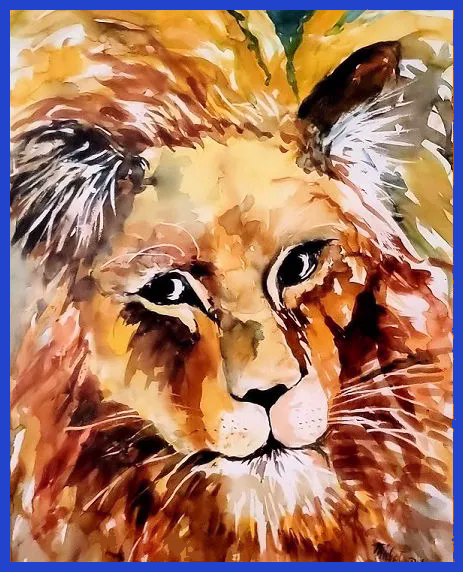
Stay alert! Watch out for your great enemy, the devil. He prowls around like a roaring lion, looking for someone to devour. – 1 Peter 5:8

Job 1:6-12

6 One day the members of the heavenly court came to present themselves before the LORD, and the Accuser, Satan, came with them.
7 “Where have you come from?” the LORD asked Satan. Satan answered the LORD, “I have been patrolling the earth, watching everything that’s going on.”

8 Then the LORD asked Satan, “Have you noticed my servant Job? He is the finest man in all the earth. He is blameless in his property you have made him prosper in everything he does not look how rich he is but reach out and take away everything he has he will surely curse you – a man of complete integrity. He fears God and stays away from evil.”
9 Satan replied to the LORD, “Yes, but Job has good reason to fear God.”
10 “You have always put a wall of protection around him and his home and his property. You have made him prosper in everything he does. Look how rich he is!”

11 “But reach out and take away everything he has, and he will surely curse you to your face!”
12 “All right, you may test him,”

The Night Stalker

On January 11, 1972, ABC captivated audiences with its Movie of the Week, “The Night Stalker.” This made-for-TV film featured Darren McGavin as an investigative reporter pursuing a merciless serial killer in Las Vegas. The movie’s success was unprecedented, earning it the title of the highest-rated original TV movie in the United States at the time. Its popularity sparked a sequel and eventually led to the single-season series Kolchak: The Night Stalker, which aired between 1974 and 1975.

Beyond its immediate success, “The Night Stalker” left an enduring legacy, inspiring Chris Carter’s iconic creation, “The X-Files.” Rooted in pure fiction, “The Night Stalker” was designed to thrill and entertain viewers. Yet, in the quiet recesses of our world lies a real night stalker, far more dangerous than anything portrayed on screen.

The Enemy in the Shadows

There is an adversary who moves within the darkness—not a mythical figure but a spiritual reality. The Apostle Paul calls him “the god of this world” (2 Corinthians 4:4), underscoring his fleeting dominion and pervasive influence on human affairs. This enigmatic figure is the relentless enemy of our souls. His aim is singular and sinister: to bring ruin, chaos, and ultimate destruction to human lives. The children of the King, those who have committed their hearts to God, are his preferred prey.

The Apostle Peter paints a vivid image of this spiritual predator. He likens him to a prowling lion, one of the most fearsome creatures known in his time. A lion on the hunt is methodical, moving slowly, with a predatory gaze that surveys the surroundings. He is not careless; he is calculating, waiting for the precise moment to strike. His roar, mighty and bone-chilling, spreads fear before his claws even make contact.

Like the lion, our adversary roams stealthily, his presence intimidating even when unseen. He does not merely seek to frighten or distract, though those tactics are often part of his approach. His ultimate aim is far more devastating. Peter warns us of his true intention—to devour, to utterly destroy. He is the original night stalker, the prince of darkness himself.

Devoured Without a Trace

The word “devour” draws from the Greek katapiomai from katadown and pinodrink. It has the sense of “gulping down, swallowing hurriedly or greedily.” Here, it implies more than a simple act of eating. It refers to “complete destruction, the swift and devastating act of swallowing someone or something whole, leaving nothing behind,” “to destroy, to ruin completely” (UBS). Consider the urgency and relentless hunger of a predator that consumes its prey without hesitation or care.

A simple picture can help us grasp the sense of this danger. Imagine two dogs at a barbecue, eyeing hamburgers that fall from the grill. One drops in the direction of a small Yorkshire terrier. He takes careful bites of his fallen burger, chewing as quickly as possible while keeping watch for threats. Meanwhile, the other hamburger heads towards a Rottweiler. He snatches his burger mid-air and swallows it in one greedy gulp. He devoured the burger, demonstrating not just hunger but a consuming, destructive force.

This is what the adversary seeks to do to his victims. He doesn’t linger or handle his prey delicately. He moves with brutal efficiency, aiming to devastate and destroy completely.

REFLECT & PRAY

1 John 4:4 Greater is He who is in you than he who is in the world.

Father, thank You for reminding us that we have a real adversary: the original night stalker, the enemy of our souls, and the prince of darkness.

INSIGHT

The Battle We Cannot Ignore

An unseen war rages constantly around us. It is a spiritual battle, dark, foreboding, and relentless, led by an adversary who neither tires nor sleeps. The devil, with subtlety and cunning, studies us closely. He spies out our fears, weaknesses, and vulnerabilities, meticulously crafting his attacks. His strategy is precise and often catches us off guard, striking where we’re most exposed. That is the nature of an enemy—to attack when unexpected and exploit every opportunity to cause harm. That is what enemies do.

It begs the question: where is the adversary most likely to attack you? Think about your moments of doubt, fear, weakness, or weariness. Those are the very places he targets.

His agenda mirrors the terrifying relentlessness of the machine in “The Terminator,” the 1984 science fiction movie. Kyle Reese’s warning echoes the reality of our spiritual struggle: “Listen and understand! That Terminator is out there! It can’t be bargained with. It can’t be reasoned with. It doesn’t feel pity, or remorse, or fear! And it absolutely will not stop, ever, until you are dead!

That’s what he does! That’s all he does! You can’t stop him!

That is precisely the devil’s mission. But as the children of the king, we are not left without guidance or defense.

Vigilance in the Midst of War

The Apostle Peter warns us of the enemy’s prowling nature and offers us a battle strategy in 1 Peter 5. He commands us to stay alert, to keep watch, and to be ready. We are called to resist the enemy, stand firm, and root ourselves deeply in faith.

1 Peter 5:8-9

8 Be sober-minded; be watchful. Your adversary, the devil, prowls around like a roaring lion, seeking someone to devour.
9 Resist him, firm in your faith,

The Greek word nepho translated as “be sober” means “to look at the battle with clear eyes, take a serious, realistic approach to life, and be intelligent concerning the stratagems of Satan”(MacDonald).

Too often, casualties occur because we forget that we are living in a war zone. We mistakenly believe we’re in a time of peace when, in reality, the battle never ceases. We live in a perpetual war zone. Even when life seems to be going smoothly, we cannot afford to grow complacent. As Charles Stanley pointedly writes, “How many casualties occur because we think we live in a time of peace?”

But here’s the truth that changes everything. Our enemy may mimic the nature of a ferocious lion, but he is no match for The Lion.

The Lion Who Has Already Won

The Lord Jesus Christ is The Lion of the tribe of Judah (Revelation 5:5), not an imposter or a counterfeit. He is unrivaled in power, unmatched in authority, and unstoppable in victory. While the enemy roars and prowls, The Lion reigns.

What’s more, our greatest weapon is as unexpected as it is extraordinary. Victory comes through blood—not just any blood, but the blood of the Lamb, the Lord Jesus Christ. His sacrifice on the cross was the ultimate triumph over sin, death, and the devil himself. Through His death, the Lord Jesus Christ conquered once and for all the enemy of our souls.

Revelation 12:11 declares this truth with boldness, “And they have defeated him by the blood of the Lamb and by their testimony. And they did not love their lives so much that they were afraid to die.”

Through Christ’s victory, our adversary is reduced to a shadow of his former self. What once seemed like an untouchable, roaring lion prowling in the dark is now nothing more than a powerless kitten in the eyes of heaven.

Heaven’s headline on the day of Christ’s crucifixion could only have read, Lamb Conquers Lion!

Our enemy, a cross-crushed foe, has been defeated by the blood of the Lamb!

Victory Is Ours

Paul captures this triumph in 1 Corinthians 15:57-58, reminding believers of the hope we carry into the battle daily.

“But thank God! He gives us victory over sin and death through our Lord Jesus Christ. So, my dear brothers and sisters, be strong and immovable. Always work enthusiastically for the Lord, for you know that nothing you do for the Lord is ever useless.”

We are called to live in the confidence that the enemy, though real and relentless, is a defeated foe. The blood of Jesus ensures that his power is limited, his roar muted, and his doom sealed.

Stand Firm

The spiritual battle may be unrelenting, but we are not without hope or weapons. Through vigilance, faith, and the victory won by Christ on the cross, we stand equipped to resist and overcome. The Lion of Judah is with us, and in His strength, no weapon formed against us will prosper (Isaiah 54:17).

The devil is not invincible. He is a conquered enemy. And we, through Christ, are overcomers. The war may rage on, but the outcome has already been decided. The Lamb has triumphed, and in Him, you, too, stand victorious. Be bold. Be strong. And know this truth with every fiber of your being: the battle may belong to the night, but the victory belongs to the King.

¯_(ツ)_/¯7-16-3

© Dr. H 2025