Can we be forgotten? ∙∙

Can we be forgotten? ∙∙

I have written your name on the palms of my hands. – Isaiah 49:16

Isaiah 49:13-16

13 The LORD has comforted his people and will have compassion on them in their suffering.
14 Yet Jerusalem says, “The LORD has deserted us; the Lord has forgotten us.”

15 Never! Can a mother forget her nursing child? Can she feel no love for the child she has borne? But even if that were possible, I would not forget you!
16 See, I have written your name on the palms of my hands. Always in my mind. ..

In times of isolation and despair, we often feel abandoned and forgotten. In our dejection and sadness, we frequently ask, “Does anyone really care?” Feelings of abandonment can weigh heavily, just as they did on the nation of Israel during a dark chapter in their history. They grumbled and whined, “The LORD has forsaken me, and the Lord has forgotten me” (Isaiah 49:14).

But nothing could be further from the truth. The Father’s response to their complaint was a profound assurance of His unwavering commitment. He would never, ever forget or abandon them. He answers them with two beautiful and poignant word pictures.

Rather than comparing His love to that of a father, God likened it to a mother’s bond with her nursing child. “Can a mother forget her nursing child?” He asked (Isaiah 49:15). The Hebrew word used for “nursing child” is ulah. This word is more specific than child or even baby. Ulah refers specifically to a “newborn still at the breast” —a picture of total helplessness and neediness. A nursing child, utterly dependent on its mother for life and nourishment, demands constant attention and care. It’s unimaginable for a mother to forget her infant.

God’s commitment goes even further. Although He never forgets anything due to His omniscience, He has also chosen to leave a mark as a lasting reminder of His love.

In our society, it has become common for people to tattoo symbols or names of those they love on their skin. In Isaiah’s day, some servants would inscribe the names of their masters on their hands. But masters did NOT write the names of their servants on theirs.

Remarkably, contrary to the customs of Isaiah’s time, the Father, to highlight His focus and love, the King of Kings and Lord of lords has inscribed the names of those He loves on the palms of His hands.

The Hebrew word for inscribed is chaqaq. Chaqaq means to “carve,” “engrave,” or “chisel.” This isn’t a fleeting note but “a permanent, lasting display of devotion.God, the King of Kings and Lord of lords has willingly engraved His love for us into His being—a radical, unshakable commitment.

REFLECT & PRAY

So many times, we experience dreadful isolation and a sense of abandonment.

Father, thank You for being totally committed to me and keeping me ever before Your mind and heart.

INSIGHT

Strictly speaking, the Father knows all, forgets nothing, and learns nothing. His understanding surpasses time and space. Yet, from our paltry human perspective, it often feels as though this divine truth doesn’t touch us. Why? Because we are the forgetful ones. We lose sight of Him amid the noise of life, the weight of doubts, and the distractions pulling us away. And so, in His great mercy, the Father fills His Word with reminders—reminders of His unfailing love, His steadfast commitment, and His unshakable presence.

A mother cradling her nursing child is among the most tender images of connection and dependence we can imagine. But even the strongest maternal bond is not perfect. It may strain, falter, or fade. Yet, the Father declares with absolute certainty that His love will never fail. His love outlasts even the greatest, purest human love. This profound truth is beautifully captured in Isaiah 49:15: “Can a mother forget the baby at her breast and have no compassion on the child she has borne? Even these may forget, yet I will not forget you.”

This word picture presented here is among the preeminent illustrations of the Father’s love found in the Old Testament. Pause for a moment and recognize this promise as a thunderous declaration written in the heavens—a covenant that nothing can erase. The love of the Father is eternal, enduring beyond the bounds of human frailty. He loves you personally, just as you are, more deeply and purely than any mother’s love for her child. Everything He does in your life is born out of love—His ways, His plans, His discipline, His blessings—they all spring from a well of love that never runs dry.

Now, close your eyes for a moment. Imagine seeing your name, written boldly and permanently, on the palm of His hand. Can you see it? Now, picture your name blurred, smudged by sin, mistakes, and wanderings. Even then, your name is still there—present, unforgotten, indelible. But the Father didn’t stop at writing your name on His hand. His love went far beyond that. He sent His Son, the Lord Jesus Christ, to bear the penalty of your sins.

Consider this. Does the resurrected Christ also carry your name? Look at Him, as Thomas did when he hesitated to believe in John 20: “Unless I see the nail marks in His hands and put my finger where the nails were, and put my hand into His side, I will not believe.”

Of course, we know what comes next. Jesus, in His kindness, arrives, extending His scarred hands to Thomas: “Put your finger here; see my hands. Reach out your hand and put it into my side. Stop doubting and believe” (John 20:27).

And in that moment, Thomas, overwhelmed, cries out, “My Lord and my God!” The scars remain as eternal proof of what He endured—a wound that runs through eternity, a reminder of His sacrifice for us.

With a little bit of sanctified imagination, we can connect the dots. Visualize that nail-scarred hand reaching for you now. Can you see it? The very place where the nail pierced His hand runs straight through your blurred name. His blood has covered it. He has made you clean, whole, remembered, and forgiven. Your name is written on His hand forever, sealed by His love and sacrifice.

John 20:24-28

24 But Thomas, one of the twelve, called Didymus, was not with them when Jesus came.
25 So the other disciples were saying to him, “We have seen the Lord!” But he said to them, “Unless I see in His hands the imprint of the nails and put my finger into the place of the nails, and put my hand into His side, I will not believe.”

26 After eight days His disciples were again inside, and Thomas with them. Jesus came, the doors having been shut, and stood in their midst and said, “Peace be with you.”

27 Then He said to Thomas, “Reach here with your finger, and see My hands; and reach here your hand and put it into My side; and do not be unbelieving but believing.”
28 Thomas answered and said to Him, “My Lord and my God!”

Take a moment to reflect on this reality. The marks on His hands are not just scars; they are the testimony of an unshakable love. They are proof that you are His. You are loved. You are forgiven. No mistake, no sin, no despair can distance you from this divine love—that love nailed to a cross.

Henceforth, whenever I see a tattoo, I will remember His nailed, scarred hands. The marks that proclaim, “You are mine, and I will never forget you.”

¯_(ツ)_/¯1-29-3

© Dr. H 2025

A fair hearing ∙∙

A fair hearing ∙∙

If they are planning and doing these things merely on their own, it will soon be overthrown. But if it is from God, you will not be able to overthrow them. You may even find yourselves fighting against God! – Acts 5:38-39

Acts 17:10-12

10 That very night, the believers sent Paul and Silas to Berea. When they arrived there, they went to the Jewish synagogue.
11 And the people of Berea were more open-minded than those in Thessalonica, and they listened eagerly to Paul’s message. They searched the Scriptures day after day to see if Paul and Silas were teaching the truth.
12 As a result, many Jews believed, as did many of the prominent Greek women and men.

Antonio Inoki is widely regarded as Asia’s most outstanding professional wrestler. A true icon and pioneer in the wrestling world, he gained respect not only in sports entertainment but also in competitive arenas. He was an iconic figure and considered a bona fide “living” legend.

On June 26, 1976, in Tokyo, he faced boxing legend Muhammad Ali in a groundbreaking match billed as the “War of the Worlds.” This wrestler vs. boxer clash captivated global audiences and helped pave the way for the emergence of MMA, a sport generating over $1 billion annually by 2022.

On a different stage, Benajah Carroll engaged in a more spiritual form of wrestling. Born on December 27, 1843, in Carrollton, Mississippi, he began life as the atheist son of a Baptist minister. During the Civil War, he served with the Texas Rangers. Later, he attended a Methodist camp meeting where the Methodist minister challenged the audience to “make a practical, experimental test” of Christianity and to give Jesus Christ a fair trial. Skeptical but intrigued, Benajah stood and went to the front. He
accepted the invitation to “give God a try.”

Benajah explained that he was not converted. Instead, he came forward only to give Christianity a fair hearing. The Father had other plans. Surprisingly, during his journey home, Benajah found himself in a deep, personal struggle with God. Alone in the woods, he got down on his knees, wrestled spiritually, and “had it out with the Lord.” He soon found out that no one ever beats God in a wrestling match. Finally, he surrendered himself fully to the Father. This story serves as a reminder that no heart is beyond the reach of the Father, not even those that seem the most resistant and hardened (Christianity.com).

Throughout the centuries, who knows how many people have grappled with God, only to limp for the rest of their lives (Genesis 32:25)? Such a man was Jacob.

Jacob’s wrestling match is recorded in Genesis 32:24-31

24 This left Jacob all alone in the camp, and a man came and wrestled with him until the dawn began to break.
25 When the man saw that he would not win the match, he touched Jacob’s hip and wrenched it out of its socket.
26 Then the man said, “Let me go, for the dawn is breaking!” But Jacob said, “I will not let you go unless you bless me.”

27 “What is your name?” the man asked. He replied, “Jacob.”
28 “Your name will no longer be Jacob,” the man told him. “From now on you will be called Israel because you have fought with God and with men and have won.”

30 Jacob named the place Peniel (which means “face of God”), for he said, “I have seen God face to face, yet my life has been spared.”
31 The sun was rising as Jacob left Peniel, and he was limping because of the injury to his hip.

Who was the man Jacob wrestled? It was the Angel of the Lord, who is also the Lord God of Heaven’s Armies. In the Old Testament, when the Angel of the Lord appeared, it was actually a pre-incarnate manifestation of the Lord Jesus Christ. This is known as a theophany.

Jacob held his own during the match, which ended in a draw, but he sustained an injury that would leave him crippled for the rest of his life. At the same time, however, the Lord triumphed. Jacob eventually surrendered to the Lord’s call, marking a significant transformation in his life.

Many simply reject God out of hand without ever giving him a fair hearing. How many of us have been willing to dare to argue with the living God? Never assume any heart is beyond the Father’s reach!

Both stories illustrate the power of resilience, faith, and the ultimate transformation that comes from surrender. Jacob spent his life wrestling with others, starting in the womb (Hosea 12:3).

REFLECT & PRAY

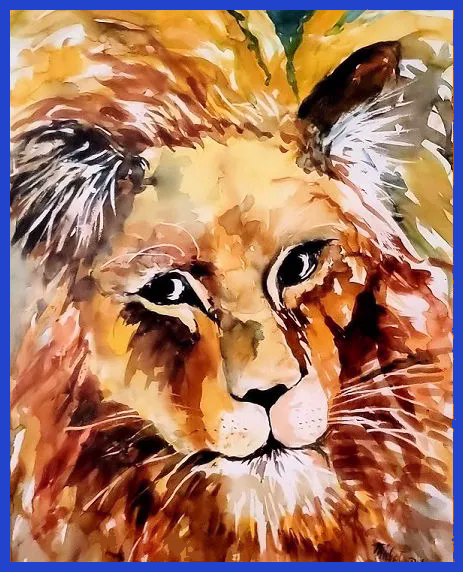
“The Word of God is like a lion. You don’t have to defend a lion. All you have to do is let the lion loose, and the lion will defend itself” (Charles Spurgeon).

Father, thank You for giving me the courage and opportunity to give You a chance. You broke through my closed mind, stirred my curiosity, and led me to search the Scriptures for truth. Through Your Word, You answered my questions, overcame my doubts, and revealed Yourself to me. Before I realized it, I became lion’s food.

INSIGHT

The Bible centers on the Lord Jesus Christ, portraying Him as its pivotal figure. Its theme is redemption and the promise of eternal life through Him. Jesus Himself declared that all Scripture points to Him:

John 5:39 “You search the Scriptures because you think they give you eternal life. But the Scriptures point to me!”

Many know of the Bible, but few actually know it. Have you taken the time to explore it for yourself? Have you examined its truth with an open mind? Are you ready to allow the Scriptures to speak for themselves? The Bereans offer us a model of this approach:

Acts 17:11 “The people of Berea were more open-minded than those in Thessalonica, and they listened eagerly to Paul’s message. They searched the Scriptures day after day to see if Paul and Silas were teaching the truth.”

Their noble character was evident in two ways. First, they listened with eagerness, recognizing the relevance of God’s message. Second, they examined the Scriptures daily to verify the truth of what they heard (Peterson). This openness and diligence led them to a deeper understanding. Anyone can follow their example.

The Greek word eugenes, translated as noble or open-minded, describes people who are “fair, thoughtful, and without prejudice.” This term perfectly captures the spirit of the Bereans. They were eager to hear Paul’s message, but they didn’t take his words at face value. Instead, they investigated for themselves, examining the Scriptures daily to ensure his teachings aligned with truth.

God has given us His Word and the ability to reason and discern. Are you prepared to give the Father and His Word a fair chance? The Bible’s core truths are clear and accessible to anyone willing to approach it with genuine curiosity.

Throughout history, millions have come to the Scriptures with doubts, questions, and skepticism. Misunderstood and often mischaracterized, the Bible invites open minds and careful examination. It challenges labels that don’t fit and instead reveals its contents to those ready to explore. It’s simple to label a bottle, but what if the label doesn’t correspond to its contents? The invitation remains simple.

Psalm 34:8 “Taste and see that the LORD is good; how blessed is the man who takes refuge in Him!”

The Bible invites careful examination. Take the time to explore it and give the Father a fair chance to be understood. After all, what do you have to lose? Why not take up the challenge? Allow the Scriptures to speak for themselves.

You may discover something far greater than expected.

¯_(ツ)_/¯12-2-23

© Dr. H 2025

Running wild ∙∙

Running wild ∙∙

When people do not accept divine guidance, they run wild. – Proverbs 29:18

Exodus 32:19-35

9 When they came near the camp, Moses saw the calf and the dancing, and he burned with anger. He threw the stone tablets to the ground, smashing them at the foot of the mountain.
20 He took the calf they had made and burned it. Then he ground it into powder, threw it into the water, and forced the people to drink it.
21 Finally, he turned to Aaron and demanded, “What did these people do to you to make you bring such terrible sin upon them?”

24 So I told them, ‘Whoever has gold jewelry, take it off.’ When they brought it to me, I simply threw it into the fire – and out came this calf!”
25 Moses saw that Aaron had let the people get completely out of control, much to the amusement of their enemies.

30 The next day, Moses said to the people, “You have committed a terrible sin, but I will go back up to the LORD on the mountain. Perhaps I will be able to obtain forgiveness for your sin.”

35 Then the LORD sent a great plague upon the people because they had worshiped the calf Aaron had made.

How do we genuinely acquire knowledge and gain a deeper understanding of the world around us?

Throughout history, people have relied on three key methods of learning: experience (empiricism), reasoning (rationalism), and revelation.

Empiricism teaches that knowledge comes from sensory experience—what we observe, feel, and perceive. Rationalism emphasizes logic, thought, and reflection as the foundation of understanding. Both methods have led to remarkable discoveries, yet they are bound by human limitations.

But could there be knowledge beyond what experience and reasoning can uncover? The answer is yes. God, who exists beyond human reality and limits, offers us a deeper source of understanding through revelation. When we enter into a relationship with Him, His Word opens a new realm of truth that goes beyond what we could discover on our own.

Biblical answers many of life’s biggest questions. It informs us of things we cannot know in any other way. It provides answers unobtainable through rationalism and empiricism. Is there really a God? What is God like? Why is there evil in the world? What is the Father’s provision for it? What is the nature and source of human sin? Why did the Lord Jesus Christ die? Why was He resurrected? What does the future hold, and how does history end? Such information is beyond human discovery. These truths are not accessible otherwise.

The Father exists apart and separate from the limited reality of people. Human capabilities are finite; the Father has no such limitation. Much of what man has “discovered” was actually revealed in the Scriptures thousands of years ago.

For instance, modern science affirms that the universe had a beginning. This is referred to as the Big Bang. This concept was revealed in Scripture in the first line of Genesis: “In the Beginning.”

Many people today dismiss the biblical revelation as a reliable source of knowledge, considering it outdated. For some, their disbelief in God rules out the possibility of supernatural revelation altogether. However, the Scriptures caution against rejecting this vital source of truth:

Proverbs 29:18 “Where there is no prophetic vision, the people cast off restraint.”

By neglecting revelation, we risk missing answers that only God can provide. Are you willing to explore the knowledge He generously offers?

REFLECT & PRAY

The times I’ve chosen my own way and done what was right in my own eyes and abandoned the truth of the Father’s revelation is embarrassingly high.

Father, help me take Your truth seriously. Make it the foundation of my beliefs and guide my actions.

INSIGHT

In Proverbs 29:18, the Hebrew word translated as vision is chazon. Chazon may be translated as “revelation,” “prophetic vision,” or “divine guidance.” It refers to the “wisdom to see beyond the present” or the “ability to foresee or anticipate the future.”

The Hebrew word translated as cast off restraint is para. Para means to “neglect,” “let go,” “let loose,” or “throw off authority.” It is used in the passive form in Hebrew and means to “lack restraint.” Without God’s vision, “we risk losing direction and restraint in our lives” (UBS).

Judges 21:25 captures this vividly: “In those days, there was no king in Israel; everyone did what was right in his own eyes.” Similarly, Ecclesiastes 8:11 warns, “When a crime is not punished quickly, people feel it is safe to do wrong.”

When we depart from the Father and His truth, we often fall into anarchy and run wild. What happens when a society rejects God’s revelation, and everyone does as they see fit? You get a culture that looks much like 21st-century America (Stanley).

Can modern culture truly achieve harmony, balance, and restraint without absolute truth? Without a firm foundation of absolute truth, things are constantly shifting, unsettled, uncertain, and adrift. The social compact of civilization breaks down. We do what is right in our own eyes without regard for any higher authority or truth.

Choices have consequences, and poor choices have disastrous consequences. There are often unintended and unanticipated outcomes of bad decisions. Such consequences are often far worse than the choices themselves. Conduct that appears to be safe and appropriate can wind up being a disaster.

Proverbs 16:25 warns, “There is a way that seems right to a man, but its end is the way of death.”

In the Hebrew text, the metaphor is more vividly expressed: There is a way that seems right before a man, but at its end are ways of death. “A man stands at the beginning of a road, and it looks fine to him; but when he comes to an end, he discovers death lies before him no matter which way he turns” (UBS).

While God’s grace forgives our sins when we repent and approach Him in faith, He doesn’t always shield us from the consequences of our actions (Stanley).

Poor decisions often promise fleeting happiness, power, or fulfillment, yet they fail to offer lasting peace. Earthly achievements and possessions do not accompany us into eternity.

What truly matters isn’t what we gather or accomplish in this life but the eternal choices we make. Without the anchor of absolute truth, we risk drifting into decisions that lead to regret, ruin, and emptiness. Will we choose the path that seems right—or the one that truly is?

May we seek God’s guidance, allowing His truth to shape our choices and keep us walking on the right path.

¯_(ツ)_/¯11-16-2

© Dr. H 2025

Battered, bruised, embraced ∙∙

Battered, bruised, embraced ∙∙

Will you stay mad at us forever? Will you remain angry throughout future generations? – Psalms 85:5

Psalms 85:1-11

1 LORD, you poured out blessings on your land! You restored the fortunes of Israel.
2 You forgave the guilt of your people – yes, you covered all their sins.
3 You held back your fury. You kept back your blazing anger.

4 Now restore us again, O God of our salvation. Put aside your anger against us once more.

5 Will you always be angry with us? Will you prolong your wrath to all generations?
6 Won’t you revive us again so your people can rejoice in you?
7 Show us your unfailing love, O LORD, and grant us your salvation.

10 Unfailing love and truth have met together. Righteousness and peace have kissed!
11 Truth springs up from the earth, and righteousness smiles down from heaven.

The tale of the feud between the Hatfields and the McCoys, two clans occupying territories in Kentucky and West Virginia, is a colorful and spirited chapter in American history. It has become firmly embedded in the country’s folklore. The saga was filled with claims and counterclaims and divided loyalties during the Civil War, leading eventually to violence and death.

And how did this long-lasting feud begin? It involved a dispute about the ownership of a pig. It’s hard to believe that generations fought and died over a pig. Floyd Hatfield found himself in possession of the hog in 1878. However, Randolph McCoy simultaneously insisted the swine was his. Back then, pigs were identified in a manner akin to cattle. But instead of branding them, unique notches were made on their ears. McCoy claimed that the markings on this specific pig were the work of a McCoy, not a Hatfield.

The pig ownership dispute was taken to Anderson “Preacher Anse” Hatfield, a local Justice of the Peace. Guess what? The judge ruled in favor of the Hatfields based on Bill Staton’s testimony. In June 1880, Staton was murdered by two McCoy brothers. They were later tried and acquitted on grounds of self-defense. Over time, the antagonism settled down.

In a surprising twist, in 1979, the feuding families came together for a special edition of the popular game show Family Feud. They competed for a cash prize and a pig, which was showcased on stage throughout the games.

It appears that discord and feuding have been woven into human DNA since the Fall. We often find ourselves in conflict with each other, our family members, our friends, and most tragically, with the Father. How often, if we dare to admit it, are we angry with the Father, and we keep our distance? More importantly, we often feel that He is angry with us. Despite our efforts, it feels like we can’t mend the relationship and make things right. We usually find ourselves bruised and in need of healing and restoration.

Regrettably, most of the time, these feelings are nothing more than our imagination, fears, dread, and anxieties playing themselves out. However, there were instances in the Old Testament when the Father was genuinely disappointed with the Nation of Israel. Psalms 85 reflects on such a time. It’s a communal lament written during a period when the Father was truly upset with His people’s lack of faithfulness.

The children of Israel were in desperate need of reconciliation with the Father. Psalms 85 outlines a roadmap for us to follow when we seek to mend our relationship with Him. Propitiously, these same steps can also be applied to human relationships.

The Israelis needed a redo. They were in dire need of a fresh start, a new beginning. As noted by Scottish preacher George H. Morrison, “The victorious Christian life is a series of new beginnings,” and he is right. His words still ring true. While it is sinful to stumble and disobey the Father, it’s equally sinful to remain downcast and depressed. We should always strive for a fresh start, and Psalms 85 offers guidance that we can follow after times of failure and chastening (Wiersbe).

REFLECT & PRAY

Perfect love drives out fear (1 John 4:18), and because of this truth, we no longer have to be afraid or keep our distance from the Father. The feud has ended, and He now longs for a deep and personal relationship with each of His children.

Father, there are times when I feel broken, exhausted, and in desperate need of renewal. Remind me in those moments that it is Your joy to restore and heal me. Give me the strength to see my mistakes clearly, to confess them, and to find my way back into Your loving arms.

INSIGHT

No matter how we might feel, no walls are separating the children of the King from their Father. Through the sacrificial death of the Lord Jesus Christ on the cross, reconciliation was accomplished once and for all. The moment we accepted Him as our Savior, the divide was bridged forever. Any sense of distance or estrangement comes solely from us, often when sin clouds our hearts and minds (Stanley).

The Father possesses and lavishes us with an unwavering and steadfast love. He doesn’t simply offer salvation; He delights in our redemption and rushes to our side in times of need. Even in the face of our sin, He graciously prepared a way for forgiveness and willingly extended His pardon. He takes great joy in restoring what was broken, relishing the act of healing the divide between us.

Psalms 85:10 beautifully captures this divine love through poetic imagery: “Lovingkindness and truth have met together; Righteousness and peace have kissed each other.”

What is the Father like as a person? He is characterized by faithful love, unwavering truth, perfect righteousness, and profound peace. These qualities, often abstract, are tenderly brought to life in Psalms 85.

Through the psalmist’s poetic touch, we see these attributes personified, joining together in a moment of intimacy and harmony. Loyal love (hesed) and truth are no longer in conflict but are united as companions. Righteousness and peace meet; warmly embrace and kiss. This divine imagery reflects the depth of the Father’s relationship with us—a bond rooted in love and tenderness.

A Hebrew translation conveys this beautifully. It could be translated as: “Faithful Love and Loyalty join together, Saving Justice and Peace embrace” (NJB). These words paint a picture of a Father who goes beyond mere restoration. He eagerly approaches us, rushing to meet us where we are. He doesn’t hesitate; He takes us in His arms, embraces us, and kisses us with unreserved affection.

Jesus Himself emphasizes this in Luke 5:31-32: “31 It is not those who are well who need a physician, but those who are sick. I have not come to call the righteous but sinners to repentance.”

Could there be anything more profound, more comforting, than this display of divine love?

Our role in this relationship is simple yet vital. It begins with recognition—an honest acknowledgment of our actions and their consequences. Repentance means more than regret; it’s about changing our minds and the direction of our lives, stepping away from sin, and walking toward Him.

His constant, unwavering faithfulness accompanies this invitation to turn back to Him. Our part involves recognition and acknowledgment. We come face-to-face with our actions, coming to terms with what we have done. We choose to change course.

Spiritual renewal means returning to a place where we can fully experience the Father’s presence and rejoice in His unending goodness, love, and mercy. We can approach Him with confidence, knowing He is always ready to welcome us back, to heal, and to renew.

Thomas O. Chisholm’s hymn, “Great Is Thy Faithfulness,” written in 1923, beautifully captures this truth. It celebrates the Father’s endless reliability; His mercies renewed each morning, and His steadfast compassion across every season of life. His faithfulness isn’t dependent on our circumstances or failures—it’s immutable, a constant source of hope and reassurance.

The Father’s love is not distant or conditional. It is intimate, personal, and enduring, inviting all His children to find solace and renewal in His eternal, unchanging presence.

Great is thy faithfulness!

Great is thy faithfulness, O God my father
There is no shadow of turning with thee
Thou changest not, thy compassions they fail not
As thou hast been, thou forever wilt be
And great is thy faithfulness
Great is thy faithfulness
Morning by morning, new mercies I see
All I have needed thy hand hath provided
Great is thy faithfulness, Lord unto me!

¯_(ツ)_/¯12-15-2

© Dr. H 2025

Gratitude matters ∙∙

Gratitude matters ∙∙

He who offers a sacrifice of thanksgiving honors Me. – Psalms s 50:23

Psalms s 50:8-15 8 I have no complaint about your sacrifices or the burnt offerings you constantly offer. 9 But I do not need the bulls from your barns or the goats from your pens. 10 For all the animals of the forest are mine, and I own the cattle on a thousand hills. 11 I know every bird on the mountains, and all the animals of the field are mine. 12 If I were hungry, I would not tell you, for all the world is mine and everything in it. 13 Do I eat the meat of bulls? Do I drink the blood of goats? 14 Make thankfulness your sacrifice to God, and keep the vows you made to the Most High.

What Is Gratitude?

Gratitude is both a natural, spontaneous emotion and an intentional choice we can actively cultivate. While it often arises effortlessly, studies reveal that we can deliberately nurture gratitude in our lives. Taking time to count our blessings not only fosters inward spiritual enrichment but also brings significant social and personal benefits. Expressing gratitude fosters a positive atmosphere that resonates deeply with others. It uplifts the mood, nourishes adjusted right the spirit and provides a pathway to more profound joy.

Gratitude matters.

Over time, practicing gratitude enhances emotional well-being and fosters both physical and mental health. Research shows that gratitude diminishes the tendency to dwell on negativity, envy, and resentment. It reduces the use of negative language and helps redirect focus toward the good in life. Grateful individuals report experiencing less pain, lower stress levels, improved sleep, stronger immune systems, and healthier relationships.

To cultivate gratitude, begin by noticing and appreciating the goodness around you—small or large. Acknowledge the blessings that fill your life and reflect on them.

Gratitude opens our hearts to the encouragement of the Father’s boundless goodness. God, the Creator of all, is not impressed by material possessions or offerings. Everything already belongs to Him, from the animals of the field to the harvests of the earth. Unlike the deities of ancient mythology, who depended on human offerings for sustenance, the one true living God had no physical needs. Yet, there is something He deeply desires from His children—our gratitude.

The Hebrew language may not have a specific word for “gratitude,” but it is rich with expressions of thanksgiving and praise. Psalms 50:14 declares, “Make thankfulness your sacrifice to God, and keep the vows you made to the Most High.” True thankfulness is more than an action—it is an attitude. Thankfulness is not about doing; it is about being. It flows naturally into praise and worship, emerging not from outward acts alone but from the core of who we are.

Gratitude is the natural response of the heart to blessings, protection, and love. In the Scriptures, it is not a tool to influence the Father’s will, nor is it artificially manufactured. Instead, gratitude is the joyful commitment of the heart to God, a sincere and authentic response to His faithfulness.

For the ancient nation of Israel, everything in creation bore the mark of God’s sovereignty and handwork. They offered heartfelt thanksgiving for His wonders, as seen in passages like Psalms 19:1-4, which marvel at the heavens declaring His glory. When they received good news, they rejoiced in His mighty deeds (1 Chronicles 16:8-12). Even in the face of adversity, like Job, they praised Him with unswerving trust in His justice, saying, “The Lord gave, and the Lord has taken away; may the name of the Lord be praised” (Job 1:21).

The Father desires our hearts and calls us to live with gratitude—not for His benefit, but for ours. Wholehearted, selfless gratitude honors Him and nurtures our spirits. Gratitude enriches the soul like nourishment for the body, helping us thrive spiritually (Tyndale Bible dictionary).

The Father wants us to give Him our hearts and lives in gratitude for all that He is, all that He has done, and all that He is doing for us. This is how we honor Him. The Father designed us so that wholehearted, fervent, unconditional gratitude helps our spirits thrive. Gratitude is nourishment for our souls.

Psalms 50 reveals the hollow nature of superficial religion. The people brought sacrifices to God, yet their outward actions lacked sincerity. Their worship became routine and mechanical—what Derek Kidner called “mindless religion.” These superficial “worshipers” totally missed the point of offering sacrifices. They were not designed to provide the Father with food. Why would the living God need food? How ridiculous.

The purpose of sacrifices was never for His benefit but as a means for His people to express heartfelt thanks. Thanksgiving and gratitude benefit those expressing it. The animal sacrificial system was a means by which they could express gratitude. They were intended to be an outward expression of an inward reality.

Genuine gratitude transforms us by aligning our hearts with God’s goodness. It redirects our focus away from what we lack and toward what we have received. Sacrificial offerings were meant to be outward symbols of an inner reality—a way to express authentic thanksgiving.

God invites us into a life of gratitude as a way to honor Him. He designed us to flourish when we live with hearts full of thankfulness for all He is and all He has done. When we truly grasp this, we come to see gratitude not as an obligation but as a joyful response—a posture of the soul that connects us deeply with the Father and His boundless grace.

REFLECT & PRAY

Gratitude begins when we realize that “God loves us just the way we are, but too much to let us stay that way” (Dr. Scott Hahn). Father, help me take a moment to appreciate all the good, delightful, and enjoyable things that You have created. Teach me to express my heartfelt gratitude to You for Who You are, for what You do, and for the ways You support me each and every day.

INSIGHT

Psalms 50:12 says, “If I were hungry, I would not tell you, for the world and its fullness are mine.” These words, spoken by God, reveal a profound truth. If any human being said such a thing, we would likely view it as arrogant. But for the Creator of the universe, it is simply a statement of undeniable reality. God has no needs. Our service does not fill any deficiency in Him. And yet, out of His great love, He invites us to serve Him—not because He requires it, but because it draws us closer to a life-giving relationship with Him (Stanley).

God’s desire for His people is not to engage in empty rituals or detached formalities. He longs for us to look to Him as our ultimate Provider. When He meets our needs, He desires our gratitude, not as a perfunctory duty but as a joyful acknowledgment of His care (Constable). This is not about fulfilling obligations; it is about cultivating an intimate relationship. He does not want merely to be acknowledged as “our God” in name, but rather, He yearns for a vital connection where we know Him deeply as our loving Father.

True worship is a response of the heart and mind. It calls for us to recognize God’s majesty and respond to His goodness. When we consciously reflect on who He is—the Creator of all things, self-sufficient, and overflowing with love—it stirs genuine worship within us. This worship is not about meeting God’s needs, for He has none. Instead, worship transforms us. It’s in exalting Him that we align our hearts with the truth of His greatness. This recognition naturally overflows into authentic praise and deep thankfulness.

Even in our darkest times, God extends an extraordinary invitation to us. He says, “Call upon me.” Psalms 50 reminds us of this grace with the words, “Call upon me in the day of trouble; I will deliver you, and you shall glorify me” (Psalms 50:15). These are words of hope and reassurance. When we call on Him, we express faith and dependence, knowing that He alone is our Deliverer.

God is not only willing to help, but He desires to do so for those who seek Him. However, He will never force Himself where He is not wanted. For those who choose to ignore Him, He allows them the freedom to go their own way. But for those who turn to Him with open hearts, He promises to hear and respond.

There’s a poignant sentiment in the saying, “I do not go where I am not wanted.” God respects our free will. Yet, His grace is always available for those who invite Him in. To those who call on Him, He gives the assurance, “I will deliver you.” This deliverance goes beyond physical rescue; it’s a demonstration of His power, love, and faithfulness. When we entrust our hearts and lives to God, we bring Him glory (Tesh and Zorn).

This glory comes not from our acts of worship alone but from the faith and dependence we place on Him. It is through our relationship with Him and the ways He works in our lives that His magnificence is displayed for all to see. True worship, then, is not simply about doing—it is about being. Being in awe of who He is.

He delivers us because it brings Him joy. In His deliverance, we discover peace, hope, and a deeper understanding of the majesty of the One who holds the entire world in His hands.

¯_(ツ)_/¯2-04-3

© Dr. H 2025