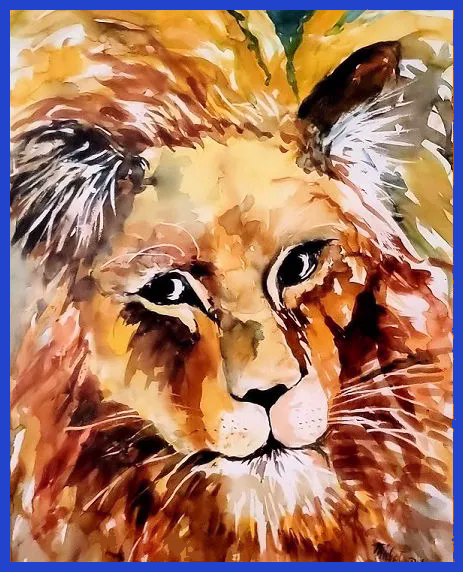
Who’s in, who’s out? ∙∙

Who’s in, who’s out? ∙∙

And to the angel of the church in Philadelphia, write: He who is holy, who is true, who has the key of David, who opens, and no one will shut, and who shuts, and no one opens. – Revelation 3:7

Revelation 1:17-18

17 Do not be afraid; I am the first and the last,
18 and the living One; and I was dead, and behold, I am alive forevermore, and I have the keys of death and of Hades.

Isaiah 22:20-24

20 And then I will call my servant Eliakim, son of Hilkiah, to replace you.
21 I will dress him in your royal robes and will give him your title and your authority. And he will be a father to the people of Jerusalem and Judah.
22 I will give him the key to the house of David – the highest position in the royal court. When he opens doors, no one will be able to close them; when he closes doors, no one will be able to open them.
23 He will bring honor to his family name, for I will drive him firmly in place like a nail in the wall.
24 They will give him great responsibility, and he will bring honor to even the lowliest members of his family.”

Losing important items like keys, wallets, or purses is something most of us have experienced. It’s a frustrating moment, often made worse by the sense of urgency and the inefficiency of frantic searching. When you’re in that situation, it’s all too tempting to launch into a chaotic, panicked hunt, retracing your steps sporadically, tossing items aside, and still finding yourself no closer to the missing object. This approach rarely yields results and only adds to the frustration. A better way to handle the situation is to pause, take a deep breath, and commit to a calm and systematic search.

Keys, in particular, have always held more than just practical significance. They unlock access, grant entry, and safeguard what’s important. But in ancient times, keys symbolized far more—they represented authority, power, and trust. For the wealthy, and especially for monarchs, keys were not just physical tools; they were symbols of significant responsibility. The holder of the key yielded the power and authority of its owner.

Take, for example, the key of King Hezekiah, ruler of Israel. Hezekiah’s trusted steward, Eliakim, was given charge of the royal key—a symbol of unparalleled authority. This key granted access to the king’s treasury, the seat of the kingdom’s wealth and resources. What’s more, Eliakim’s stewardship of the key also extended to holding the power to grant or deny access to Hezekiah himself. This trusted servant alone could open or close the way to the king, giving him immense authority within the royal court.

Isaiah 22:22 I will give him the key to the house of David, the highest position in the royal court. When he opens doors, no one can close them; when he closes doors, no one can open them.

The apostle John draws on this imagery in Revelation 3:7, presenting the Lord Jesus Christ as the one holding the key of David. This symbolism mirrors Isaiah and emphasizes Christ’s role as the Son of God, who possesses the authority to grant or deny access to the Father’s house and the prophesied messianic kingdom. The power to open and close—to give or withhold entry—rests solely in His hands. His authority is not partial or conditional; it is absolute and final.

John 5:26-27 declares, “For just as the Father has life in Himself, even so, He gave to the Son also to have life in Himself; and He gave Him authority to execute judgment because He is the Son of Man.”

The authority given to the Lord Jesus Christ is unparalleled. He holds the power of life within Himself, endowed by the Father, and the authority to judge all because of His status as the Son of Man.

The Lord Jesus Christ boldly proclaims, “I am the way and the truth and the life. No one comes to the Father except through me” (John 14:26). Here lies the crux of His role—Jesus is the only way to the Father. There is no alternate route, no other mediator. Access to the presence of the Father and the eternal kingdom is granted solely through Him. His decisions are irreversible. If He opens a door, no one can shut it. If He shuts it, no one can pry it open.

Christ’s authority is not just a matter of access but of ultimate power. Revelation 1:17-18 echoes this when the Lord Jesus Christ declares, “Do not be afraid; I am the first and the last, and the living One; and I was dead, and behold, I am alive forevermore, and I have the keys of death and of Hades.” He holds not only the key of David, granting or denying entrance to the Father’s kingdom, but also the keys of death and Hades. His resurrection has triumphed over death, and His authority extends even to the grave.

If we were to put this into modern terms, we might say that the Lord Jesus Christ has the ultimate authority. If he had a desk, there would be a sign that says, “The buck stops here.”

REFLECT & PRAY

Supreme and absolute authority belongs to the Lord Jesus Christ. He reigns with unmatched power, yet what makes this truth such good news is His boundless grace, mercy, and lovingkindness. Despite His sovereign rule, He extends an open invitation to all, welcoming everyone to come to the Father through Him. His authority is not a barrier but a bridge to eternal life, offered in love.

Father, I am overwhelmed with gratitude for the privilege of calling You Father. Thank You for making a way for me to approach You through the Lord Jesus Christ.

INSIGHT

Have you ever experienced the painful rejection of being locked out or barred from a place you longed to enter? That deep sense of exclusion resonates throughout history, particularly with the early Jewish believers in the Roman Empire. Synagogues were central to Jewish life, and they were abundant in nearly every significant city. For Jews who recognized Jesus Christ as the promised Messiah of Israel, however, things often took a heartbreaking turn.

Many early Jews for Jesus faced excommunication from local synagogues, which shut their doors to those proclaiming Jesus as Lord. At the small church in Philadelphia (Revelation 3:7-13), they experienced this rejection, with Jewish believers hearing the harsh sound of synagogue doors slamming shut behind them, declaring, “You are no longer welcome here.”

The local synagogues in Philadelphia mistakenly assumed they held the final say in matters of faith and access to the living God. Their claim to authority was deeply flawed. It is the Lord Jesus Christ who holds the authority—not over temporary, earthly places of worship—but over the eternal kingdom where true life resides.

To the rejected Jewish believers in Philadelphia, the Lord Jesus Christ offered a message of deep empathy and comfort. Understanding their pain of exclusion, He reminded them that the doors to heaven, the true synagogue, were open to them. While earthly congregations may have turned them away, Christ welcomed them with love and acceptance. His intimate words assured them of their place in His kingdom despite their worldly rejection. He alone holds the keys to heaven, inviting all who belong to the Father into His everlasting kingdom.

In the Old Testament, chief priests held the key to the temple, controlling access to God’s house (1 Chronicles 9:27). This role was often misinterpreted as having ultimate control over faith and worship.

However, the true key to David’s eternal kingdom belongs to Jesus Christ, not earthly priests. While Jewish believers in Philadelphia faced ostracism from local synagogues, this was ultimately insignificant. For they had access to the Father’s eternal house.

How tragically ironic it is that those who claimed authority over God’s people were mistaken, failing to recognize the Messiah they had awaited. Despite having the keys to the synagogues, they missed the true entry point into God’s congregation. Entry was not based on rank or ritual but on faith. In their unbelief, they shut themselves out, while Christ alone holds the key to eternal life and access to the Father.

John 1:11 He came to his own people, and even they rejected him.

Romans 10:1-3

1 Dear brothers and sisters, the longing of my heart and my prayer to God is for the people of Israel to be saved.
2 I know what enthusiasm they have for God, but it is misdirected zeal.
3 For they don’t understand God’s way of making people right with himself. Refusing to accept God’s way, they cling to their own way of getting right with God by trying to keep the law.

They rejected the gift of righteousness through faith in Jesus Christ, choosing instead their own path of good intentions tied to human effort. Paul expresses his sorrow over this misunderstanding in Romans 10:3, “For they don’t understand God’s way of making people right with Himself. Refusing to accept God’s way, they cling to their own way of getting right with God by trying to keep the law.” Their sincere zeal was undone by the absence of faith, leaving them far from the destination they sought.

This passage invites all of us to pause and reflect. Are we clinging to our own methods—convinced of our own rightness—rather than submitting to the truth found in the Scriptures? Regular examination of our faith is essential.

2 Corinthians 13:5 Examine yourselves to see if your faith is genuine.

A personal question arises, “What keys are on your keychain?” Are they keys fashioned by the Father, or are they replicas crafted by human hands?

¯_(ツ)_/¯4-16-1

© Dr. H 2024

Running wild ∙∙

Running wild ∙∙

When people do not accept divine guidance, they run wild. – Proverbs 29:18

Exodus 32:19-35

9 When they came near the camp, Moses saw the calf and the dancing, and he burned with anger. He threw the stone tablets to the ground, smashing them at the foot of the mountain.
20 He took the calf they had made and burned it. Then he ground it into powder, threw it into the water, and forced the people to drink it.
21 Finally, he turned to Aaron and demanded, “What did these people do to you to make you bring such terrible sin upon them?”

24 So I told them, ‘Whoever has gold jewelry, take it off.’ When they brought it to me, I simply threw it into the fire – and out came this calf!”
25 Moses saw that Aaron had let the people get completely out of control, much to the amusement of their enemies.

30 The next day, Moses said to the people, “You have committed a terrible sin, but I will go back up to the LORD on the mountain. Perhaps I will be able to obtain forgiveness for your sin.”

35 Then the LORD sent a great plague upon the people because they had worshiped the calf Aaron had made.

Throughout history, humanity has sought to understand the world and its mysteries through three primary methods of gaining knowledge: empiricism (experience), rationalism (thinking), and divine revelation.

Empiricism, the foundation of modern science, holds that knowledge is acquired through sensory experience. Through observation, experimentation, and perception, we learn about the physical world. It is practical, measurable, and rooted in what we can see, hear, and touch.

Rationalism, on the other hand, bases knowledge on logic, thought, and reflection. Where empiricism draws from the external, rationalism emerges from within—our capacity for reason and contemplation. It is through rationalism that humanity develops philosophies, mathematical principles, and frameworks too abstract to rely solely on observation.

Significant advancements have come from these methods. The scientific revolution and the development of technology exist because of a balance between experience and reasoning. Yet, for all their power, both empiricism and rationalism share a critical flaw—they are inherently limited human abilities. Our senses are fallible, and our intellect is finite. There are questions empiricism cannot observe, and rationalism cannot answer. Could it be that there is information that exists apart from human experience and reflection?

Yes, this is where divine revelation stands apart. Revelation asserts that there is a source of knowledge and truth beyond human discovery—knowledge directly revealed by God. When we meet the Father and enter into a personal relationship with Him, a whole new source of learning and understanding opens up to us that we cannot access otherwise. Through His Word—the Scriptures—we are given answers to the most profound questions of life and existence.

The Father exists apart and separate from the limited reality of people. Human capabilities are finite; the Father has no such limitation. Much of what man has “discovered” was actually revealed in the Scriptures thousands of years ago.

For instance, long before modern cosmology concluded that the universe is not eternal but had a beginning, the Scriptures declared that “in the beginning,” God created it.” What scientists now theorize as the “Big Bang” was already described in Genesis.

Beyond scientific truths, the Bible provides unparalleled insight into the most pressing philosophical questions. Is there a God? What is God like? Why does evil exist? Why do we suffer? What is humanity’s purpose? What happens after death? Why did the Lord Jesus Christ sacrifice Himself, and what does His resurrection mean for us? What does the future hold, and how does history end? These are questions empiricism cannot test, and rationalism cannot resolve.

Biblical revelation provides information that we cannot know in any other way.

Yet, in the modern scientific age, many dismiss divine revelation as a source of knowledge and often reject the very existence of God. For those who deny God’s reality, revelation is deemed irrelevant or impossible. They cling to the belief that knowledge must remain confined to what is observable or internally reasoned.

This rejection of revelation is not a neutral act; it carries profound consequences. When humanity distances itself from the truth of God, it becomes untethered and vulnerable to deception, confusion, and despair. The Scriptures themselves caution against hardening our hearts to God’s voice, warning of the spiritual and moral fallout that follows when humanity abandons divine truth.

The Bible offers a foundation for knowing and understanding that is unmatched by human methods. The Bible does not compete with empiricism or rationalism; it completes them by addressing the aspects of reality they cannot reach. Through His Word, the Father reveals not only His own nature but also the ultimate purpose and destiny of humanity. To dismiss revelation is to close ourselves off to the fullness of truth. But to embrace it is to walk in the light of knowledge, drawn not from human discovery but from the eternal wisdom of the Creator Himself.

Proverbs 29:18 Where there is no prophetic vision, the people cast off restraint.

REFLECT & PRAY

The number of times I have done what was right in my own eyes and abandoned the truth of the Father’s revelation is embarrassingly high.

Father, I ask for Your guidance. Help me to take Your revealed truth seriously and make it the foundation of my beliefs, decisions, and actions. Strengthen me to prioritize Your Word above my limited understanding so that I do not lean on myself but firmly trust in Your wisdom.

INSIGHT

Proverbs 29:18 reveals a profound truth when it says, “Where there is no vision, the people cast off restraint” (ESV). The Hebrew word for “vision,” chazon, refers not just to any vision but specifically to divine revelation, prophetic insight, or guidance from God. Without this anchoring revelation, individuals and societies become untethered, losing their sense of purpose and direction.

The phrase “cast off restraint” stems from the Hebrew word para, which conveys a sense of neglect, lawlessness, or throwing off all authority. It is used in the passive form in Hebrew and means to lack restraint. Essentially, when people reject God’s truth, they descend into chaos and lack the discipline necessary for a flourishing life or society.

This pattern is vividly illustrated throughout Scripture. Judges 21:25 depicts a time of anarchy in Israel, saying, “In those days, there was no king in Israel; everyone did what was right in his own eyes.” Without divine guidance or governance, the nation spiraled into moral and social disorder. Ecclesiastes 8:11 echoes this same principle on an individual scale, warning that when sin and wrongdoing are not punished, people feel safe to continue on destructive paths.

Ecclesiastes 8:11 When a crime is not punished quickly, people feel it is safe to do wrong.

Rejecting God’s ultimate authority is a danger that extends beyond ancient times to modern society. Many prioritize personal feelings over objective biblical standards, leading to a “do what feels right” mindset.

Proverbs 16:25 There is a way that seems right to a man, but as its end, it is the way of death.

“In the Hebrew text, the metaphor is more vividly expressed: “There is a way that seems right before a man, but at its end are ways of death.” A man stands at the beginning of a road, and it looks fine to him; but when he comes to an end, he discovers death lies before him no matter which way he turns” (UBS).

Decisions made without regard for the Scriptures may appear harmless or even good at first, but they often result in unintended, devastating outcomes. Proverbs 16:25 warns us of this danger, declaring, “There is a way that seems right to a man, but its end is the way of death.”

When we depart from the Father and His truth, we often fall into anarchy and run wild. What happens when a society rejects God’s revelation, and everyone does as he sees fit? You get a culture that looks much like 21st-century America (Stanley).

Is there hope?

When we humble ourselves and place God’s revelation at the center of our lives, we experience stability, harmony, and guidance. His Word instructs us in righteousness, while His Spirit empowers us to live according to His truth. Society can also find restoration by turning to the unchanging foundation of God’s authority and truth. Harmony and balance are achievable, but only when His revelation is recognized as the primary source of wisdom and direction.

“God forgives sin and wickedness when we repent and come to Him in faith, but He does not always prevent us from experiencing the consequences of our wicked behavior” (Stanley).

Life choices often come with risks and false promises. They offer happiness, power, and a good life. However, what we gain usually does not last. The achievements and possessions we acquire in this life do not follow us into eternity.

What truly matters is not what we know but rather Who we know.

¯_(ツ)_/¯11-16-2

© Dr. H 2024

Parched souls and seasons of drought ∙∙

Parched souls and seasons of drought ∙∙

When the fullness of the time came, God sent forth His Son, born of a woman, born under the Law – Galatians 4:4

Isaiah 35:3-10

3 With this news, strengthen those who have tired hands and encourage those who have weak knees.
4 Say to those with fearful hearts, “Be strong and do not fear, for your God is coming to destroy your enemies. He is coming to save you.”

5 And when he comes, he will open the eyes of the blind and unplug the ears of the deaf.
6 The lame will leap like a deer, and those who cannot speak will sing for joy! Springs will gush forth in the wilderness, and streams will water the wasteland.

10 Those who the LORD has ransomed will return. They will enter Jerusalem singing, crowned with everlasting joy. Sorrow and mourning will disappear, and they will be filled with joy and gladness.

Life is full of seasonal cycles, both in nature and in our personal journeys. Just as we observe the rhythm of nature—trees shedding leaves in fall and standing bare in the stillness of winter, only to burst with life in spring—our lives follow patterns of growth, dormancy, and renewal. Yet, not all seasons adhere to predictable schedules. Sometimes, “seasons” can be irregular. Life surprises us in extraordinary ways, much like the wildflowers of the Mojave Desert.

Beneath the barren sands of this dry, desolate place lie countless wildflower seeds, dormant and unseen. For years, they wait, seemingly lifeless, buried under harsh conditions. Yet, when rain arrives in abundance, and the timing aligns perfectly with warming sunlight, an explosion of vibrant color transforms the desert. What once appeared empty and lifeless springs forth with breathtaking beauty. Without those precise conditions, the Mojave Desert remains but a desert, parched and barren.

Our lives often resemble that desert during dry seasons. We feel lifeless, weighed down by trials or doubts that seem unending. It’s easy during these times to question whether God is present, whether He truly loves us, or hears our prayers. The thirsty soul cries out for relief, and when none seems to come, despair creeps in. For some, even faith begins to falter under the pressure of hopelessness.

But what we often fail to see is what lies beneath the surface. In the same way that seeds sleep under the desert’s sands, waiting for just the right moment to bloom, the Father has placed unseen potential within us. He has designed both the seasons of our lives and their irregularities for a purpose. The dry spells are not meant to harm or defeat us but to prepare us for the beauty that will one day burst forth. Divine timing is always at work, even when we cannot see it.

The Father, in His infinite wisdom, created time not as a limitation for Himself but as a gift for humanity—a framework through which we can experience growth, change, and transformation. For us, time is linear; we live through seasons of waiting, struggle, and rejoicing. For Him, time is eternal—everything is always now. He sees the whole picture, the end from the beginning, while we only see fleeting moments. When we trust that He holds the seasons of our lives in His hands, we can find peace even in the desert moments.

Just as the Mojave’s flowers rely on the rain and sun arriving at the perfect time, so too do we rely on the Father’s perfect timing for the renewal and fruitfulness He has planned. The Father’s eternal perspective reassures us that every season, whether vibrant or desolate, is part of His glorious design. Walking by faith and not by sight is to trust that He sees the beauty yet to come, even when all we see is sand.

REFLECT & PRAY

Reflecting on the seasons of my life, I see moments of drought—times that felt barren and lifeless. Yet, I also recall the seasons of growth, filled with beauty and purpose. What stands out most is the realization that I have control over neither. These shifting cycles are not mine to command but are part of a greater design.

Father, I humbly acknowledge Your sovereignty. You, and You alone, hold the seasons of my life in Your hands. You have appointed a time for everything under heaven. Give me the courage to trust You during the dry and difficult moments, and grant me the strength to stand firm when doubts cloud my heart.

INSIGHT

Sometimes, we do not understand what’s happening, and it makes no sense to us, and the path ahead seems shrouded in confusion. Yet in those moments, it’s easy to forget the truth—the unseen hand of our loving Father has been working all along. And suddenly, without warning, we find ourselves exactly where we need to be, surrounded by circumstances we could never have imagined. What follows is nothing short of remarkable.

The Word of God is a beacon of truth and a source of unwavering encouragement during life’s most challenging moments. Through His Word, the Father has given us promises that bring hope and assurance. He reminds us that a time is coming when He will make all things right, wiping away every tear and restoring that which is broken. These promises are not empty; they are rooted in His eternal plan and faithfulness.

Isaiah 35:4-6

4 Say to those with fearful hearts, “Be strong, and do not fear, for your God is coming to destroy your enemies. He is coming to save you.”
5 And when he comes, he will open the eyes of the blind and unplug the ears of the deaf.
6 The lame will leap like a deer, and those who cannot speak will sing for joy! Springs will gush forth in the wilderness, and streams will water the wasteland.

The miracles performed by the Lord Jesus Christ during His time on earth were extraordinary acts that validated His identity as the Messiah. Each act of healing, restoration, and power was evidence of the Father’s promises being fulfilled. Yet, even John the Baptist, the great forerunner of Christ, experienced moments of doubt. John, who had once boldly proclaimed Jesus as the Lamb of God, found himself questioning when his own circumstances turned bleak.

We must remember who John the Baptist was. The Lord Jesus Christ Himself said, “Of all who have ever lived, none is greater than John the Baptist” (Matthew 11:11). John’s role as the herald of the Messiah was marked by miraculous moments, including the unforgettable scene at Jesus’ baptism. As Jesus prayed, heaven opened, and the Holy Spirit descended upon Him in the form of a dove. A voice from heaven declared, “You are my dearly loved Son, and you bring me great joy” (Luke 3:21-22). This powerful confirmation left no doubt about Jesus’ divine identity.

Yet, even John—the man who baptized Christ and prepared the way—faced deep uncertainty. Imprisoned and awaiting his fate, John’s world seemed to crumble. He sent his disciples to Jesus with the question that weighed heavily on his heart: “Are you the Messiah we’ve been expecting, or should we keep looking for someone else?” (Matthew 11:2-3). It’s a profound reminder that even the strongest faith can falter in the face of hardship and isolation.

Jesus’ response to John’s disciples was both compassionate and decisive. He pointed to the evidence of His works, the fulfillment of the very prophecies John had heralded. Jesus said, “Go back to John and tell him what you have heard and seen—the blind see, the lame walk, the lepers are cured, the deaf hear, the dead are raised to life, and the Good News is being preached to the poor” (Matthew 11:4-5). These miracles were not random acts of kindness—they were specific signs foretold in Scripture, affirming Jesus as the promised Savior.

For John and us, the reassurance lies in this truth: the promises of the Father regarding Jesus have been fulfilled, and His works continue to declare His identity. Even in moments of doubt, we can trust in the unshakable evidence of who He is—the Son of God, the Messiah, and the hope of the world.

Matthew 16:15-17

15 “But who do you say that I am?”
16 Simon Peter answered, “You are the Messiah, the Son of the living God.”
17 Jesus replied, “You are blessed, Simon, son of John because my Father in heaven has revealed this to you. You did not learn this from any human being.”

The barren desert is not the final story—it is simply a season. And when the rains come, what once seemed lifeless will bloom beyond what we could have imagined.

Can we trust the Father through life’s seasons of drought and drenching storms? The answer, of course, is a resounding yes! There is a time when even the most parched souls bloom! The Father never makes a promise that He does not keep.

Romans 11:29 The gifts and the calling of God are irrevocable.

¯_(ツ)_/¯8-21-2

© Dr. H 2024

Running fast but getting nowhere ∙∙

Running fast but getting nowhere ∙

If racing against mere men makes you tired, how will you race against horses? – Jeremiah 12:5

2 Corinthians 9:6-11

6 Remember this – a farmer who plants only a few seeds will get a small crop. But the one who plants generously will get a generous crop.

7 You must each decide in your heart how much to give. And don’t give reluctantly or in response to pressure. “For God loves a person who gives cheerfully.”
8 And God will generously provide all you need. Then you will always have everything you need and plenty left over to share with others.

9 As the Scriptures say, “They share freely and give generously to the poor. Their good deeds will be remembered forever.”

10 For God is the one who provides seed for the farmer and then bread to eat. In the same way, he will provide and increase your resources and then produce a great harvest of generosity in you.
11 Yes, you will be enriched in every way so that you can always be generous. And when we take your gifts to those who need them, they will thank God.

It’s a frustrating reality we all face at times—running as fast as we can, putting in all our effort, yet remaining stuck in the same place. We feel trapped, weighed down by the challenges of life. It seems no matter what we do, we can’t seem to make any real progress.

This brings to mind Lewis Carroll’s Through the Looking Glass, where Alice finds herself running alongside the Queen of Hearts, only to discover they are still in the same spot. Breathless and confused, Alice remarks, “Well, in our country,” said Alice, still panting a little, “you’d generally get to somewhere else – if you run very fast for a long time, as we’ve been doing.” To which the Queen replies, “A slow sort of country! My dear, here we must run as fast as we can just to stay in place. And if you wish to go anywhere, you must run twice as fast as that.”

It’s a perfect picture of life lived solely in our own strength. When we focus inwardly, relying only on ourselves, the harder we try, the more stagnant we feel. Alone, we cannot break free from this endless loop. To accelerate, to truly progress, we must step outside of ourselves.

Perhaps this idea is best understood by its opposite. Consider the story of Cain and Abel, brothers who could not have been more different. Abel was obedient and humble, committed to honoring God in the right way.

Cain, however, was self-centered and defiant. Doing things the right way did not matter to him. He wanted to do things his own way. His selfishness created walls that trapped him, leaving him bitter and angry when his efforts didn’t yield the results he desired. Overcome by jealousy, Cain struck down his brother in rage. When confronted by God, his response was terse, defiant, harsh, and devoid of compassion: “Am I my brother’s keeper?”

Cain’s story serves as a cautionary tale. Though he ran as fast as he could in pursuit of his own desires, his selfishness slowed him down and led to a dead end. Like Alice, he remained stuck, unable to move forward because he was focused inwardly on himself.

Contrast this with a life lived in service to others—a life marked by generosity, selflessness, and care for those around us. Isaiah 32:8 reminds us, “Generous people plan to do what is generous, and they stand firm in their generosity.” When we shift our focus outward, thinking of what others need and how we can serve them, we experience a profound transformation. Suddenly, we find ourselves moving forward at a speed we never thought possible. Serving others propels us further than we could ever go on our own.

This is one of life’s greatest secrets—true progress and fulfillment come not from chasing after our own desires but from giving ourselves to others. Lewis Carroll expressed it simply and powerfully: “All that is really worth doing is what we do for others.”

When we prioritize the needs of others above our own, we step outside the walls of self-centeredness. We begin to live with purpose, accomplishing more than we imagined. Helping others isn’t just a noble idea—it’s a way to truly break free from stagnation and experience meaningful growth. Running faster starts with putting others first. By lifting others up, we find ourselves being lifted, too.

REFLECT & PRAY

The Father encourages us and challenges us. He speaks soft words but also strong words when we need them.

Father, You know the path that You have laid out for me. Strengthen me to endure and overcome.

INSIGHT

Jeremiah once found himself struggling to understand his circumstances. Curious and a bit disheartened, he brought his concerns to the Father. But instead of offering comfort or direct answers, the Father provided a profound lesson. He cautioned Jeremiah, reminding him that if he faltered under the current challenges, how would he stand when more difficult trials came? He wasn’t dismissing Jeremiah’s feelings—He was preparing him. These moments of struggle were not meaningless but were instead molding Jeremiah into someone capable of navigating more challenging roads ahead.

The Father’s intervention does not remove challenges. He uses them to refine us. Our adversities are opportunities. They teach us to rise above today’s conditions to face tomorrow’s trials. Just as He did with Jeremiah, the Father’s wisdom calls us forward, equipping us to endure, grow, and fulfill His dream and purpose for our lives.

The Father teaches us a powerful lesson through the analogy of moving from the lesser to the greater. If simply running a foot race with men exhausts you, how can you hope to run with horses? The message is clear—if more minor challenges wear you out, how will you overcome and endure greater trials?

Hard times are not intended to destroy us. Trials serve as His training ground, strengthening us and increasing our ability not just to endure but to overcome.

Romans 5:3-5 provides incredible insight into how God works through challenges:

3 We can rejoice, too, when we run into problems and trials, for we know that they help us develop endurance.
4 And endurance develops strength of character, and character strengthens our confident hope.
5 And this hope will not lead to disappointment.

The Greek word translated as “endurance” is hupomone. Hupomone literally means to remain under. It conveys perseverance, steadfastness, and patience during difficult circumstances. It’s not passive resignation. It is associated with hope and refers to that quality of character that does not allow one to surrender to circumstances or succumb under trial (Zodhiates). Hupomone is like a muscle. It grows and develops over time as a result of the proper responses to the vicissitudes of life. The Father wants to develop this exceptional quality in us.

And while trials shape us externally, spiritual renewal occurs internally. Ephesians 4:23 reminds us, “Let the Spirit renew your thoughts and attitudes.” This renewal gives us a fresh perspective, lifting us emotionally, mentally, and spiritually. It enables us to face today’s challenges with hope and tomorrow’s with unwavering confidence.

Through every hardship, the Father is equipping us for greater things. He is transforming us—not just to contend with horses but to run victoriously alongside them, growing into the fullness of who He has called us to be.

As the Holy Spirit renews our minds and attitudes, we can rejoice in the face of difficulties, knowing that His endgame is to develop confident hope, not disappointment.

¯_(ツ)_/¯12-08-2

© Dr. H 2024

Our holy empath ∙∙

Our holy empath ∙∙

The Holy Spirit helps us in our weakness. – Romans 8:26

Romans 8:22-26

22 For we know that all creation has been groaning as in the pains of childbirth right up to the present time.
23 And we believers also groan, even though we have the Holy Spirit within us as a foretaste of future glory, for we long for our bodies to be released from sin and suffering. We, too, wait with eager hope for the day when God will give us our full rights as his adopted children, including the new bodies he has promised us.

26 And the Holy Spirit helps us in our weakness. For example, we don’t know what God wants us to pray for. But the Holy Spirit prays for us with groanings that cannot be expressed in words.

One of the most profound human needs is the desire to be understood. Without recognition and acceptance, we can feel unseen, overwhelmed, or isolated. This is where the role of the empath becomes truly powerful.

Empathy begins with a tender heart, but it reaches far beyond mere compassion. It involves the extraordinary ability to connect deeply with the emotions and experiences of others. An empath doesn’t just sympathize—they feel. They step into another person’s world, sensing their feelings and thoughts with remarkable understanding. This unique gift allows empaths to forge a bond that goes beyond words, rooted in emotional connection and profound insight.

Empaths possess an almost intuitive awareness of the unspoken. They often perceive emotions and situations with uncanny clarity. They absorb the joy, pain, and struggles of others as if they were their own, which can create a dynamic and deeply empathic connection. Their ability to “walk in someone else’s shoes” allows them to see the world from different perspectives, creating greater understanding and compassion.

Yet, the life of an empath is not without challenges. The immense emotional weight they carry can be overwhelming at times, as the intensity of feeling others’ emotions often leaves little room for their own. Still, this heightened sensitivity to the world is also a gift. It paves the way for profound connections, meaningful relationships, and acts of kindness that transform lives.

Empaths hold the power to heal, not just through their ability to understand but also through their willingness to engage. They come alongside others in their struggles, offering compassion and care and fostering connection. This is the heart of empathy, where understanding turns into love, and love creates a lasting difference.

Psalm 103:13-14 beautifully captures God’s heart for His children: “The LORD is like a father to His children, tender and compassionate to those who fear Him. For He knows how weak we are; He remembers we are only dust.”

The Father fully understands our fragile nature. He is not embarrassed by His children. He knows we are weak and dependent, yet He meets us with tenderness, not condemnation. Our Heavenly Father never looks at us and says, “You are too much to handle” or “What a disappointment.” Instead, His heart overflows with mercy and lovingkindness.

But God does more than see and understand our struggles—He actively provides solutions. His response to our frailty is not one of frustration but the creation of a perfect remedy intelligently designed with boundless wisdom and grace.

Romans 8:26 reminds us of His gift of provision: “And the Holy Spirit helps us in our weakness. For example, we don’t know what God wants us to pray for. But the Holy Spirit prays for us with groanings that cannot be expressed in words.”

When we are at a loss, overwhelmed by our inability even to express our needs, the Father, in His infinite love, has provided an empath for His children. The Holy Spirit is our Holy Empath. He intercedes on our behalf. The Spirit is our advocate who bridges the gap between our human limitations and God’s infinite understanding. The Spirit’s prayers go beyond words, reaching the depths of our hearts and presenting them before the Father with perfect clarity.

REFLECT & PRAY

We are fallen creatures, and we cannot get up. Fallen people are incurably weak.

Father, thank You for the gift of the Holy Spirit, who comes alongside me to aid me in my most vulnerable moments. He steps in where I cannot, doing for me what I am powerless to do for myself.

INSIGHT

Living in a fallen world, we all encounter moments that reveal just how fragile we truly are. Who among us hasn’t felt the weight of our natural human limitations—whether it’s a lack of ability, moments of fear, or an overwhelming sense of inadequacy? Human weakness isn’t something we can escape; it’s part of our DNA.

But instead of leaving us to struggle against our insufficiencies, the Father provides a better way. Rather than asking us to conquer our frailty, He offers His Spirit to empower us. The Holy Spirit doesn’t merely stand alongside us—He strengthens us, filling the gaps left by our weakness. His power transforms what we lack, replacing our timidity with boldness and our inadequacies with transcendent heavenly sufficiency.

Are there any among us who have not received empathy and provided it to others? Yet, it’s rare to encounter someone truly and consistently compassionate—a person who wholly puts others before themselves. But that is precisely Who and What the Holy Spirit is.

The Holy Spirit embodies perfect empathy. He is profoundly in tune with each child of the King, understanding our innermost thoughts and hidden desires. He doesn’t just know the language of our hearts; He comprehends the depths of every unspoken longing and feeling.

Romans 8:26 And the Holy Spirit helps us in our weakness.

The Greek word for “helps” is sunantilambanomai. Sunantilambanomai is a compound verb with a precise meaning. In Greek, it literally reads, “help our weaknesses.” It is only used twice in the New Testament (Luke 10:40, Romans 8:26). It comes from sun (with, together) and antilambano (to support and help). It signifies assisting someone, helping, coming to the aid of. Sunantilambanomai paints a vivid picture of someone stepping in to assist, offering shared strength, and lifting burdens alongside another.

Imagine someone who has stumbled and cannot get up on their own. A caring hand reaches out, steadying and lifting them to their feet. This is the essence of sunantilambanomai and perfectly captures the work of the Holy Spirit. He doesn’t simply observe our struggles; He actively offers His strength to replace our weaknesses. He meets us where we are and stands with us, empowering and sustaining us.

Romans 8:26 The Holy Spirit prays for us.

There are times when words fail us. We may find ourselves unable to articulate our thoughts or prayers, left with only a faint, blurred longing—unspoken cries from the depths of our hearts. Yet, the Holy Spirit understands. He sees beyond the silence, fully comprehending the emotions we cannot put into words. Acting as our Advocate, He steps in, offering the support and divine connection we so desperately need.

“The Spirit Himself pleads with God for us may be translated as ‘the Spirit asks God on our behalf,’ ‘the Spirit talks to God for us,’ or even ‘the Spirit prays to God for us’” (USB).

Romans 8:26 reminds us of this truth, saying, “The Holy Spirit prays for us with groanings that cannot be expressed in words.”

The Greek term translated as “groanings” or “groans” is stenagmos, which conveys an expression of deep concern. It signifies groans, sighs, or inexpressible yearning. Here, it refers to the Holy Spirit’s prayers—intense and wordless, yet filled with meaning. Various translations render this as “unspoken words,” “inexpressible yearnings,” or “sighs that are beyond words.” These descriptions capture the depth of emotion and empathy with which the Spirit intercedes for us.

The Spirit’s communion with the Father is seamless, intimate, and immediate. At moments of profound sorrow, no spoken language is employed to communicate for us. What does this mean? We can only begin to comprehend this incomprehensible, otherworldly reality by pondering telepathy.

When tragedy strikes and words are lost, the Holy Spirit takes over. He prays for us, expressing what we cannot. These intercessions flow from a place of perfect empathy, capturing the deepest cries of our souls and presenting them to the Father.

The Holy Spirit is our Advocate, the One who speaks for us when we cannot speak for ourselves. He transforms our groans into prayers and our brokenness into a conversation of hope with our Heavenly Father. That is the unmatched grace of the Spirit’s intercession, a gift for every child of the King.

¯_(ツ)_/¯7-06-1

© Dr. H 2024