It Takes a Team ∙

It Takes a Team ∙

He makes the whole body fit together perfectly. As each part does its own special work, it helps the other parts grow, so that the whole body is healthy, growing, and full of love. – Ephesians 4:16

Numbers 1:50-54

Put the Levites in charge of the Tabernacle of the Covenant, along with all its furnishings and equipment. They must carry the Tabernacle and all its furnishings as you travel, and they must take care of it and camp around it.

Whenever it is time for the Tabernacle to move, the Levites will take it down. And when it is time to stop, they will set it up again. But any unauthorized person who goes too near the Tabernacle must be put to death.

Each tribe of Israel will camp in its designated area, each with its own family banner.

But the Levites will camp around the Tabernacle of the Covenant to protect the community of Israel from the LORD’s anger. The Levites are responsible for standing guard around the Tabernacle.

So the Israelites did everything just as the LORD had commanded Moses.

The Legacy of Ben-Hur: A Tale of Excellence and Teamwork

The 1959 film Ben-Hur, starring Charlton Heston as Judah Ben-Hur, remains one of the most iconic American religious epics of all time. Adapted from Lew Wallace’s 1880 novel Ben-Hur: A Tale of the Christ, the movie achieved unprecedented success, earning 12 Academy Award nominations and 11 wins, a record at the time.

A Cinematic Masterpiece

Ben-Hur was the most elaborate and ambitious film production of its era. With a staggering budget of $15,175,000, it set new standards for scale and grandeur. The production required the construction of the largest movie sets ever built, the use of over 200 camels and 2500 horses, and the involvement of approximately 10,000 extras. Among its many highlights, the nine-minute chariot race remains one of the most celebrated action sequences in cinematic history.

The Andalusian Horses: A Lesson in Teamwork

The chariot driven by Judah Ben Hur was pulled by four magnificent Andalusian horses, each named after stars: Aldebaran, Altair, Rigel, and Antares. Upon first seeing the horses, Judah admired their beauty and strength but quickly identified a critical issue. He observed, “Your horses are very fine, but they are not a team.” Recognizing the need for unity, Judah proposed a solution: “Antares, the slow one, should run on the inside where he can steady the others.”

Judah’s experience as a skilled charioteer, honed through victories in the Circus Maximus in Rome, enabled him to train the Andalusians to work as a cohesive unit. He partnered with Ilderim, the horses’ owner, who agreed to let Judah drive his chariot in the Circus in Jerusalem. Together, they developed a training method that relied solely on hand guidance, without using a whip. Through discipline, strategy, and teamwork, the horses were transformed into a unified force capable of achieving victory.

Biblical Parallels: Teamwork in the Tabernacle

The importance of teamwork is a recurring theme in Scripture. When the Father has goals and objectives, He invites His children to participate in His plan. He equips them with unique gifts and provides a clear strategy to achieve His purposes. This principle is exemplified in the construction, transportation, and assembly of the Tabernacle during the Israelites’ journey through the wilderness.

The Father gave explicit instructions for the Tabernacle’s assembly, as recorded in Exodus 40:18-34. A team of Levitical priests was assigned specific responsibilities, ensuring the work was carried out in an orderly and efficient manner. Each individual performed their assigned tasks, contributing to the collective effort. The Levites, as the priestly tribe, formed a highly organized group capable of assembling the entire Tabernacle in a single morning. The dismantling process, performed in reverse, required only a few hours.

REFLECT & PRAY

When people with different talents and skills unite around a common goal, they can achieve remarkable results.

Father, thank You for bestowing spiritual gifts upon each member of Your Forever Family. Help us to recognize these gifts and use them effectively in Your service. Encourage us to work together in unity, accomplishing Your goals and bringing honor to Your name.

INSIGHT

Spiritual Gifts: The Father’s Design for Unity and Growth

In the New Testament, the Father gave spiritual gifts to the children of the King, equipping them to serve and build up the body of Christ. These gifts are likened to the parts of a living body, each fitting together perfectly to ensure the health and growth of the whole. Every member has a unique role, and when the team works in harmony, the body thrives. However, when unity is absent, the body falters, as emphasized in Ephesians 4:16: “He makes the whole body fit together perfectly. As each part does its own special work, it helps the other parts grow, so that the whole body is healthy and growing and full of love.”

The Purpose of Spiritual Gifts

Spiritual gifts are given to equip God’s people for service and to build up the church, the body of Christ. These gifts are not for personal gain but for the collective growth and maturity of the church. Paul explains this in Ephesians 4:11-16:


Now these are the gifts Christ gave to the church: the apostles, the prophets, the evangelists, and the pastors and teachers. Their responsibility is to equip God’s people to do his work and build up the church, the body of Christ.

This will continue until we all come to such unity in our faith and knowledge of God’s Son that we will be mature in the Lord, measuring up to the full and complete standard of Christ. Then we will no longer be immature like children. We won’t be tossed and blown about by every wind of new teaching. We will not be influenced when people try to trick us with lies so clever they sound like the truth.

Instead, we will speak the truth in love, growing in every way more and more like Christ, who is the head of his body, the church. He makes the whole body fit together perfectly. As each part does its own special work, it helps the other parts grow, so that the whole body is healthy, growing, and full of love.

As William Barclay notes, “A body is only healthy and efficient when every part is thoroughly coordinated. The Church is like that, and the Church can be like that only when Christ is really the head and when every member is moving under his control, just as every part of a healthy body is obedient to the brain.”

What Is a Spiritual Gift?

What is a spiritual gift? A spiritual gift is a supernatural ability given to each child of the King at the moment of salvation. Paul clearly states that each child of the King has at least one spiritual gift, 1 Corinthians 12:7: “But to each one is given the manifestation of the Spirit for the common good.” It is the power to serve or act through the Holy Spirit.

Those with spiritual gifts can also teach and train others to do what they do. For example, some are given the gift of evangelism, as mentioned in Ephesians 4:11:
“Now these are the gifts Christ gave to the church: the apostles, the prophets, the evangelists, and the pastors and teachers.”

Evangelism involves sharing the good news of the gospel and helping others enter the Father’s Forever Family. While not everyone has the spiritual gift of evangelism, all believers are called to do the work of an evangelist, as Paul instructs in 2 Timothy 4:5: “/As for you, always be sober-minded, endure suffering, do the work of an evangelist, fulfill your ministry.”

Dr. Bill Bright, the founder of Cru, had the gift of evangelism. He created The Four Spiritual Laws, a simple tool that enabled even those without the gift of evangelism to share the gospel effectively. His work empowered countless individuals to spread the good news, leaving a lasting legacy.

The Greek Words for “Gift”

In the New Testament, two Greek words are translated as “gift”: pneumatikaand charismata.

  • Pneumatika refers to spiritual gifts in general, emphasizing their connection to the Holy Spirit.
    1 Corinthians 12:1: “Now concerning spiritual gifts [pneumatika], brothers, I do not want you to be uninformed.”
  • Charismata highlights the grace of God in bestowing these gifts.
    Romans 12:6: “In his grace, God has given us different gifts [charismata] for doing certain things well.”

Spiritual Gifts vs. Natural Talents

What is the difference between a spiritual gift and a natural talent or ability? 

  • Natural talents are innate abilities or skills that individuals are born with. These talents are part of a person’s natural makeup and are often evident early in life. They can be developed and refined through practice, education, and experience. Natural talents are not limited to any specific area and can manifest in a wide range of fields, including the arts, academics, music, athletics, and interpersonal skills.
  • Spiritual gifts are supernatural abilities given by the Holy Spirit at the moment of spiritual rebirth. These gifts are not based on natural ability or human effort but are divinely imparted to believers for the purpose of serving God and building up the body of Christ.

The Father’s Forever Family: A Diverse Team

The Father’s Forever Family is a remarkable and diverse group of individuals, each uniquely gifted to contribute to His plan. Just as the parts of a body must work together for the body to function, so too must the children of the King collaborate to achieve the Father’s purposes. When each member utilizes their spiritual gifts in harmony with others, the church becomes a powerful force for good, reflecting Christ’s love and unity.

The story of Judah Ben-Hur and his remarkable Andalusian horses highlights the importance of teamwork in achieving success. Just as the Andalusian horses had to move as one to win, the children of the King are encouraged to work harmoniously to fulfill the will of the Father.  

¯\_(ツ)_/¯5-7-2

© Dr. H 2025

The G.O.A.T. ∙∙

The G.O.A.T. ∙∙

I tell you the truth, of all who have ever lived, none is greater than John the Baptist. Yet even the least person in the Kingdom of Heaven is greater than he is! – Matthew 11:11

John 1:6-8

God sent a man, John the Baptist, to tell about the light so that everyone might believe because of his testimony. John himself was not the light; he was simply a witness to tell about the light.

The Concept of the G.O.A.T. in History and Scripture

Throughout history, a distinguished cohort of individuals has been celebrated as the G.O.A.T., an acronym for the Greatest of All Time, in their respective fields. This esteemed title is reserved for those who not only achieved extraordinary success but also reshaped excellence in fields such as sports, the arts, science, technology, politics, and other human pursuits. The term G.O.A.T. has become a cultural shorthand for exceptional greatness.

Recognizing Human Greatness

In the world of sports, Tom Brady is often celebrated as the greatest of all time (G.O.A.T.) in football. With a record ten Super Bowl appearances, his accomplishments distinguish him from any other NFL quarterback and cement his exceptional legacy. Across the spectrum of human achievement, a few of the many names that stand out as icons of excellence are:

  • Philosophy and Science: Socrates, Plato, Aristotle, Archimedes, Galileo, Newton, Einstein, Marie Curie, and Tesla.
  • Art and Literature: Michelangelo, Leonardo da Vinci, van Gogh, Picasso, Shakespeare, Jane Austen, and Maya Angelou.
  • Music and Composition: Beethoven, Mozart, Bach, Paganini, Aretha Franklin, John Lennon, and Freddie Mercury.
  • Politics and Leadership: Washington, Jefferson, Lincoln, Theodore Roosevelt, FDR, Churchill, Gandhi, and Mandela.
  • Sports: Jim Thorpe, Babe Ruth, Jackie Robinson, Serena Williams, Wilma Rudolph, Michael Jordan, Muhammad Ali, Simone Biles, Michael Phelps, Pele, and Gretzky.
  • Entertainment and Media: Chaplin, Lucille Ball, Bob Hope, Frank Sinatra, Michael Jackson, Whitney Houston, Oprah Winfrey, Steven Spielberg, and Robin Williams.

Exploration and Innovation: Columbus, Magellan, Amelia Earhart, Neil Armstrong, Elon Musk, Steve Jobs, and Grace Hopper.

Each of these individuals has significantly impacted history, leaving lasting marks in their respective fields and inspiring many with their extraordinary contributions.

Biblical Figures of Greatness

The Scriptures highlight the lives of remarkable individuals known for their unwavering faith, courage, and dedication to God’s divine plans. Notable figures like Abraham, Joseph, Ruth, Daniel, Esther, David, the Apostle John, and the Apostle Paul are remembered for their exceptional contributions to spirituality and moral leadership. Many of these heroes are celebrated in Hebrews 11, often called the “Hall of Faith,” which emphasizes their exemplary lives.

The Life and Mission of John the Baptist

Who is the biblical G.O.A.T.? Christ Himself answered this question in Matthew 11:11: “I tell you the truth, of all who have ever lived, none is greater than John the Baptist.”

John the Baptist demonstrates unwavering dedication to fulfilling God’s purpose for his life. He voluntarily gave up the comforts and luxuries of everyday life, opting for a rugged, simple existence in the wilderness. His unconventional lifestyle was characterized by asceticism and minimalism, reflecting a deep spiritual commitment that set him apart from society. He was an extreme, ascetic outsider who likely wouldn’t have been welcomed with open arms in our churches or homes.

Mark 1:6: “His clothes were woven from coarse camel hair, and he wore a leather belt around his waist. For food, he ate locusts and wild honey.”
Luke 7:33: “For John the Baptist did not spend his time eating bread or drinking wine.”

John the Baptist was chosen for the greatest of all missions. He was selected as the forerunner of the Messiah, tasked with heralding the arrival of Jesus Christ and preparing the way for His ministry.

Luke 16:16: “Until John the Baptist, the law of Moses, and the messages of the prophets were your guides. But now the Good News of the Kingdom of God is preached, and everyone is eager to get in.”

Preparation in the Wilderness

John’s time in the wilderness was a crucial phase of preparation. During this solitude, he grew spiritually and prepared for his critical mission. He earned his ‘Backside of the Desert Degree’ (BDD). He gained the strength and understanding needed for his calling.

Luke 1:80: “John grew up and became strong in spirit. And he lived in the wilderness until he began his public ministry to Israel.”

REFLECT & PRAY

The story of John the Baptist serves as a reminder of the Father’s authority and direction. He alone orchestrates the calling of every child of the King. As John expressed in John 3:27, “No one can receive anything unless it is given from heaven.”

Father, John the Baptist was the greatest of all men, fully committed to Your purpose. Strengthen my spirit and prepare me to fulfill the mission You have for my life. May I reflect the same dedication and faithfulness in all that I do.

INSIGHT

John the Baptist: The Forerunner of Christ

At precisely the right moment in history, the Father sent John the Baptist to prepare the way for the first coming of the Lord Jesus Christ. John’s mission was divinely planned, and his life demonstrated humility, purpose, and unwavering dedication to fulfilling God’s will. John the Baptist was sent by God to bear witness to the light of Christ, so that others might believe through his testimony.

A Voice in the Wilderness

John’s ministry began in the Judean wilderness, where he confidently proclaimed a message of repentance and preparation for the coming Kingdom of Heaven. His mission was foretold by the prophet Isaiah, who described him as a voice crying out to prepare the way for the Lord. Matthew 3:1-3 recalls, “In those days John the Baptist came to the Judean wilderness and began preaching. His message was, ‘Repent of your sins and turn to God, for the Kingdom of Heaven is near.’ The prophet Isaiah was speaking about John when he said, ‘He is a voice shouting in the wilderness, ‘Prepare the way for the LORD’s coming! Clear the road for him!’”

John’s call to repentance deeply resonated, drawing people from Jerusalem, Judea, and the Jordan Valley. Those who confessed their sins were baptized by him in the Jordan River, demonstrating their commitment to the kingdom of God (Matthew 3:5-6).

Preparing the Way for the Messiah

John’s ministry wasn’t about self-promotion but about preparing the way for someone much greater: Jesus Christ, the Messiah. He humbly recognized his role as the forerunner and pointed to the one who would baptize with the Holy Spirit and fire.

Matthew 3:11: “Someone who is greater than I am is coming soon, so much greater that I’m not worthy even to be his slave and carry his sandals. He will baptize you with the Holy Spirit and with fire.”

Passing the Torch

For a short time, John the Baptist was the center of attention. However, he understood that his mission was to prepare the way for Christ and then step aside. When Jesus began His ministry, John willingly stepped back from the spotlight, knowing his mission was accomplished.

John 3:30: “He must become greater and greater, and I must become less and less.”

John compared his role to that of a best man at a wedding, celebrating the bridegroom’s success. His happiness was fulfilled seeing Christ take center stage. John 3:28-29: “You yourselves know how plainly I told you, ‘I am not the Messiah. I am only here to prepare the way for him.’ It is the bridegroom who marries the bride, and the best man is simply glad to stand with him and hear his vows. Therefore, I am filled with joy at his success.”

Acknowledging God’s Sovereignty

John the Baptist grasped a profound biblical truth: all abilities, opportunities, and successes come from God. He lived out this truth, recognizing that his role and mission were gifts from heaven.

John 3:27: “John replied, ‘No one can receive anything unless God gives it from heaven.’”

The Father sent John the Baptist to prepare the way for His Son, and John carried out this mission with humility and dedication. John’s life and work showed God’s control and provision. He faithfully carried out his mission, guiding others to reconcile with God and pointing them to the Savior. May we receive the strength to embrace the purpose He has for our lives, and may He equip us with the skills and courage needed to fulfill the tasks He has entrusted to us.

¯\_(ツ)_/¯4-8-3

© Dr. H 2025

Falling for Cleverly Devised Deception

Falling for Cleverly Devised Deception

When the people of Gibeon heard what Joshua had done to Jericho and Ai, they resorted to deception to save themselves. – Joshua 9:3-4

2 Timothy 3:13-14

But evil people and impostors will flourish. They will deceive others and will themselves be deceived. But you must remain faithful to the things you have been taught. You know they are true, for you know you can trust those who taught you.

MiG-25: A Masterpiece of Soviet Propaganda and Deception

During the Cold War, the Soviet Union and the United States were locked in a relentless arms race, competing for technological and military dominance. One of the most fascinating episodes in this rivalry was the development of the MiG-25, a supersonic interceptor and reconnaissance aircraft. The MiG-25 became a symbol of Soviet engineering prowess and a tool of strategic deception, leaving a lasting impact on U.S. military strategy and aircraft development.

The MiG-25, known by its NATO reporting name “Foxbat,” was shrouded in secrecy and propaganda. Its development and the misinformation campaign surrounding it were carefully orchestrated to mislead Western intelligence and project an image of Soviet superiority. What motivated the creation of the MiG-25? How successful was the misinformation surrounding it, and how were its true capabilities eventually revealed?

The Goals Behind the MiG-25

The MiG-25 was developed in the late 1950s and early 1960s in response to emerging threats from the United States. The introduction of high-speed, high-altitude strategic reconnaissance aircraft such as the Lockheed SR-71 Blackbird posed significant challenges to Soviet air defenses. The Soviets needed an aircraft capable of countering these advanced American planes.

The Propaganda and Deception Campaign

The Soviets were adept at using secrecy and misinformation to their advantage, and the MiG-25 was no exception. They carefully controlled the narrative around the aircraft, creating an aura of mystery and invincibility.

The Soviet propaganda portrayed the MiG-25 as a cutting-edge, all-purpose fighter that could outmatch anything in the U.S. arsenal. They exaggerated its capabilities, leading U.S. analysts to mistakenly view it as a highly maneuverable, multirole fighter rather than a specialized interceptor. The MiG-25 was designed to showcase Soviet technological dominance.

Limited access to its true capabilities meant Western analysts relied on grainy images and sparse data, leading to speculation. The MiG-25’s record-breaking flights in the 1960s and 1970s were publicized to showcase its speed and altitude, reinforcing concerns about Soviet technology.

Deceived – The U.S. Fell for the Ruse

The U.S. military and intelligence community were deeply concerned about the MiG-25; based on the limited information available, they panicked. The U.S. allocated significant resources to countering the MiG-25, including investments in radar systems, missile technology, and reconnaissance capabilities. The perceived threat of the MiG-25 was a major factor driving the development of the McDonnell Douglas F-15 Eagle.

The F-15 is a legend in the skies. Sleek, fast, and armed with a variety of weapons, the F-15 has been a key part of the United States Air Force’s fleet since the 1970s. The F-15 Eagle has an impressive record of 104 wins and no losses against Russian-made aircraft, including the MiG-21, MiG-23, MiG-25, MiG-29, and Su-27. This outstanding record demonstrates its dominance in air-to-air combat.

The Truth Revealed: The Defection of Viktor Belenko

The true nature of the MiG-25 was revealed in 1976 when Soviet pilot Viktor Belenko defected to the United States, landing his MiG-25 in Japan. This event was a goldmine for Western intelligence, as it offered the first opportunity to examine the aircraft thoroughly.

It turns out that the hype surrounding the MiG-25 was just that, hype. The MiG-25 was not a multi-role fighter; instead, it was a specialized interceptor and reconnaissance aircraft. It was mainly designed for speed and altitude, not for maneuverability or dogfighting. This aircraft can fly fast, straight, and high, but it lacks advanced capabilities. Its electronics, engines, and airframe were dated. It relied on vacuum tube technology instead of solid-state electronics. Additionally, it was constructed from nickel-steel alloys rather than advanced titanium.

Although the MiG-25 could reach Mach 3.2, doing so came at a significant cost. Flying above Mach 2.5 negatively impacted the aircraft’s engines and airframe. The engines overheated and incurred irreversible damage, while the airframe was subjected to extreme thermal and aerodynamic stress. This significantly shortened the aircraft’s operational lifespan.

The Legacy of the MiG-25

The MiG-25 is one of the most iconic aircraft of the Cold War era. Although it may not have been the groundbreaking innovation the Soviets claimed, it successfully met its psychological and strategic objectives. By controlling the narrative about the aircraft, the Soviets crafted an image of unmatched strength and technological prowess. Ultimately, the aircraft’s most outstanding achievement was its role as an instrument of deception and propaganda.

REFLECT & PRAY

1 John 4:1 Beloved, do not believe every spirit, but test the spirits to see whether they are from God, for many false prophets have gone out into the world.

Father, it is very easy to be deceived by disinformation and faulty assumptions. Help me to rely on You not to be led astray. 

INSIGHT

The Gibeonite Deception

After the Israelites’ victories over Jericho and Ai, the surrounding Canaanite nations were terrified (Joshua 9:1-2). They knew God had commanded the Israelites to destroy all the inhabitants of the land. The Gibeonites, instead of joining the other kings in battle, devised a clever plan to trick the Israelites into making a peace treaty with them.  

Joshua 9:3-6 recounts that, “When the people of Gibeon heard what Joshua had done to Jericho and Ai, they resorted to deception to save themselves. They told Joshua and the men of Israel, ‘We have come from a distant land to ask you to make a peace treaty with us.’”

The Effectiveness of the Deception

The Gibeonites’ appearance and story convinced the Israelites. They examined the evidence (the moldy bread, old wineskins, and worn-out clothes) but failed to seek God’s guidance.

The events are recorded in Joshua 9:7-15:

The Israelites said to the Hivites, “How do we know you live far away? We can’t make a treaty if you don’t.” They answered, “We are your servants.” Joshua asked, “Who are you, and where do you come from?” They replied, “We ‘ve come from a distant country, having heard of the Lord’s might in Egypt and what He did to the Amorite kings.”

Our elders instructed us to take supplies and seek a treaty. This bread was hot when we left, but now it’s dry and moldy. These wineskins were new, now old and split, and our clothes and sandals are worn from our long journey.’

The Israelites examined their provisions but did not consult the Lord. Joshua then made a peace treaty with them, which the community leaders ratified with an oath.

The deception worked because the Israelites trusted their own judgment instead of seeking God’s counsel and direction. They entered a binding treaty with the Gibeonites, swearing an oath in the name of the LORD.

The Consequences of Being Found Out

Three days later, the Israelites uncovered the truth: the Gibeonites were not distant travelers but neighbors. Joshua 9:16-18 states: After making the treaty, the Israelites discovered that the people lived nearby . . . Despite the Israelites’ grumbling, their leaders honored the vow made to these towns in the name of the Lord and did not attack.

Although the Israelites were angry about being deceived, they honored the treaty because it was made in the name of the LORD. Breaking the oath would have brought dishonor to God.

The Punishment of the Gibeonites

Joshua 9:22-25 discloses that Joshua confronted the Gibeonites about their deception. The Gibeonites admitted their actions, explaining that they feared for their lives because they knew God had commanded the Israelites to destroy all the inhabitants of the land.

Joshua spared their lives but condemned them to perpetual servitude as woodcutters and water carriers for the Israelites (Joshua 9:26-27).

Ingenious Well-Executed Deception

The Gibeonites’ strategy was remarkably effective because it exploited several weaknesses in the Israelites’ decision-making. The Israelites’ failure to seek divine guidance was their biggest flaw, leaving them vulnerable to deception.

The Gibeonites took advantage of the situation by crafting a convincing story. They presented worn-out supplies, such as tattered clothing, patched wineskins, and moldy bread, that created a believable illusion of being travelers from a distant land. Additionally, their humble and submissive demeanor helped to disarm any suspicion, making their request for a treaty appear genuine. By exploiting the assumptions of the Israelites and providing evidence that supported their fabricated tale, the Gibeonites skillfully manipulated the circumstances to ensure their survival.

Consequences of the Deception

While the Gibeonites’ deception saved their lives, it came with significant consequences. They were spared from destruction but became lifelong servants. For the Israelites, the deception led to internal frustration and grumbling, as their leaders’ failure to consult God resulted in an unwanted alliance. Despite the circumstances, the Israelites honored their oath, demonstrating the importance of integrity and the sanctity of commitments made in the name of the LORD.

Lessons Learned

Always seek God’s guidance in decision-making, especially when the stakes are high. Deception may achieve short-term goals but often comes with long-term consequences. The sanctity of oaths and commitments is a recurring theme in Scripture, emphasizing the importance of integrity.

This story serves as a powerful reminder of the importance of discernment and the consequences of deception.  While deception may achieve immediate objectives, it often has less-than-stellar long-term consequences. The Father utilizes flawed choices, missteps, and outcomes to fulfill His purposes.

¯\_(ツ)_/¯

© Dr. H 2025

The Hiding Place ∙∙∙

The Hiding Place ∙∙∙

Jezebel sent this message to Elijah: “May the gods strike me and even kill me if by this time tomorrow I have not killed you just as you killed them.” Elijah was afraid and fled . . . – 1 Kings 19:2-3

1 Kings 19:3-15

Elijah was afraid and fled for his life. He went to Beersheba, a town in Judah, and he left his servant there. Then he went on alone into the wilderness, traveling all day. He sat down under a solitary broom tree and prayed that he might die. “I have had enough, LORD,” he said. “Take my life, for I am no better than my ancestors who have already died.”

Then he lay down and slept under the broom tree. But as he was sleeping, an angel touched him and told him, “Get up and eat!” He looked around, and there beside his head was some bread baked on hot stones and a jar of water! So, he ate and drank and lay down again.

Then the angel of the LORD came again and touched him and said, “Get up and eat some more, or the journey ahead will be too much for you.” So he got up and ate and drank, and the food gave him enough strength to travel forty days and forty nights to Mount Sinai, the mountain of God.

There he came to a cave, where he spent the night. But the LORD said to him, “What are you doing here, Elijah?” Elijah replied, “I have zealously served the LORD God Almighty. But the people of Israel have broken their covenant with you, torn down your altars, and killed every one of your prophets. I am the only one left, and now they are trying to kill me, too.”

Then the LORD told him, “Go back the same way you came.”

A Testament of Courage and Faith

The Hiding Place was first published in 1971, with its movie adaptation released in 1975. This powerful story tells of a Dutch family, a father and his two daughters, who remained steadfast in their faith as children of the King. During the difficult days of World War II, they risked everything to save Jewish people from the horrors of Nazi capture and extermination.

Corrie ten Boom, an unmarried watchmaker, lived a peaceful and content life with her sister Betsie and their elderly father in a modest home above their watch shop. Their days were simple, filled with love and devotion to one another. However, their tranquil existence was shattered when the Nazis invaded and occupied Holland. In response to the atrocities around them, the ten Boom family became leaders in the Dutch Underground resistance.

Their tiny home became a shelter for Jewish refugees fleeing Nazi persecution. They built a secret room, a literal hiding place, where those in danger could find safety. For a while, their efforts went unnoticed, but eventually, the family was discovered. Arrested for their courageous actions, Corrie and Betsie were sent to the Ravensbrück concentration camp, where they endured unimaginable suffering. Despite the horrors, their unwavering faith carried them through. Tragically, Betsie did not survive, but Corrie emerged from the ordeal, sharing their story of faith, resilience, and love with the world.

Mountaintop Experiences and the Valleys Below

Throughout history, many children of the King have experienced profound spiritual highs, often called “mountaintop experiences,” where they feel an extraordinary connection to the Father. A notable example is the prophet Elijah, who experienced this literally on Mount Carmel. On the mountain, he witnessed the Father’s majestic power through a miraculous event. He prayed fervently, and in response, the Father sent down fire from heaven, securing a decisive victory over his enemies. That moment marked a peak of spiritual triumph, leaving Elijah with an exhilarating feeling as if he were on top of the world.

However, mountaintop experiences, no matter how intense, are often fleeting. They are frequently followed by challenging periods of struggle and hardship in the valleys below. For Elijah, the victory on Mount Carmel did not bring lasting spiritual joy. Like many of us, he faced challenges that tested his faith and resolve as the excitement of that spiritual high faded.

The Father – Our Hiding Place

In times of trial and adversity, the Father provides refuge for His children. As the psalmist declares in Psalms 94:22: “The LORD is my fortress; my God is the mighty rock where I hide.” The Father is a master at creating hiding places, both literal and spiritual, where His children can find safety and renewal.

The Father’s provision is often unexpected yet perfectly timed. For Elijah, this provision came in the form of one of his earliest “B&B” adventures. After his triumph on Mount Carmel, the Father provided Elijah with food and rest, ensuring he had the strength to continue his journey. This divine care serves as a reminder that even in the valleys, the Father’s presence is constant, offering protection and renewal to those who trust in Him.

A Legacy of Faith

The stories of Corrie ten Boom and Elijah illustrate that faith is not solely about experiencing joyous, triumphant moments; it also encompasses enduring hardships. Whether through a literal refuge or the spiritual comfort found in His presence, God empowers His children to confront life’s challenges with courage and resilience.

His systematic approach showcases God’s intimate care for His children. Rather than overwhelming them with the entirety of His plans, He offers guidance in manageable portions, fostering growth in trust and reliance on Him. This gradual process not only fortifies faith but also deepens the relationship between the Father and His children.

REFLECT & PRAY

The Lord often leads His faithful followers one step at a time, guiding them as they align their hearts with His Word. This principle is beautifully illustrated in the life of Elijah. The Father did not give Elijah a detailed, long-term plan or a three-year schedule. Instead, He guided His servant at every crucial moment, providing direction exactly when it was needed. Elijah responded with unwavering faith and obedience, trusting the Father’s wisdom and timing (Wiersbe).

Father, thank You for Your steadfast commitment to me, an undeserving child. You have graciously invited me into Your Forever Family, and I am humbled by Your love. Lead me wherever You desire, and help me to follow Your guidance with faith and trust.

INSIGHT

Ahab’s Despair and Jezebel’s Threats

Picture the scene: Ahab, the king of Israel, returns home defeated and humiliated. Frustration and despair consume him as he recounts the events to his wife, Jezebel. Perhaps his lament sounded something like this: “Jez, honey, Elijah, Yahweh’s troublemaking prophet, has been so cruel to me. He humiliated me in front of everyone. He prayed, and fire came down from heaven, while my prophets stood there clueless. And now, because of him, all of my prophets are dead. Jez, honey, what am I going to do?”

Jezebel, however, was not one to wallow in self-pity. She knew exactly what to do: retaliate with threats and intimidation, a little bit of trash talk. Elijah, who had just faced and defeated the 450 prophets of Baal and 400 prophets of Asherah in a dramatic showdown, now found himself the target of Jezebel’s anger.

Jezebel’s Threat and Elijah’s Fear

Jezebel’s menacing bluster is recorded in 1 Kings 19:1-3: “When Ahab got home, he told Jezebel everything Elijah had done, including the way he had killed all the prophets of Baal. So Jezebel sent this message to Elijah: ‘May the gods strike me and even kill me if by this time tomorrow I have not killed you just as you killed them.’ Elijah was afraid and fled for his life. He went to Beersheba, a town in Judah, and he left his servant there.”

Despite his earlier triumph, Elijah was now emotionally and physically drained. His limited capacity was overwhelming. Jezebel’s words struck fear into his heart, and he fled for his life. As chronicled in 1 Kings 19:3-15. Exhausted, hungry, and overwhelmed, perhaps he was suffering from hypoglycemia. Elijah spiraled into despair, even expressing a desire to die as he rested under a broom tree.

The Father’s Provision at Mount Sinai

Elijah continued on his journey to Mount Sinai. There, he found a hiding place in a cave, which became a sanctuary of divine care. The best B&B ever. The accommodations, though simple, were remarkable for that time and place. The Father provided for Elijah in miraculous ways. Angelic room service delivered sustenance, with “angel food” on the menu. Beyond physical nourishment, Elijah experienced a deep spiritual encounter with the Father Himself.

The LORD’s question to Elijah in 1 Kings 19:9 was both piercing and convicting,“What are you doing here, Elijah?” This divine confrontation prompted Elijah to pull himself together and refocus on his mission. Following the Father’s instructions, Elijah “hired an assistant,” Elisha, who would eventually become his successor.

The Fate of Ahab and Jezebel

While Elijah found restoration and purpose, Ahab and Jezebel’s story took a far darker turn. Their actions were marked by unparalleled evil in the sight of the LORD. 1 Kings 21:25 describes their wickedness: “No one else so completely sold himself to what was evil in the LORD’s sight as Ahab did under the influence of his wife, Jezebel.”

Their end was as gruesome as their deeds. Both were hunted down and killed, suffering a final indignity that fulfilled Elijah’s prophecy. Jezebel’s death was particularly horrific, as her remains were consumed by dogs and scattered.

2 Kings 9:36-37: “‘This fulfills the message from the LORD, which he spoke through his servant Elijah the Tishbite: “At the plot of land in Jezreel, dogs will eat Jezebel’s body. ‘Her remains will be scattered like dung on the plot of land in Jezreel so that no one will be able to recognize her.’”

A Play on Jezebel’s Name

The scattering of Jezebel’s remains provides an interesting linguistic twist. In Hebrew, the consonants ZBL in her name can be shown in two different ways.  When rendered as “Zebul,” it means “prince,” but when rendered as “Zebel,” it means “dung.” While her hometown of Sidon likely referred to her as “Jezebul,” meaning “Where is the prince?” the Hebrews mockingly called her “Jezebel,” meaning “Where is the dung?” The answer, of course, was that she was scattered, just as the prophecy foretold.

A Sobering Legacy

The story of Ahab and Jezebel serves as a stark reminder of the consequences of defying the LORD and leading others into evil. In contrast, Elijah’s journey illustrates the Father’s faithfulness in providing strength, guidance, and restoration to those who trust in Him, even in their moments of fear and weakness.

¯\_(ツ)_/¯7-13-3

© Dr. H 2025

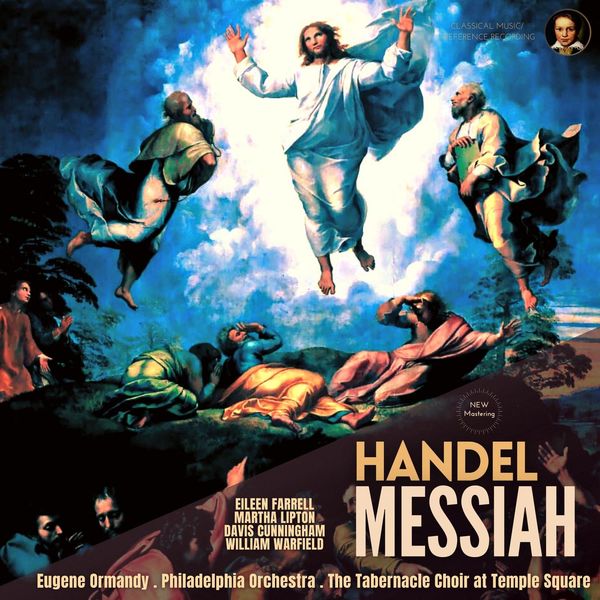
Handel’s Messiah and the Lord God Omnipotent

Handel’s Messiah and the Lord God Omnipotent

For a child is born to us, a son is given to us. The government will rest on his shoulders. And he will be called: Wonderful Counselor, Mighty God, Everlasting Father, Prince of Peace. – Isaiah 9:6

Revelation 19:6 Alleluia: for the Lord God omnipotent reigneth.

The Timeless Majesty of Handel’s Messiah

George Frideric Handel’s oratorio, Messiah, is a masterpiece that magnificently sets to music the greatest story ever told. With its elegant, memorable melodies, Messiah has become a beloved tradition, particularly during the Christmas season. It is celebrated across the globe in grand performances. Remarkably, Handel originally crafted the piece to be accessible, requiring as few as four vocalists accompanied by a small ensemble of instruments, including strings, continuo, two trumpets, and two drums. This intentional simplicity facilitated performances in various settings, contributing to its lasting impact.

Since its premiere on April 13, 1742, in Dublin, Messiah has been performed annually without exception, earning its reputation as the most renowned and frequently staged oratorio in history. Its universal appeal and profound spiritual significance have firmly established it as one of the greatest masterpieces in classical music.

A Reflection on Christ’s Life and Mission

For the children of the King, Messiah is more than just a musical composition; it is a profound meditation on the life, mission, and majesty of the Lord Jesus Christ. The oratorio reflects on Christ as the Messiah of Israel, the Savior of the world, and the coming King of Kings. Its libretto draws directly from Scripture, primarily the King James Bible and the Coverdale Psalter, seamlessly blending passages from both the Old and New Testaments. This creates a cohesive and powerful narrative that captivates the soul with its heart-stirring beauty.

The Structure of Messiah

The oratorio is divided into three distinct parts, each focusing on a pivotal aspect of Christ’s life and mission:

Part 1: The Nativity

This section highlights the prophecies of Christ’s coming, particularly those of Isaiah, and culminates in the joyous proclamation of His birth. The narrative draws heavily from Luke 2:8-14, recounting the angelic announcement to the shepherds: “Glory to God in the highest, and on earth peace, goodwill toward men.”

Part 2: The Passion

The second part focuses on the suffering and sacrifice of Christ, culminating in His crucifixion. It reaches its emotional and musical zenith with the triumphant “Hallelujah Chorus,” a declaration of Christ’s ultimate victory and reign.

Part 3: The Resurrection and Ascension

The final section celebrates Christ’s resurrection, His ascension, and the promise of eternal life for believers. It brings the divine story full circle, exalting the hope and glory found in the risen Savior.

Musical Nuances and Scriptural Depth

Handel’s Messiah is not only a musical triumph but also a deep expression of biblical truth. The libretto celebrates the everlasting beauty of Scripture while honoring the Lord Jesus Christ. Handel’s brilliance shines through in his use of musical elements to amplify the text’s meaning. For example:

  • “All We Like Sheep”: The lively, scattered melody vividly portrays a flock in motion, reflecting the words, “All we like sheep have gone astray.”
  • “For Unto Us a Child Is Born”: This uplifting piece builds to a majestic climax with the declaration: “And His name shall be called Wonderful, Counselor, the Mighty God, the Everlasting Father, the Prince of Peace.”

The highlight of the oratorio is undoubtedly the “Hallelujah Chorus”, a rousing anthem of praise that proclaims:

“Alleluia: for the Lord God omnipotent reigneth. Lord of lords, forever and ever, hallelujah, hallelujah, and King of Kings, forever and ever, hallelujah, hallelujah.”


This unparalleled composition continues to inspire and uplift, carrying forward the timeless legacy of Handel’s magnum opus.

Handel’s Inspiration and Legacy

Remarkably, Handel composed Messiah in just 24 days, a feat that many attribute to divine inspiration. Regarding the Hallelujah Chorus, Handel himself said, “I did think I did see all heaven before me and the great God himself!” His masterpiece gently and unequivocally presents Jesus Christ as the Son of God, the fulfillment of prophecy, the Savior of mankind, and the coming King.

Handel’s achievement far surpasses any expectations he may have had. The music elevates to sublime beauty and power, gently reflecting the majesty of Christ. It is a work that continues to resonate with audiences, bringing them closer to the heart of God.

The Role of Language in Messiah

Unlike many great classical musical compositions, which were originally written in languages other than English, Messiah was composed in English. Handel, born in Halle, Germany, in 1685, relocated permanently to London in 1712. The libretto quotes directly from the King James Bible, a version that was widely understood and cherished at the time. This accessibility enabled audiences to easily internalize the words and their sentiments. Over time, as English became a global language, Messiah gained even greater reach, ensuring its message could be shared with people around the world. There are no coincidences in the kingdom of God!

REFLECT & PRAY

Matthew 26:64: “And in the future, you will see the Son of Man seated in the place of power at God’s right hand and coming on the clouds of heaven.”

Father, You are the omnipotent, mighty King, ruler over all creation. Your Son, the Lord Jesus Christ, is the fulfillment of prophecy, the Savior of the world, and the coming King of Kings. May His reign bring joy, peace, and hope to all who seek Him.

INSIGHT

The Reign of the Lord God Omnipotent

Revelation 19:6 declares: “Hallelujah! For the Lord God Omnipotent reigns.” This triumphant proclamation celebrates the sovereignty and unmatched authority of the Lord God Almighty, whose reign is absolute and eternal. The Greek word translated as “Omnipotent” or “Almighty” is pantokrator, a term rich in meaning and significance.

The term pantokrator is derived from two Greek words: pantos, meaning “all, every, everything,” and krateo, meaning “ruler.” Together, pantokrator signifies “ruler of everything,” emphasizing the Lord’s supreme authority over all creation. This title highlights God’s limitless power and sovereignty, who rules the universe with complete authority.

Kosmokrator: The Limited Power of the Enemy

In stark contrast, the enemy is referred to as the “world ruler” in Ephesians 6:12: “For we do not wrestle against flesh and blood, but against principalities, against powers, against the rulers of the darkness of this age, against spiritual hosts of wickedness in the heavenly places.” The Greek word for “world ruler” is kosmokrator, which combines kosmos (world, world system) and krateo, meaning “ruler.” Kosmokrator denotes “the ruler of the world system,” a title that highlights the enemy’s influence over the fallen world.

However, the enemy’s power is both limited and delegated. It is temporary and subject to the ultimate authority of God. In contrast, the power of the Lord Jesus Christ is infinite, arising from His inherent deity. No force, earthly or spiritual, can withstand His supreme authority.

The Sovereign Reign of the Lord God Almighty

The Lord God Almighty is already sovereign, presiding over all creation. His control is absolute, and His authority is unmatched. However, His reign has so far been exercised in abstentia, allowing humanity to experience free will and the consequences of sin. This dynamic will change dramatically with the return of the Lord Jesus Christ.

When Christ returns, His reign will no longer be distant. He will establish His Kingdom on Earth, ruling in a personal and direct way. His governance will be “hands-on,” bringing His presence into the midst of His people. This will mark the beginning of a new era, one characterized by holiness, righteousness, and peace.

The Kingdom of the Prince of Peace

Since the fall of Adam and Eve, the Earth has never been a place of perfect holiness, righteousness, or peace. Human governance, no matter how noble or well-meaning, has consistently fallen short of achieving true harmony. Wars, uprisings, and injustices have troubled humanity throughout history. But this will change when the Prince of Peace establishes His Kingdom.

The coming of the Lord Jesus Christ will bring in the long-awaited Kingdom of God. For the first time in history, Earth’s inhabitants will experience just, holy, and righteous leadership. The reign of Christ will usher in an era of unparalleled peace, prosperity, and tranquility. For a thousand years, the world will be free from wars, uprisings, and the chaos that has marked human history.

A Unified Faith Under Christ

Under the reign of the Lord Jesus Christ, the entire human race will be united in a singular faith, free from divisions, competing ideologies, and false religions. The Kingdom of God will center around Christ, the King of Israel and the Savior of the world, welcoming all who enter to worship Him as the one true King.

This profound unity of faith will illustrate the fulfillment of God’s ultimate purpose for humanity: a harmonious existence where His people worship Him in spirit and truth. Christ’s reign will stand as a testament to God’s power, love, and righteousness, bringing His will to fruition.

Handel’s Messiah exemplifies the power of Scripture and the beauty of music, inspiring listeners to reflect on the eternal truths within God’s Word. It serves as an invitation to acknowledge the majesty and glory of the King of Kings.

The Father reigns as the omnipotent ruler and sovereign King over all creation, His limitless power and unmatched authority inspiring hope for the future. We eagerly anticipate the day when His Son, the Lord Jesus Christ, will establish peace, righteousness, and unity in the world. May His Kingdom come and His will be fulfilled on Earth as it is in Heaven.

¯\_(ツ)_/¯

© Dr. H 2025